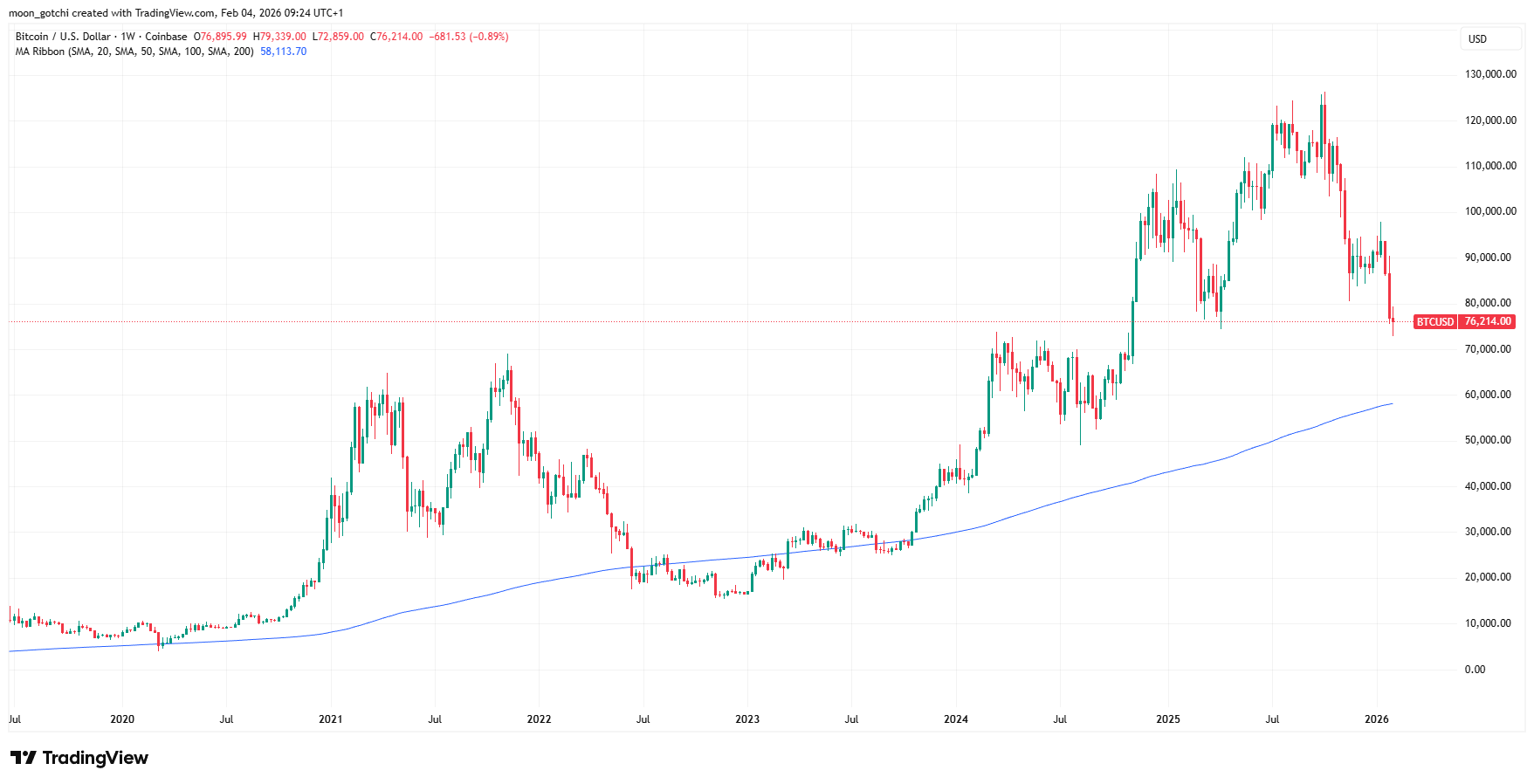
Bitcoin hit a 15-month low of around $72,900. The largest cryptocurrency is now trading at the same level as on US election night in November 2024, when Trump's victory catapulted the price from $69,000 to over $75,000 within hours.
The entire "Trump premium" has been erased. This decline accelerated in late January. On January 31 alone, Bitcoin lost 10 percent in a single day, accompanied by liquidations totaling over $2 billion. Overall, the price fell more than 15 percent within one week. Bitcoin is now trading at around $76,400 after a brief recovery.
Liquidations and ETF outflows amplify the sell-off
The crash triggered a cascade of forced sales. On February 1, exchanges liquidated over $2 billion in crypto positions -- one of the largest liquidation events in the industry's history. Two days later, another $740 million followed, including $287 million in Bitcoin long positions alone. The steepest price drop occurred over the weekend during thin liquidity, when stop-loss orders triggered algorithmic selling.
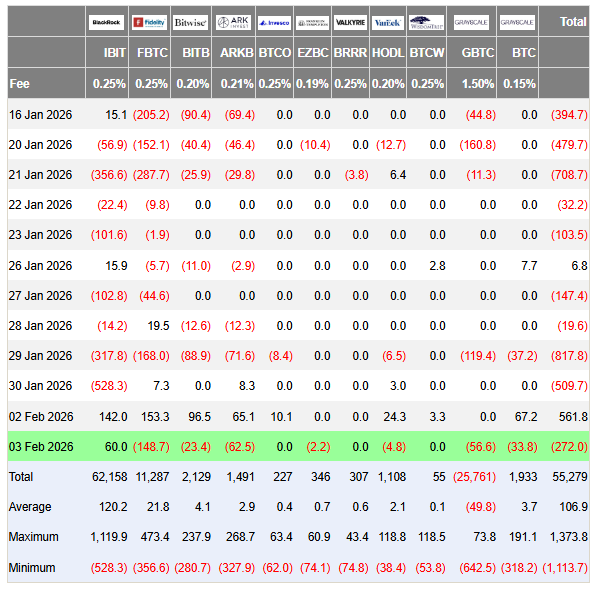
At the same time, institutional investors pulled capital from Bitcoin spot ETFs. Over two weeks, $2.8 billion flowed out of the funds. On January 29, ETFs recorded record outflows of $818 million, followed by $510 million the next day. BlackRock's iShares Bitcoin Trust (IBIT) alone lost $528 million. The average cost basis of ETF holdings sits at around $84,000. At a price of $73,000, roughly 62 percent of invested capital is in the red.
Macro factors pressure the crypto market
Several factors converged at the same time. The US Federal Reserve held interest rates at 3.50 to 3.75 percent on January 28. Fed Chair Powell signaled he was "not in a rush to cut." Elevated inflation data further delayed rate cut expectations. Meanwhile, a stronger US dollar reduced the appeal of risk assets.
Adding to the pressure, a US government shutdown began on January 31. It was triggered by a dispute over immigration policy and Department of Homeland Security spending. Bitcoin fell to $73,100 during the shutdown. Trump signed a funding package on February 3. The House of Representatives voted 217 to 214 in favor. His tariff threats of 25 to 60 percent on automobiles, pharmaceuticals, and semiconductors also weighed on markets. As a result, the S&P 500 lost around 1.4 percent, the Nasdaq 2.2 percent.
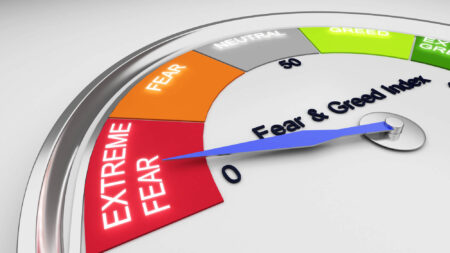
The Fear & Greed Index dropped to 20-25 points, signaling "Extreme Fear." In total, the crypto market shed nearly $500 billion in market capitalization within one week. Ethereum plunged 26 percent, XRP lost 17 percent, and Solana gave up 7 percent.




Gold rises, Bitcoin falls: the "digital gold" narrative crumbles
While Bitcoin crashed, gold approached the $5,600 per ounce mark and hit a record high. Gold gained 8.6 percent during geopolitical tensions, while Bitcoin lost 6.6 percent. As a result, the narrative of Bitcoin as "digital gold" and an inflation hedge is losing credibility.
Instead, Bitcoin increasingly behaves like a tech stock. The 30-day correlation between Bitcoin and the Nasdaq 100 stood at 0.80 in January 2026. Galaxy Digital's Head of Research Alex Thorn sees no evidence of a role as a store of value.
"There is little evidence of significant accumulation. Bitcoin has failed to follow gold and silver as a debasement hedge." - Alex Thorn, Head of Research, Galaxy Digital
Technical signals point to further downside potential
Bitcoin already lost the 50-week moving average in November 2025. In previous cycles, a break below this level was often followed by a decline to the 200-week moving average. This currently sits at around $58,000. Between $70,000 and $80,000, a significant supply gap exists that favors high volatility.