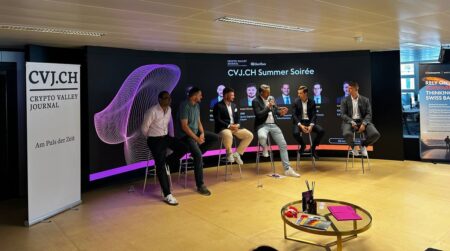
Up to now, assets such as land, art, wine, etc. have been limited either to geographical boundaries or accredited investors. Through " tokenization ", assets can be made available to a wider audience. A practical example.
Asset tokenisation enables the use of smart contracts to automate processes such as settlement, compliance, distribution, reporting, etc. Global transferability, 24/7 markets and partial ownership of assets will improve accessibility for investors. Assets such as real estate, private equity and art could gain liquidity with ease of transferability.
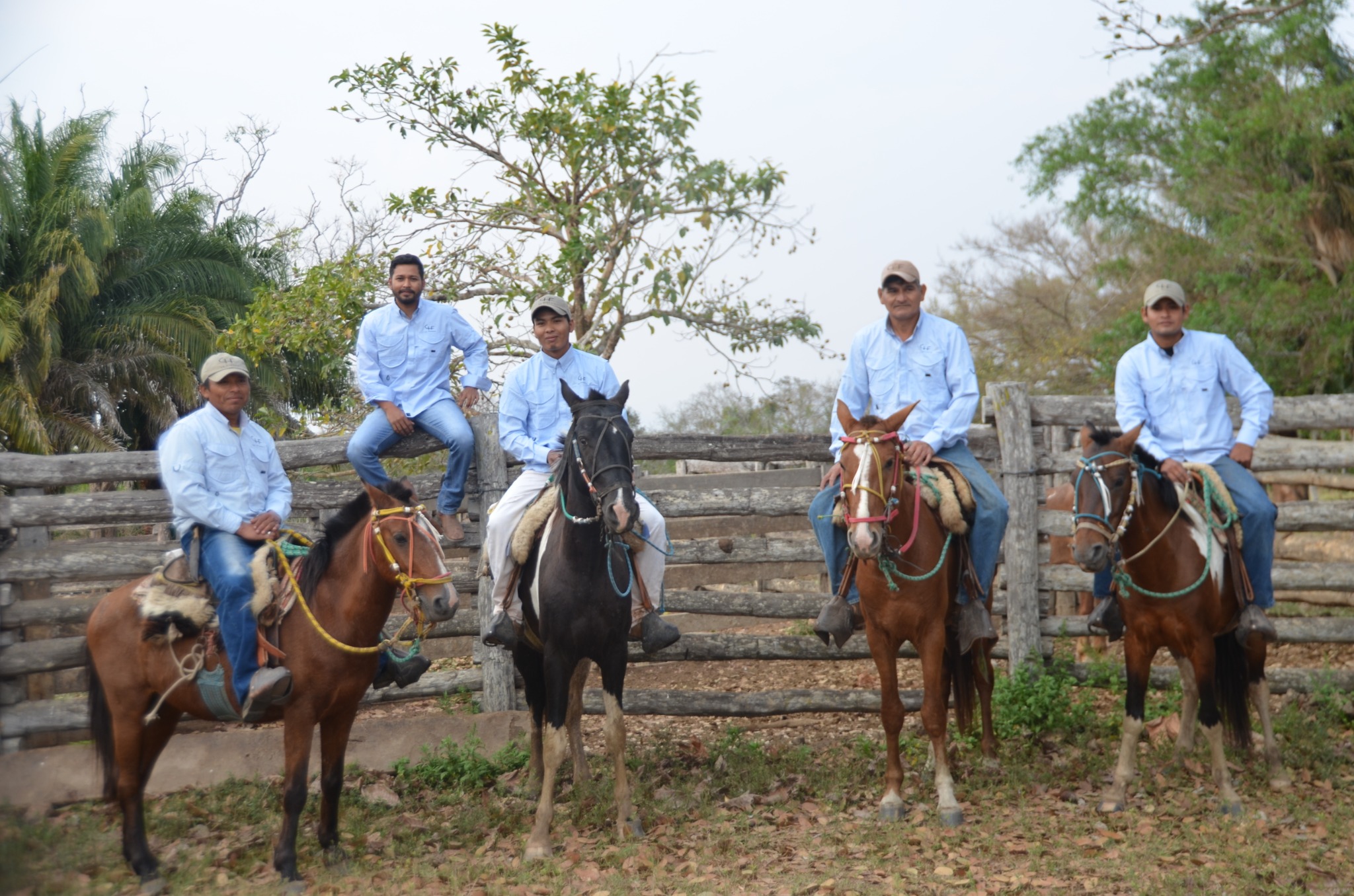
With the introduction of tokenization and partial ownership, illiquid assets can overcome these disadvantages and enjoy greater liquidity. A Bolivian cattle farm project provides a practical example. With the so-called finka token, an investor acquires a share in the production and its revenue. The Zug-based crypto- and block chain investment company CV VC recently announced that it is investing in the new Finka Token.
In an interview Carlos H. Fernandez Mazzi, founding partner of Finka GmbH, talks about the project.
CVJ: Thank you for taking the time, Carlos. Can you please explain what the Finka Token is?
Thanks for having me! The Finka Token is a Security Token which grants investors a pro-rata share of the yearly Net Operating Revenues of the La Pradera cattle ranch located in Santa Cruz, Bolivia. It is combining blockchain technology with the forward sale of future revenues in the traditional cattle industry. Even though cattle ranching is a very stable and predictable value creator there were no investments available in this space for the common investor. We decided that we wanted to change this.
What problems are being solved with your Token?
Traditionally, both the barrier to entry as well as the transactional costs for cattle ranching investments are very high, which prevents most retail investors from having access to this asset class. Beyond the positive environmental and social impact, by leveraging the power of blockchain, we are able to democratize access to capital and reduce the barrier to entry for retail investors. The technology effectively reduces transactional costs, lowers friction and removes the need for intermediaries during the investment process. Furthermore, investments can be fractional and very small which eliminates the traditional limitation of investors having to put down large amounts of money to gain exposure to this type of investment.
Can you elaborate on the positive environmental impact?
The La Pradera Ranch operates on strict environmental-friendly standards. The ranch does not use any fertilizers, hormones or antibiotics and pastures are naturally fertilized, preserving the soils natural richness and balanced microenvironment. This grazing method leads to considerably lower CO2 emissions than in conventional cattle breeding farms and mimics the way that wild herds would move naturally across grasslands. Our cattle are 100% free range and grass fed and we only provide them with the required vaccines, salt and water. Furthermore, it is important to understand that, contrary to popular belief, open range cattle ranching is actually environmentally friendly. The net carbon emissions for open range grazing based cattle ranching are negative. Studies show that in the MERCOSUR region, pastures absorb on average 3.5 times the amount of carbon that cattle grazing in the same pastures produce.
What social impact does the Token have?
In developing countries, large parts of the population have little or no access to financial services, such as digital money transfers, consumer lending or stock market investments. In Latin America alone, tokenized investments could thus help to lower the barrier to entry and drive financial inclusion for more than 400 million people.
Due to the current uncertainties, the low interest rates environment, the monetary intervention of central banks and the still ongoing Covid-19 pandemic, it makes sense for many investors to increase their exposure to tangible assets, such as real estate, gold, art, collectables and other alternative investments. With our Finka Tokens we are enabling every person on the planet to invest in cattle ranching which grants them exposure to an asset class which is not correlated with conventional investments and provides stable and reliable returns.
Are the current uncertainties about to cause a paradigm shift for investors?
Yes, I do think so. At least for a certain type of investor. The majority of wealth is in the hands of the Baby Boomer generation which is currently reaching the retirement age. The conventional approach for investing in this life situation was a portfolio allocation of 60% equities and 40% bonds. This was a successful strategy in the past 30 years, but now, with bonds providing virtually zero returns, retirees are forced to re-think their investment strategy. My expectation is that many will come the conclusion that an increased exposure in alternative investments, such as cryptocurrencies, tokens, art and other collectables makes sense in the current situation.
Why do you think that now is a good time to invest in cattle ranching?
Cattle ranching is an attractive investment due to its stable costs, predictable revenues, low risk and high liquidity. Exposure to this type of investment decreases the risk of a portfolio since it is not correlated with traditional forms of investments, such as stocks, bonds, mutual funds and other financial instruments. Furthermore, animal protein consumption is poised for growth given that the global population is expected to reach 9 billion people by 2040. As the developing world improves its living standards, demand for better nutrition will be the main driving force for the increased consumption of animal protein and beef in particular. For example, the growth of per capita consumption in China has grown approximately 15-fold since 1961 and this trend is continuing.
What are your current activities?
We have recently signed an agreement with Cabana Tres Cuces, a leading operator in Argentina with over 40 years of experience in the genetic improvement of BRANGUS livestock. This agreement will allow La Pradera to improve its productivity and will significantly improve its herd quality. Moreover, we are aiming to be the first ranch in Bolivia to breed BRANGUS cattle for reproduction and we are expecting to sell the first animals by 2022.
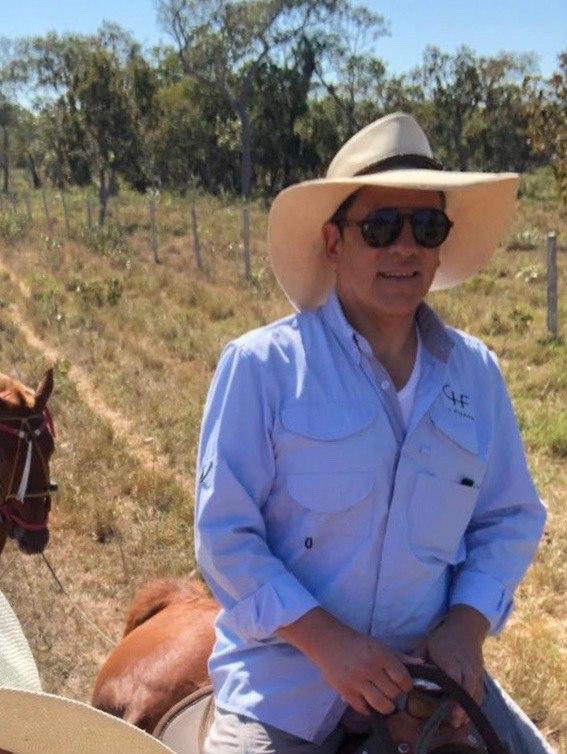 Carlos H. Fernandez Mazzi is Founding Partner at Finka GmbH with over 35 years of international business experience. With Finka, a Zug-based advisory firm which he founded, he leverages this experience with a passion for the promise of blockchain technology to lower the barriers of entry to global financial markets.