Close Menu
Crypto Valley Journal
    Facebook X (Twitter) Instagram
    Crypto Valley Journal
    • Hot Topics
      • News
      • Minds
    • Focus
      • Background
      • Blockchain
      • Legal & Compliance
      • Non-Fungible Token (NFTs)
    • Investing
      • Markets
      • Financial Products
      • Decentralized Finance (DeFi)
      • Exchange overview
    • Education
      • Basics
      • Glossary
      • Politicians on crypto
    • Statistics
      • Bitcoin-ETF-Flows
      • Ethereum-ETF-Flows
      • Crypto market data
      • On-chain data
    • Academy
      • Overview
      • Part 1: Blockchain
      • Part 2: Money
      • Part 3: Bitcoin
      • Part 4: Cryptocurrencies
      • Part 5: Decentralized Finance
      • Part 6: Investing
    • English
      • Deutsch
    Crypto Valley Journal
    You are at:Home»Investing»Financial Products»First Bitcoin ETF in the US
    NYSE develops platform for 24/7 trading with tokenized stocks
    New York City, USA - May 19, 2014: Entrance of the New York Stock Exchange - also recognizable is the street sign „Wall Street“.

    First Bitcoin ETF in the US

    By Editorial Office CVJ.CH on 19. October 2021 Financial Products, Investing

    It has been speculated for a long time, now it is here. For a few hours, a Bitcoin fund (ETF) has been trading on the New York Stock Exchange (NYSE) for the first time. This gives institutional investors easier access to the largest digital asset.

    The first request for a Bitcoin exchange-traded fund (ETF) in the United States dates back to 2013 and was submitted by the Winklevoss brothers. However, the application, like the countless others that followed in the eight years since, was rejected by the relevant Securities and Exchange Commission (SEC). The reason given was the insufficient maturity of the market and the comparatively low demand for an exchange-traded product. However, much has changed in recent years. The increasing merging of the crypto industry with the traditional financial world eventually led the regulator to approve the first Bitcoin ETF in the States.

    Futures-based bitcoin ETF "BITO"

    The first bitcoin ETF with the exchange ticker "BITO" is a futures-based fund from U.S. issuer ProShares. The company has been present with ETFs since 2006 and currently offers a wide range of ETF products, including leveraged and inverse ETFs.

    The majority of Bitcoin ETF applications rejected by the SEC so far are spot ETFs. In this case, the Bitcoins are actually held in custody at the issuer and the ETF owner has a partial claim to the deposited values with his security.
    Bitcoin ETF
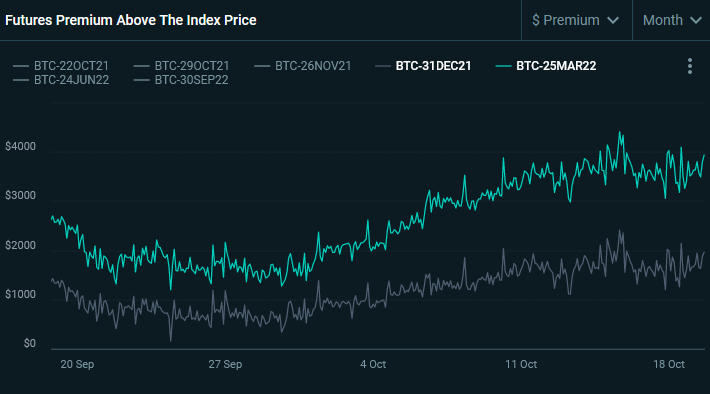
    Bitcoin Futures Premiums Dec & March Expiration / Source: Deribit.com

    However, the Proshares Bitcoin ETF, which has been trading for a few hours, is a futures-based ETF. The price development is mapped here using forward contracts, the Bitcoin futures. Futures contracts trade at different prices than the spot market depending on their expiration date.

    If the futures market trades at a higher price level than the spot market, the market is in a contango situation, in the opposite case the market trades in a so-called backwardation.


    Bitcoin fails again at the 80'000 USD mark, profit-taking weighs on ETH, SOL and XRP despite Strategy purchase and ceasefire. Market Review

    Bitcoin price climbs to 80’000 USD – profit-taking hits ETH, SOL and XRP

    technical chart analysis Technical Analysis

    Technical Analysis August 23, 2022

    Bitcoin fails again at the 80'000 USD mark, profit-taking weighs on ETH, SOL and XRP despite Strategy purchase and ceasefire. Market Review

    Bitcoin price climbs to 80’000 USD – profit-taking hits ETH, SOL and XRP

    Goldman Sachs files its first Bitcoin ETF with the SEC, a covered-call product offering premium income with a capped upside for investors. Financial Products

    Goldman Sachs files its first Bitcoin ETF with the SEC

    Bitcoin futures ETF not suitable for investors with a longer investment horizon

    A futures-based ETF offers a number of advantages for the issuer compared to the spot ETF, as their handling is simpler in principle. For investors, however, there are certain factors to consider. If a futures contract trades predominantly in a contango situation, as is usually the case with Bitcoin, an investor fares worse over time than with a direct investment. This is because the issuer has to swap the deposited futures contracts into the next futures contract at the end of their term, paying the premium of the next futures contract, which is ultimately borne by the ETF investor.

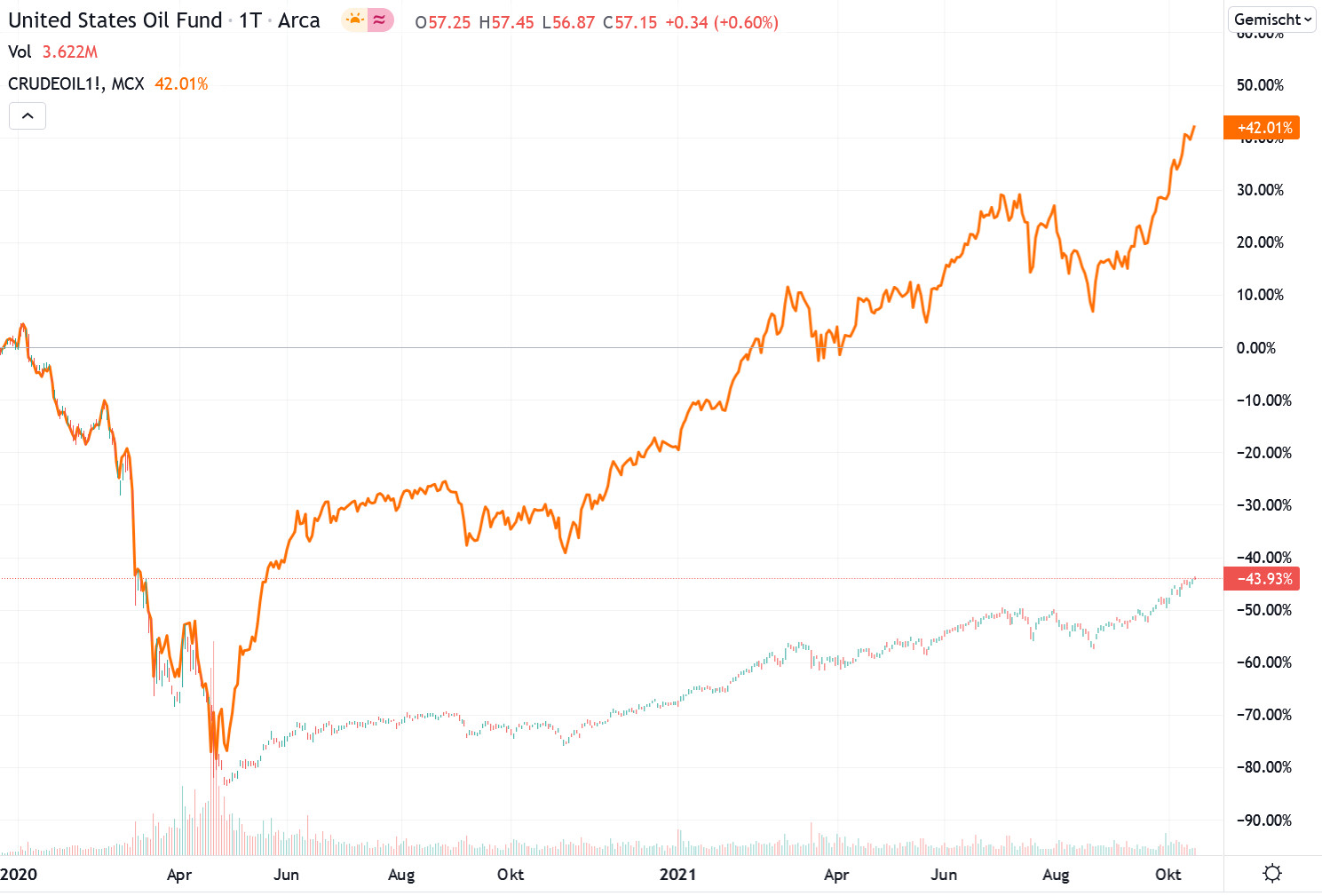
    Over a longer investment horizon, this circumstance inevitably leads to a below-average performance compared to the underlying. A good example is the exchange-traded oil fund "USO" backed by oil futures contracts. Since the storage of oil turns out to be cost-intensive, the respective oil futures contracts trade at considerable premiums. Due to the expensive exchange activities involved, the investor loses money on each "rollover" due to the premium that has to be paid. In the illustrated example, this circumstance resulted in an investor losing a good 40% on the oil ETF since 2020, even though the oil price gained about 40% over the same period.
    US oil funds
    Price development spot oil (orange line) vs. oil ETF (lower line) / Chart: Tradingview

    The long-awaited first US Bitcoin ETF should therefore be taken with a grain of salt. While the approval testifies to the maturity of Bitcoin as an asset class and opens up an investment opportunity for many institutional investors, for private investors, it is recommended to focus on products with direct Bitcoin investments.


    Share. Facebook Twitter LinkedIn Email Telegram WhatsApp

    About the author

    Editorial Office CVJ.CH

      The CVJ editorial staff consists of a team of Blockchain experts and informs daily and independently about the most exciting news.

      Related Articles

      JPMorgan warns: Recurring DeFi exploits and stagnant ETH-denominated TVL curb institutional engagement in the DeFi sector.

      JPMorgan: DeFi hacks and TVL losses weigh on institutional investors

      Admiral Paparo confirmed to the US Senate: INDOPACOM operates an active Bitcoin node and is conducting operational tests to protect military networks.

      US military operates Bitcoin node in the Indo-Pacific

      Bitcoin fails again at the 80'000 USD mark, profit-taking weighs on ETH, SOL and XRP despite Strategy purchase and ceasefire.

      Bitcoin price climbs to 80’000 USD – profit-taking hits ETH, SOL and XRP

      Trump would sign the CLARITY Act immediately. But the Senate is blocking it, and a May deadline could push the law back to 2030.
      27. April 2026

      Trump wants to sign CLARITY Act immediately, but chances drop to 50%

      CVJ.CH Weekly review calendar week
      25. April 2026

      Weekly review calendar week 17 – 2026

      JPMorgan warns: Recurring DeFi exploits and stagnant ETH-denominated TVL curb institutional engagement in the DeFi sector.
      24. April 2026

      JPMorgan: DeFi hacks and TVL losses weigh on institutional investors

      twitter image button instagram image button linkedin image button youtube image button

      About Crypto Valley Journal
      About Crypto Valley Journal

      On the pulse of the movement

      • Academy
      • Contact
      • Advertising
      • About us
      • Partner
      • Imprint
      • Privacy
      • Disclaimer
      Search

      Type above and press Enter to search. Press Esc to cancel.