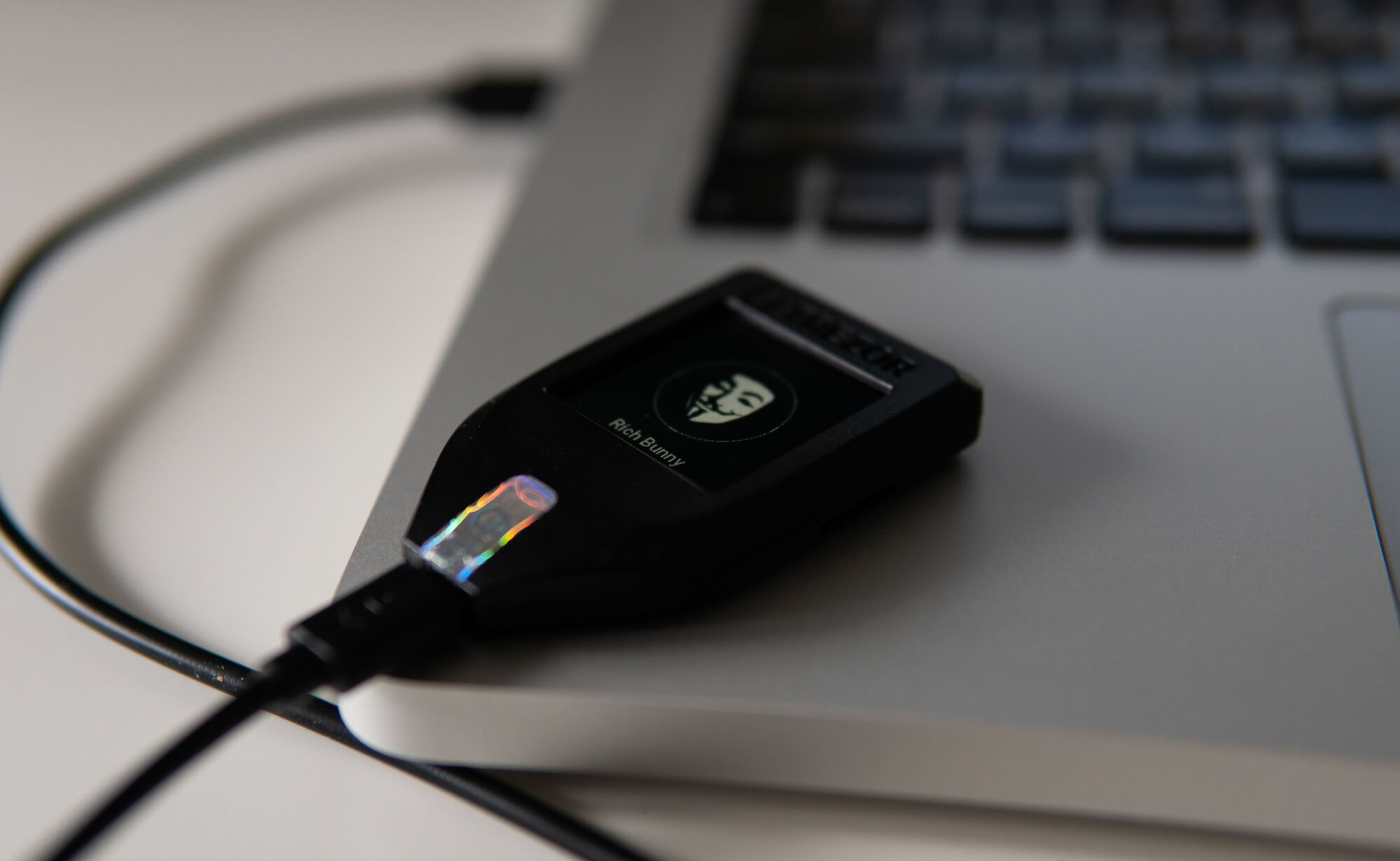
Ledger and Trezor both overhauled their product lines in 2025. With the Nano Gen5 (179 USD), the Flex (249 USD) and the Stax (399 USD), Ledger now covers three price tiers. Trezor's Safe 7 (249 USD) competes directly in the premium segment for the first time.
At the same time, another data breach at Ledger shows that the biggest vulnerability does not lie in the devices themselves. Instead, it lies in the manufacturers' customer data. As a result, the hardware wallet market has fundamentally shifted. Anyone buying a device in 2026 faces different decisions than just a year ago. Post-quantum cryptography, open-source hardware and data protection at the manufacturer level are moving to the forefront as purchasing criteria. Consequently, the traditional hardware wallet comparison based on coin count and display size falls short.
New flagships in direct hardware wallet comparison
In October 2025, Ledger launched the Nano Gen5 at 179 USD. The device features a 2.8-inch E-Ink touchscreen, Bluetooth BLE 5.2, NFC and a battery life of up to ten hours. Furthermore, Clear Signing and Transaction Check ensure that users can fully verify every transaction on the device. Starting with the Gen5, direct dApp connectivity is also available.
Trezor introduced the Safe 7 in the same month. For 249 USD, it offers a 2.5-inch color touchscreen with 520 by 380 pixels and 700 nits of brightness. Gorilla Glass 3, haptic feedback and Qi2 charging are included. Notably, the Safe 7 carries an IP67 rating. As a result, it is the first water- and dust-resistant hardware wallet on the market.
Both manufacturers continue to offer entry-level models. Ledger sells the Nano S Plus for 59 USD, while Trezor offers the Safe 3 for 79 USD. At the 249 USD price point, the Ledger Flex and Trezor Safe 7 go head to head. Ledger relies on E-Ink technology with NFC and Qi charging. Trezor, in contrast, opts for a high-resolution color display with IP67 protection. Meanwhile, Ledger's Stax at 399 USD targets a different audience as a lifestyle device with magnetic stacking.
Post-quantum cryptography as a new differentiator
The Trezor Safe 7 is the world's first hardware wallet with post-quantum cryptography. Specifically, the device implements SLH-DSA-128 for firmware updates, device authentication and the boot process. Consequently, every Safe 7 contains a post-quantum device certificate.
At the core is the TROPIC01, a fully transparent and auditable secure element chip. It operates as a dual secure element alongside a conventional EAL6+ chip. In doing so, Trezor solves a longstanding dilemma in the industry. Previous secure elements were always proprietary and not independently verifiable. The TROPIC01, however, is open-source hardware. Moreover, Trezor's entire firmware remains fully open source.
Ledger has not announced a comparable quantum-ready strategy so far. All Ledger models continue to use proprietary secure elements with CC EAL5+ or EAL6+ certification. In addition, firmware and chip design remain closed source. For users who prioritize independent auditability, Trezor therefore remains the only option.



Data breaches and physical attacks: the underestimated risk
On January 5, 2026, it became known that attackers had hacked Ledger's payment processor Global-e. The stolen data included customer names, postal addresses, email addresses, phone numbers and order information. Financial data and seed phrases were not affected. Global-e isolated the compromised systems immediately.
It was not the first incident. In April 2025, Ledger customers received physical letters containing QR codes that prompted them to enter their 24-word recovery phrase. Ledger confirmed the phishing campaign. That same year, criminals kidnapped Ledger co-founder David Balland. Spanish authorities arrested a prime suspect in March 2026. According to industry data, social engineering attacks increased by 40 percent year-over-year in 2025. The repeated data breaches provide attackers with the address book to carry them out.
Trezor has not experienced comparable security incidents since late 2025. This does not make Trezor customers immune. However, the repeatedly compromised customer data at Ledger significantly increases the risk of physical attacks on device owners.
Which device fits which security profile
In 2026, choosing between Ledger and Trezor depends less on coin compatibility and more on personal security priorities. Both ecosystems support over 500 and 1,000 assets respectively. As a result, transparency, future-proofing and data protection at the manufacturer level carry more weight than feature lists.
Users who prioritize auditable security will find a fully open-source system at Trezor. From the TROPIC01 chip to the firmware to post-quantum cryptography, every component can be independently verified. The Safe 7 combines this with IP67 protection and wireless charging. For Bitcoin maximalists, Trezor also offers Bitcoin-only variants of both flagships.
Ledger excels in ecosystem breadth. Ledger Live integrates over 50 third-party wallets and enables direct dApp connectivity starting with the Nano Gen5. Furthermore, the Stax with its 3.7-inch E-Ink display and magnetic stacking targets users who want to combine aesthetics with functionality. Nevertheless, the proprietary security model remains a matter of trust. The repeated data breaches at third-party vendors undermine precisely that trust.
For beginners, the Ledger Nano S Plus at 59 USD remains the most affordable entry point. Trezor's Safe 3 costs 79 USD but already includes an EAL6+ secure element. In the premium tier at 249 USD, the decision comes down to Ledger Flex versus Trezor Safe 7. It is a choice between a proprietary E-Ink ecosystem and an auditable post-quantum architecture with outdoor durability.
Important security notice: Hardware wallets should only be purchased through the official manufacturer shops (shop.ledger.com or trezor.io). Devices from third-party sellers or second-hand markets may have been tampered with. All prices listed are in US dollars as shown in the official shops. Swiss buyers should factor in additional shipping costs and potential customs fees. Certain discounts are available when using the partner links above.