Close Menu
Crypto Valley Journal
    Facebook X (Twitter) Instagram
    Crypto Valley Journal
    • Hot Topics
      • News
      • Minds
    • Focus
      • Background
      • Blockchain
      • Legal & Compliance
      • Non-Fungible Token (NFTs)
    • Investing
      • Markets
      • Financial Products
      • Decentralized Finance (DeFi)
      • Exchange overview
    • Education
      • Basics
      • Glossary
      • Politicians on crypto
    • Statistics
      • Bitcoin-ETF-Flows
      • Ethereum-ETF-Flows
      • Crypto market data
      • On-chain data
    • Academy
      • Overview
      • Part 1: Blockchain
      • Part 2: Money
      • Part 3: Bitcoin
      • Part 4: Cryptocurrencies
      • Part 5: Decentralized Finance
      • Part 6: Investing
    • English
      • Deutsch
    Crypto Valley Journal
    You are at:Home » Focus » Background » Project Helvetia III: SNB pushes digital Franc forward
    Projekt Helvetia III: SNB treibt digitale Zentralbankwährung (CBDC) voran

    Project Helvetia III: SNB pushes digital Franc forward

    By Editorial Office CVJ.CH on 12. April 2024 Background

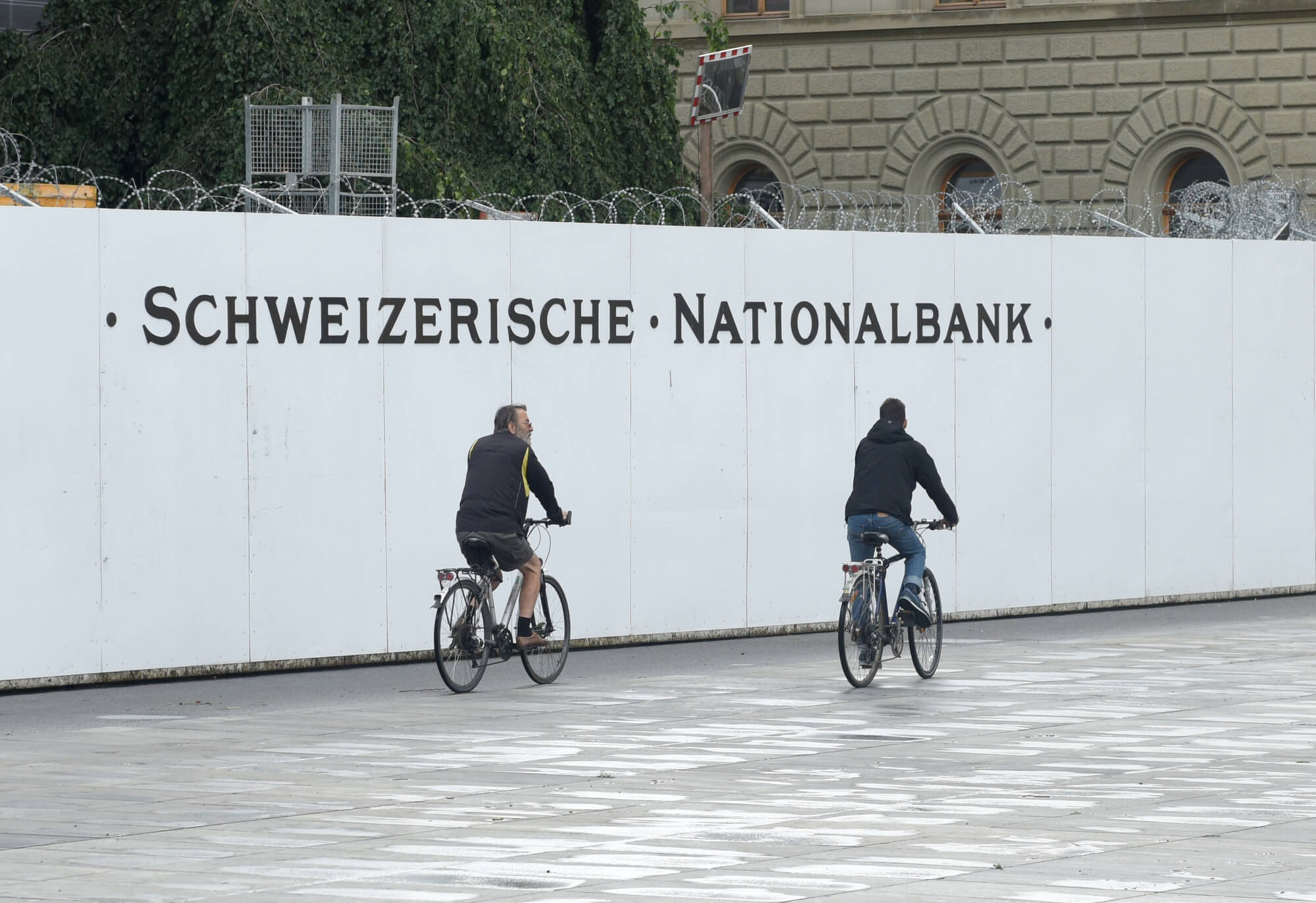
    The Swiss National Bank (SNB) is moving forward with the Helvetia III pilot project, becoming the first central bank in the world to issue a tokenized central bank digital currency (CBDC) on a regulated third-party platform.

    The SNB has been extensively researching the development of a digital central bank currency (CBDC) and identified early on the privacy issues associated with a central registry of all financial transactions. As part of "Project Helvetia," research has been underway since 2019 on how to settle securities transactions and cross-border payments using blockchain technology and a digital Swiss franc.

    Despite the potential benefits of a CBDC, the SNB has emphasized that the current risks to consumers outweigh the benefits, and that implementation would primarily make sense for financial institutions. Speaking at an event this week, SNB President Thomas Jordan emphasized that the tokenization of assets based on distributed ledger technology (DLT) enables a more efficient and transparent transfer of assets in real time.

    Subscribe to our newsletter

    The best articles of the week, directly delivered into your mailbox.

    Transactions involving tokenized assets

    In Switzerland, 2.5% of Swiss franc bonds are already tokenized, making Switzerland a leader in the field. As part of the Helvetia III pilot project, the SNB is currently investigating the possibility of settling tokenized asset transactions with tokenized central bank money in Swiss francs. This money could be used for transactions on third-party platforms that also hold the tokenized assets.

    Initial results suggest that the benefits of transactions in central bank money remain in a tokenized world. However, important questions are still open about the next steps. The choice of the right instruments for settlement and the required standards are still open. In addition, the requirements for third parties to participate in these transactions are still under consideration.

    Immediate payments for Swiss banks

    The SNB has also optimized the SIC payment system to enable instant payments. This means that payments between accounts can be made in a matter of seconds, around the clock. Jordan emphasizes that these developments lay the foundation for future competition and innovation in payments. By late summer, some 50 banks, which process 98% of customer payments in Switzerland, are expected to be able to use the technology.

    Instant payments allow individuals and businesses to make payments directly from account to account in seconds, around the clock. Jordan emphasized that this not only speeds up payments, but also promotes competition among payment methods and drives innovation such as programmable payments.


    Ray Dalio’s Bridgewater Associates Minds

    Star investor Ray Dalio considers Bitcoin inferior to gold

    18 percent hold crypto assets in Switzerland, an IFZ and LUKB study shows. Banks see potential for up to 1 million advisory clients. Background

    HSLU and LUKB study: 18% of the Swiss population hold crypto assets

    Robinhood Perpetual Futures in Europe now cover commodities and currencies, and the broker plans a crypto launch in the United Kingdom. Financial Products

    Robinhood Perpetual Futures expand to commodities in Europe

    Digital finance transparency relies on Proof of Reserves, Merkle trees, MPC custody and 24/7 monitoring to verify solvency and user assets. Basics

    Transparency as the foundation of security in digital finance

    Ray Dalio’s Bridgewater Associates Minds

    Star investor Ray Dalio considers Bitcoin inferior to gold

    18 percent hold crypto assets in Switzerland, an IFZ and LUKB study shows. Banks see potential for up to 1 million advisory clients. Background

    HSLU and LUKB study: 18% of the Swiss population hold crypto assets

    The Agorá project

    The Bank for International Settlements (BIS), in collaboration with seven central banks and the private sector, is researching tokenization to improve the functioning of the monetary system. Named after the Greek word for marketplace, Project Agorá involves the SNB and the central banks of France (for the Eurosystem), Japan, Korea, Mexico, the Bank of England and the Federal Reserve Bank of New York. They will work in partnership with a large number of private financial firms brought together by the Institute of International Finance (IIF).

    The project will explore the integration of tokenized commercial bank deposits with tokenized central bank money on a programmable financial platform. Solutions enabled by smart contracts could improve the monetary system while maintaining itd two-tier structure. This would also increase efficiency of the current payment system, especially for cross-border transactions. Various legal, regulatory and technical challenges as well as time differences will be taken into account.


    Share. Facebook Twitter LinkedIn Email Telegram WhatsApp

    About the author

    Editorial Office CVJ.CH
    • Website
    • Twitter
    • LinkedIn

    Since 2018, the editorial team at Crypto Valley Journal has been reporting from Zug - the heart of Switzerland’s Crypto Valley - on Bitcoin, cryptocurrency, blockchain, and regulatory developments in digital assets. Behind the publication’s collective editorial voice is a team of writers with backgrounds in financial markets, law, and technology.

    Related Articles

    18 percent hold crypto assets in Switzerland, an IFZ and LUKB study shows. Banks see potential for up to 1 million advisory clients.

    HSLU and LUKB study: 18% of the Swiss population hold crypto assets

    The four-year Bitcoin cycle remains intact

    The EU Parliament's ECON committee has approved the legal framework for the digital euro and ordered trilogue negotiations to begin.

    EU Parliament approves legal framework for the digital euro

    PMorgan warns of Strategy's new Bitcoin sales policy: the bank sees an avoidable two-way risk for the entire Bitcoin market.
    3. July 2026

    JPMorgan flags Strategy’s Bitcoin sales as a market risk

    Ethereum Institutional launches as a non-profit from Bitmine, Sharplink, and Joe Lubin, a new point of contact for banks and asset managers.
    3. July 2026

    Ethereum Institutional becomes Wall Street’s point of contact

    Six Swiss crypto service providers secured MiCA authorization. AMINA was the world's first; Sygnum and Bitcoin Suisse followed later.
    2. July 2026

    Swiss crypto service providers secure MiCA licenses

    twitter image button instagram image button linkedin image button youtube image button

    About Crypto Valley Journal
    About Crypto Valley Journal

    On the pulse of the movement

    • Academy
    • Contact
    • Advertising
    • About us
    • Partner
    • Imprint
    • Privacy
    • Disclaimer
    Search

    Type above and press Enter to search. Press Esc to cancel.