
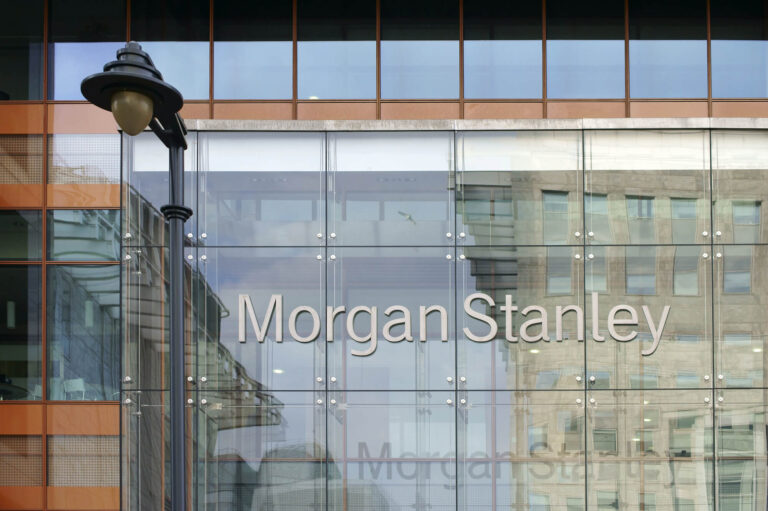
Morgan Stanley has filed a second amendment to its S-1 registration with the SEC for the "Morgan Stanley Bitcoin Trust." The product is set to trade under the ticker MSBT on NYSE Arca.
Coinbase Custody will handle Bitcoin holdings in cold storage. Bank of New York Mellon serves as cash custodian, administrator, and transfer agent. The filing includes seed capital of 50,000 shares with gross proceeds of approximately $1 million. A six-month fee waiver applies to the first $5 billion in invested capital. With this move, Morgan Stanley positions itself as the first major US bank to issue a spot Bitcoin ETF directly under its own name. This breaks with the industry norm of routing such products through asset management subsidiaries.
Vertical integration over outsourcing
The MSBT filing is part of a broader crypto strategy. Back in January 2026, Morgan Stanley filed S-1 registrations for an Ethereum and a Solana trust. In February, the bank applied to the OCC for a National Trust Bank Charter. The planned entity, called "Morgan Stanley Digital Trust National Association," is headquartered in Purchase, New York. Its comment period closed on March 20, 2026.
This entity covers digital asset custody, fiduciary staking, and the purchase, sale, and transfer of tokens. Morgan Stanley Capital Management controls it entirely. At the same time, the bank plans to launch crypto spot trading for retail clients through E*Trade in the first half of 2026, starting with Bitcoin, Ethereum, and Solana.
Currently, startup Zerohash provides the infrastructure for liquidity, custody, and settlement. Over time, in-house systems will replace this reliance on third parties. Morgan Stanley is pursuing a vertically integrated crypto value chain spanning ETFs, retail trading, and institutional custody. The bank acquired E*Trade in 2020 for roughly $13 billion and now transforms the platform into a crypto trading channel.
Direct issuance as precedent
Existing spot Bitcoin ETFs in the US operate through specialized subsidiaries. BlackRock issues IBIT through iShares, and Fidelity uses Fidelity Investments. With MSBT, Morgan Stanley would break this model by offering the product directly under its own brand. For institutional investors, this carries tangible implications: the Morgan Stanley name stands directly behind the product as counterparty.
The bank signals that it does not view crypto products as a niche offering. Over 15,000 Morgan Stanley financial advisors can actively recommend Bitcoin ETFs. With roughly $1.8 trillion in wealth management AUM, the distribution potential is substantial.
Yet the advisory-driven channel remains largely untapped. This is precisely where Morgan Stanley aims to move in. A proprietary ETF, an authorized advisor network, and planned custody infrastructure together target clients who have so far had little exposure to crypto products. Traditional banking channels have largely left this segment unserved.



Competitive pressure among major banks
Morgan Stanley is not the only major bank with crypto ambitions. Goldman Sachs acquired Innovator Capital Management in 2025 for $2 billion and holds approximately $2.4 billion in crypto ETFs. JPMorgan meanwhile projects up to $130 billion in annual inflows from pension funds and endowments into crypto products.
The market for federal crypto banking licenses is tightening as well. Within 83 days, 11 companies filed OCC trust charter applications. Meanwhile, the SEC is reviewing more than 126 crypto ETF applications, including eight XRP ETF filings that could mobilize $5 to $7 billion upon approval.
In the short term, the market shows mixed signals. On March 18, US spot Bitcoin ETFs recorded net outflows of $129.6 million. BlackRock's IBIT alone saw over $100 million in outflows. At the time of the filing, the Bitcoin price stood at around $70,000. Still, spot Bitcoin ETFs in the US are outpacing the adoption curve of gold ETFs, pointing to sustained structural demand.
Details of the MSBT filing
The second S-1 amendment introduces one key change. Fidelity now joins the custodian network. As a result, the trust features a dual-custody model with Coinbase for cold storage and Fidelity as a supplement. BNY Mellon continues to handle cash management and administration. Pricing relies on the CoinDesk Bitcoin Benchmark, calculated daily at 4:00 PM New York time.
Creations and redemptions work on both a cash and in-kind basis. This gives authorized participants flexibility in share creation and redemption. In-kind mechanisms also offer greater tax efficiency and reduce the spread to net asset value.
The filing does not specify a final expense ratio. Market estimates range from 0.20 to 0.30 percent. Aggressive pricing would be a logical step, as Morgan Stanley can sustain an ETF fee war from a position of strength. The six-month fee waiver on the first $5 billion follows a familiar playbook. BlackRock and Fidelity used similar fee waivers when launching the first spot Bitcoin ETFs in early 2024 to quickly build volume.