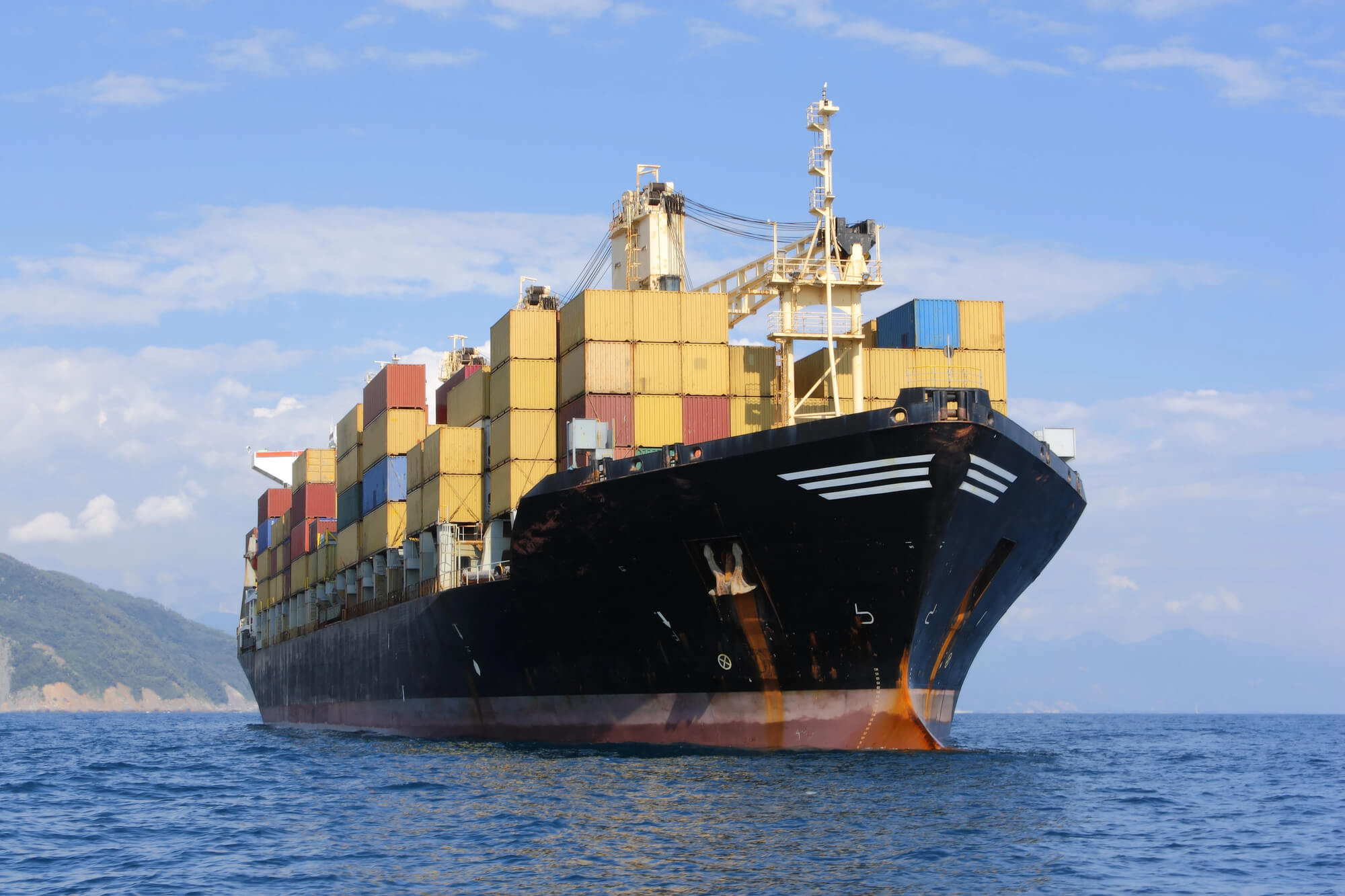
Iran now requires ships passing through the Strait of Hormuz to pay transit fees in crypto stablecoins and Chinese yuan. The Iran Hormuz crypto toll amounts to roughly 1 USD per barrel of cargo. As a result, a fully loaded supertanker carrying 2 million barrels faces a toll of up to 2 million USD per passage.
Hamid Hosseini, spokesperson for Iran's Association of Petroleum, Gas and Petrochemical Exporters, confirmed the system to the Financial Times. An intermediary company linked to the Islamic Revolutionary Guard Corps (IRGC) manages the entire process. Empty vessels pay nothing.
How the Iran Hormuz crypto toll system works
Before transit, ship captains must submit extensive data. This includes the owner, flag, cargo manifest, destination port, crew details and AIS position data. After payment is received, they get a one-time passcode. The IRGC then transmits this code via VHF radio at the checkpoint between the islands of Qeshm and Larak. Subsequently, it escorts the vessel through the strait into the Gulf of Oman.
The choice of payment methods stands out. Although numerous media reports refer to "Bitcoin payments," the operational details tell a different story. In practice, Iran favors stablecoins and yuan. Stablecoins eliminate price volatility between invoicing and settlement, yet remain nominally pegged to the dollar. Yuan, by contrast, bypasses the SWIFT clearing system entirely. As a result, both options make the correspondent banking system obsolete.
Iran's parliamentary National Security Committee passed a "Strait of Hormuz Administration Plan" on March 31. The document formally names the Iranian rial as the currency. However, the system runs on crypto and yuan in practice. Furthermore, the plan still requires full parliamentary approval and review by the Guardian Council.
Ceasefire and geopolitical context
On April 7, the United States and Iran agreed to a two-week ceasefire. Consequently, Trump suspended planned strikes on Iranian infrastructure. In return, Iran must open the Strait of Hormuz "fully, immediately and safely." Pakistan brokered the deal through Prime Minister Shehbaz Sharif and Field Marshal Asim Munir.
Iran's Foreign Minister Abbas Araghchi accepted the terms. He guaranteed safe passage for two weeks, provided the attacks on the country cease. Peace talks are scheduled for Friday in Islamabad, likely led by Vice President Vance. However, Israel's government accepted the ceasefire only partially. It does not cover fighting between Israel and Hezbollah.
One aspect receives little attention in media coverage. Iran's 10-point plan includes demands that go far beyond opening Hormuz. For example, these include full sanctions removal, US reparations and long-term Iranian control over the strait. Whether Trump will agree to these terms remains unclear.



Congestion in the Persian Gulf and market reaction
The system currently processes around six ships per day. Moreover, over 320 tankers and gas carriers are stuck in the Persian Gulf. In addition, nearly 2,000 commercial vessels remain stranded. Between 15 and 18 ships have already used the toll system in recent weeks.
Pakistan received transit permits for 20 ships and resold 14 surplus slots. Meanwhile, China secured agreements for at least three vessels. Maersk, by contrast, is waiting for clarity on the exact terms. Hosseini warned that ships ignoring the system face "warnings through military strikes."
Markets responded immediately to the ceasefire. WTI dropped more than 13 percent to around 96 USD per barrel. At the same time, the Dow Jones gained over 1,000 points. Bitcoin lost roughly 12 percent since late February. Gold, however, held its position as the preferred war hedge. The numbers speak clearly: in geopolitical escalations with real-economy consequences, Bitcoin loses to gold. Liquidity constraints and risk aversion outweigh the digital store-of-value narrative.
Iran's crypto infrastructure as a sanctions tool
The Hormuz toll system is not an experiment. Iran has systematically built crypto infrastructure to circumvent Western sanctions for years. For example, the country legalized Bitcoin mining in 2019. Today, it holds approximately 4 percent of global mining capacity. An estimated 95 percent of all active mining devices operate illegally. Around 427,000 units run on electricity costs of 0.01 to 0.05 USD per kilowatt hour.
Iran's on-chain activity rose from 3.17 billion USD in 2023 to 7.4 billion in 2024. By 2025, the figure reached nearly 7.8 billion USD. In Q4 2025, more than half of all value received by Iranian actors flowed to IRGC-linked addresses. Furthermore, in January 2026, Iran's Defense Ministry updated its export platform to accept stablecoin payments for drone, missile and arms exports.
Approximately 20.9 million barrels of oil pass through the Strait of Hormuz daily. This represents about 20 percent of global oil consumption and 34 percent of worldwide seaborne crude trade. In addition, roughly 20 percent of global LNG trade transits the strait. Only Saudi Arabia and the UAE have alternative pipelines with a capacity of 3.5 to 5.5 million barrels per day. For LNG, however, no operational bypass routes exist. Through this toll system, Iran controls access to one of the world's most critical trade arteries. And it collects payment in crypto.