Celsion Bank AG, headquartered in Vaduz, has commenced operations. The institution holds a Liechtenstein banking license and a MiCAR authorization, which grants access to the entire EEA market.
As a result, Celsion Bank positions itself as a fully licensed bank focused on digital assets. Its target clients include corporates, asset managers, and foundations with digital asset exposure across the EU, the EEA, and Switzerland.
Banking license and MiCAR authorization from Liechtenstein
The FMA Liechtenstein granted the banking license in autumn 2025. Subsequently, the registration in the official banking register followed on February 18, 2026. One month later, on March 13, 2026, Celsion Bank received its MiCAR authorization pursuant to Art. 60(1) of EU Regulation 2023/1114. Specifically, the authorization covers custody and administration of crypto assets, exchange against fiat currencies or other crypto assets, and transfer services.
This MiCAR authorization is the strategic core of the venture. It enables passporting rights across all 30 EEA states without requiring a separate license per country. Moreover, MiCAR has been fully applicable in Liechtenstein since June 24, 2025, after the implementing legislation entered into force on February 1, 2025.
Beyond pure custody, the bank offers digital asset custody with legally segregated client accounts. Around-the-clock trading with institutional-grade order execution is also available. In addition, staking on proof-of-stake assets within a regulated framework is part of the offering. Multi-currency accounts in CHF, EUR, and USD with individual IBANs round out the current services. Furthermore, derivatives, structured products, and capital-efficient settlement are planned.
Choosing Vaduz over Zurich
Celsion Bank has a notable backstory. Originally, the project operated under the name Crypto Helvetica with offices on Zurich's Fraumünsterstrasse. After roughly two years of development, the website went live as Celsion Finance AG in June 2024. With the banking registration, the renaming to Celsion Bank AG followed.
Choosing Liechtenstein as headquarters was a deliberate decision. The reason is simple: EU market access. As an EEA member, Liechtenstein provides full access to the EU single market. For a bank with international scaling ambitions, this represents a concrete advantage over Switzerland, which lies outside the EEA. Furthermore, Liechtenstein established a comprehensive legal framework for the token economy as early as 2020 with the TVTG, the so-called Blockchain Act.
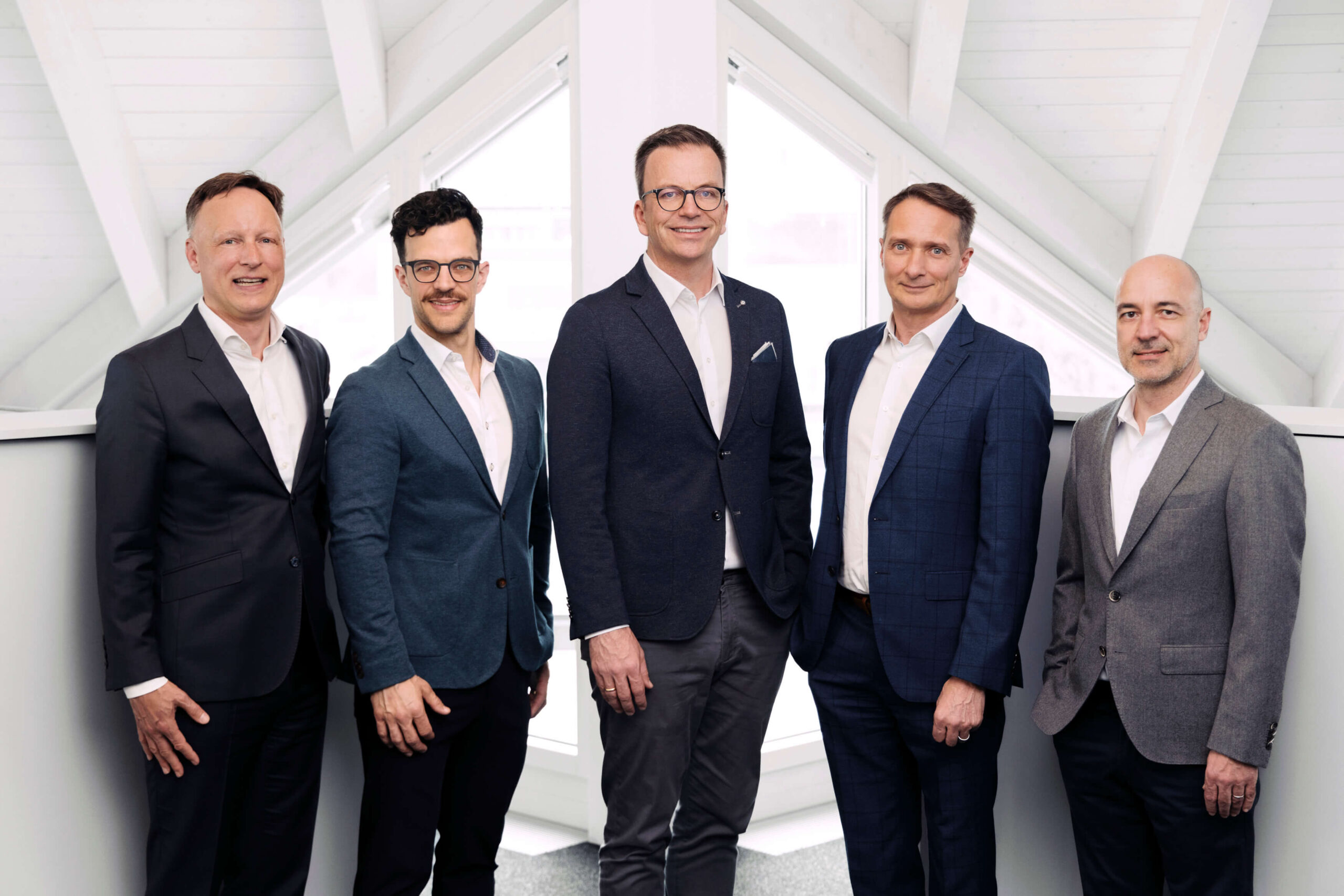
Celsion Bank uses Finnova as its core banking system. CEO Dr. Markus Federspiel aims to position the institution as a bridge between traditional banking and digital assets. Lee Weiss chairs the board of directors. CTO Thomas Müller comes from the predecessor project Crypto Helvetica.


Competitive landscape: Swiss crypto banks as benchmark
Celsion Bank enters a market where established players have already built significant client assets. Sygnum Bank in Zurich manages approximately CHF 4.5 billion and reached unicorn status in 2025. Meanwhile, AMINA Bank (formerly SEBA) in Zug holds roughly CHF 3.5 billion in client assets. Both institutions have held FINMA licenses since 2019 and are now profitable.
Notably, Sygnum is also pursuing a MiCAR strategy through Liechtenstein. EEA access is therefore becoming the strategic standard for crypto banks with European ambitions. In Switzerland, around 20 crypto banks are currently active, of which 17 offer custody services and 16 provide trading services.
However, Celsion Bank does not only compete with crypto-native institutions. In Liechtenstein itself, Bank Frick, founded in 1998, already offers institutional digital asset services. At the same time, traditional banks are pushing into the market. By early 2026, EU authorities had issued more than 200 MiCAR licenses. Consequently, barriers to entry are declining.
MiCAR as gateway to the EU market
The European MiCAR regulation has been fully applicable across the entire EU since December 30, 2024. It thus creates the first unified regulatory framework for crypto assets across all member states. For Liechtenstein as an EEA state, the same rules apply.
Crypto service providers in Liechtenstein previously registered under the TVTG have until July 1, 2026, to obtain MiCAR authorization. Celsion Bank, by contrast, launched directly under the new regulation and thereby bypasses the transition period. For institutional clients, this means regulatory clarity from day one.
In practice, Celsion Bank bundles traditional banking services, including payments, FX, and treasury, with digital asset services under one roof. This eliminates the need for clients to coordinate between multiple providers. Whether this model will prevail in an increasingly competitive environment depends on the speed of client acquisition. The benchmark is clear: Sygnum and AMINA required roughly five years to reach profitability.