
Close Menu
Crypto Valley Journal
    Facebook X (Twitter) Instagram
    Crypto Valley Journal
    • Hot Topics
      • News
      • Minds
    • Focus
      • Background
      • Blockchain
      • Legal & Compliance
      • Non-Fungible Token (NFTs)
    • Investing
      • Markets
      • Financial Products
      • Decentralized Finance (DeFi)
      • Exchange overview
    • Education
      • Basics
      • Glossary
      • Politicians on crypto
    • Statistics
      • Bitcoin-ETF-Flows
      • Ethereum-ETF-Flows
      • Crypto market data
      • On-chain data
    • Academy
      • Overview
      • Part 1: Blockchain
      • Part 2: Money
      • Part 3: Bitcoin
      • Part 4: Cryptocurrencies
      • Part 5: Decentralized Finance
      • Part 6: Investing
    • English
      • Deutsch
    Crypto Valley Journal
    You are at:Home » Hot Topics » News » Central Bank Digital Currency (CBDC) with Privacy
    Central Bank Digital Currency (CBDC) with Privacy
    Businessman on blurred background using digital padlock with data protection 3D rendering

    Central Bank Digital Currency (CBDC) with Privacy

    By Editorial Office CVJ.CH on 25. February 2021 News

    A working paper of the Swiss National Bank (SNB) proposes a privacy-friendly token-based payment system. The retail CBDC is not based on the distributed ledger technology (DLT) and meets regulatory requirements in a convincing manner.

    With the emergence of cryptocurrencies and various stablecoins, central banks face an important decision. The options are to either leave the field to private players, or to offer their own digital alternative to physical cash. The SNB's published working paper shows how a central bank could improve the cash payment system. The authors indicate that the system would not significantly affect monetary policy, nor financial stability. The proposed retail CBDC would also replicate physical cash, not bank deposits.

    The use of tokens to cryptographically sign electronic contracts would also enable the use of smart contracts. This, too, could lead to the emergence of entirely new applications for payment systems. Although the system is not based on DLT, it could be easily integrated if required by financial market infrastructures in the future.

    The Taler Project

    Taler stands for "Taxable Anonymous Libre Electronic Reserves," and unlike the existing online currency Bitcoin, for example, it is intended to consume less energy. In addition, the GNU Taler would be pegged one-to-one to currencies such as the Swiss Franc, and effectively protect users' private data using cryptography.
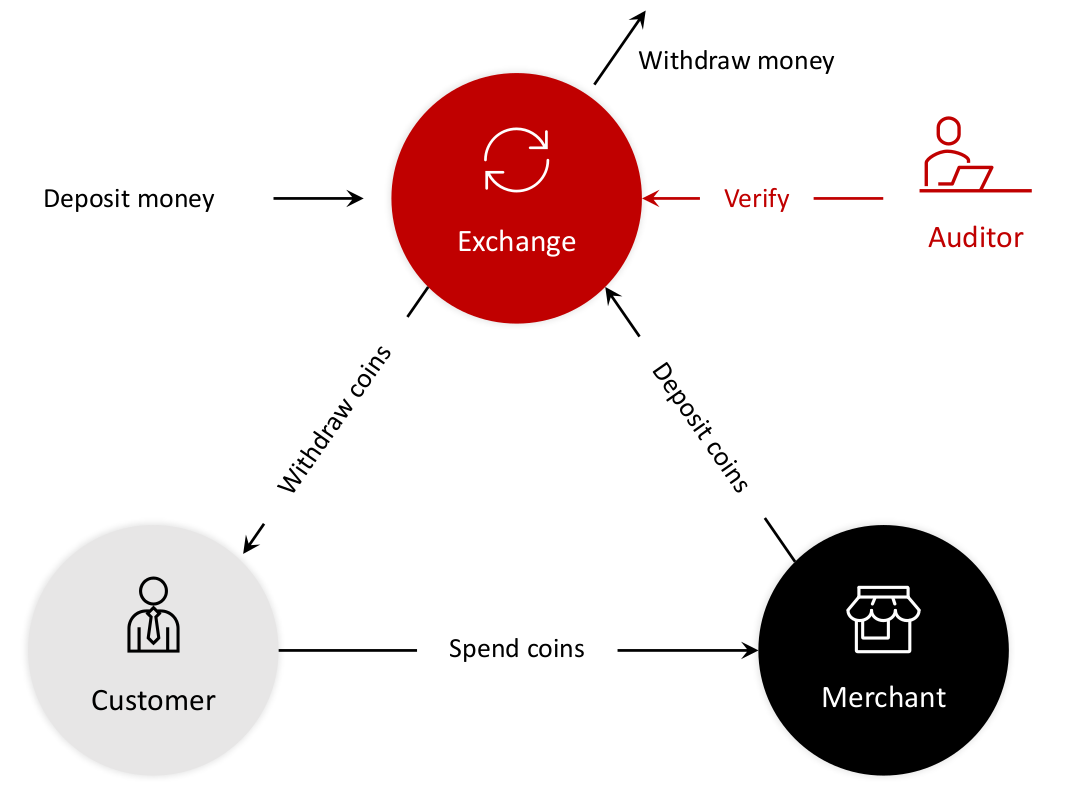
    GNU Taler

    The privacy-friendly alternative in the working paper is based on the open-source Taler project. GNU Taler keeps the identity of buyers secret from sellers, as well as exchange operators. Buyers receive legal proof of their payments. Sellers, on the other hand, are required to disclose to the authorities what was sold. This is intended to systematically prevent tax evasion and money laundering. As with cash payments, no one finds out who paid with Taler.

    "The protection of private data (such as purchase history, personal bank details and the payments themselves) is to be guaranteed by technical measures, which can also be checked and assessed at any time from the first to the last code line. Mere declarations of intent, or fine-sounding voluntary commitments would fall short. Taler solves the tasks set by its well thought-out concept and the design of its system components. The resulting possibilities should help people in the digital society to achieve new freedoms."

    The project seeks to combine the advantages of cash (trust and anonymity) with the advantages of electronic communication (low cost, online and secure). What makes the GNU Taler special is the involvement of the Bern University of Applied Sciences (BHF). The payment system is hosted at the BFH Biel. This means that the servers and computers with the most important data for the project are located at the BFH.

    The payment system was introduced at the Bern University of Applied Sciences in 2020 in the presence of a representative of the Swiss National Bank. At that time, Thomas Moser, Representative Member of the SNB Governing Board, stated: "The SNB is not planning an e-Franc/CBDC, but a system based on the technology of Taler is quite convincing."


    Share. Facebook Twitter LinkedIn Email Telegram WhatsApp

    About the author

    Editorial Office CVJ.CH
    • Website
    • Twitter
    • LinkedIn

    Since 2018, the editorial team at Crypto Valley Journal has been reporting from Zug - the heart of Switzerland’s Crypto Valley - on Bitcoin, cryptocurrency, blockchain, and regulatory developments in digital assets. Behind the publication’s collective editorial voice is a team of writers with backgrounds in financial markets, law, and technology.

    Related Articles

    US gaming associations want to ban sports prediction markets in the crypto bill Clarity Act. The CFTC is steering against this with its proposed rule.

    Clarity Act: Gaming associations demand ban on sports prediction markets

    Ripple enters Africa: the firm takes a stake in Flutterwave's Series E and embeds the RLUSD stablecoin across 34 African countries."

    Ripple invests in Flutterwave for stablecoin payments in Africa

    The SPCX perp on Hyperliquid generated USD 1.4 billion in volume on SpaceX IPO day and became the largest HIP-3 market ever recorded.

    SpaceX IPO drives USD 1.4 billion in trading volume on Hyperliquid

    US gaming associations want to ban sports prediction markets in the crypto bill Clarity Act. The CFTC is steering against this with its proposed rule.
    17. June 2026

    Clarity Act: Gaming associations demand ban on sports prediction markets

    Greece's HCMC plans to reject Binance's MiCA licence. Without approval by 1 July 2026, the crypto exchange faces exclusion from the EU market.
    16. June 2026

    Binance ban in the EU: Greece set to deny MiCA licence

    Ripple enters Africa: the firm takes a stake in Flutterwave's Series E and embeds the RLUSD stablecoin across 34 African countries."
    16. June 2026

    Ripple invests in Flutterwave for stablecoin payments in Africa

    twitter image button instagram image button linkedin image button youtube image button

    About Crypto Valley Journal
    About Crypto Valley Journal

    On the pulse of the movement

    • Academy
    • Contact
    • Advertising
    • About us
    • Partner
    • Imprint
    • Privacy
    • Disclaimer
    Search

    Type above and press Enter to search. Press Esc to cancel.