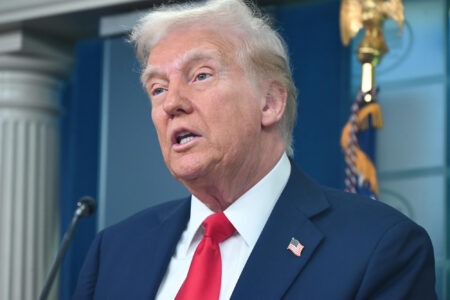
The regulatory landscape in the United States is complex. While a comprehensive framework is slowly but surely being developed, enforcement continues to rest with various agencies. Gary Gensler, Chairman of the SEC, calls for jurisdiction over most of the crypto industry.
Since the U.S. President's executive order in March 2022, crypto industry regulation has been consistently creeping up the priority list. The forthcoming framework builds on existing authorities and aims to prioritize consumer protection. At the forefront is the U.S. Securities and Exchange Commission (SEC), which, under the leadership of ex-Goldman Sachs investment banker Gary Gensler, seeks to usurp decision-making authority over the majority of regulations governing the issuance and trading of cryptocurrencies.
Jurisdiction over all Ethereum-based tokens
Hidden in a civil lawsuit against crypto-influencer Ian Balina, the U.S. Securities and Exchange Commission is looking deep. Gary Gensler feels responsible for regulating the entire decentralized network because all transactions took place in the US. Buried under paragraph 69 of the 23-page indictment against the Influencer, it lists the validation of the Ethereum blockchain and claims that due to the high node density in the United States, the transactions were virtually conducted on U.S. ground.
"The U.S.-based investors in Balina's pool irrevocably committed to the transaction when they sent their ETH contributions to Balina's pool from the United States. At that point, their ETH contributions were validated by a network of nodes on the Ethereum blockchain that are more densely concentrated in the United States than in any other country. As a result, these transactions took place in the United States." - SEC Civil Complaint
In this bold and unprecedented move, the U.S. Securities and Exchange Commission argues that essentially the entire Ethereum network falls under the agency's jurisdiction. An absurd position - not to mention the fact that less than a third of all nodes were located in the US at the time. It is generally known that Gensler wants to secure control over the entire crypto sector by various means.
Dispute among US regulators
The question of whether digital assets should be considered securities is at the center of the discussion here. After all, securities fall under the scope of the SEC, and commodities trading is overseen by the Commodity Futures Trading Commission (CFTC). For his part, using the Howey test introduced in 1933, Gensler argues that "pretty much all" cryptocurrencies should be classified as securities. This contrasts with the position of the CFTC, which also feels it has jurisdiction over the field.
This battle was fueled in late 2020 when the SEC charged Ripple Labs - the issuer of the cryptocurrency XRP - for selling unregistered securities. However, the fact that the lawsuit is still unresolved today shows the complexity of the matter. An acquittal of the Ripple board would be a setback for Gensler's regulator.
Ether also a security?
The only exception from Gensler's point of view is Bitcoin - also recognized by him as a "commodity" due to sufficient decentralization. The second largest cryptocurrency by market capitalization, Ether (ETH), on the other hand, could also turn out to be an unregistered security. Following the blockchain's successful move to Proof of Stake (also known as Merge), the SEC chairman expressed new concerns. Indeed, the fact that users can now earn a return through staking potentially turns Ether into an investment contract, he said.
The situation is similar in the decentralized financial applications (DeFi) space. More than 100 Ethereum-based tokens were removed from the user interface of trading protocol Uniswap last July because the cryptocurrencies could embody securities. The same issue sparked a dispute between Coinbase and the regulator a few months ago when the largest U.S. crypto exchange was accused of listing securities. Without clear guidance from the SEC, this is unlikely to be the last dispute over the issue.