
Chainlink Labs has announced the launch of its Cross-Chain Interoperability Protocol (CCIP), which aims to bridge the gap between traditional financial institutions and both public and private blockchains, enabling seamless data and value transfer.
Kemal El Moujahid, Chief Product Officer of Chainlink Labs, the development company behind the Chainlink protocol and its native LINK token, shared in a blog post that the CCIP has been introduced as part of the Early Access program. As of today, developers are able to access CCIP on their respective testnets. The protocol will be launched on multiple platforms, including Ethereum, Avalanche, Polygon, Arbitrum, and Optimism.
Chainlink connecting blockchains
The Web3 ecosystem has evolved into a multi-chain system with the rise of Layer-1 blockchains and Layer-2 scaling solutions. However, these isolated networks face the oracle problem, lacking native communication with traditional systems or other blockchains. This challenge underscores the need for blockchain interoperability protocols.
Chainlink is a vital component of the blockchain ecosystem, providing a reliable solution to the oracle problem and enabling wider adoption and benefits of smart contracts. Chainlink offers businesses a universal gateway to all blockchains and has facilitated trillions of dollars in transactions across various industries.
Interoperability protocols are essential for the Web3 ecosystem and traditional systems interacting with different blockchains. They simplify cross-network interactions and promote the growth of the multi-chain ecosystem by establishing the foundation for blockchain abstraction layers. Central bank digital currencies (CBDCs) are likely to be connected to old and new systems through an interoperability protocol as well.
Chainlink Cross-Chain Interoperability Protocol as a universal settlement layer
The CCIP aims to solve the problem of interoperability between different blockchains, which currently hinders the innovation and mass adoption of Web3. CCIP is powered by Chainlink's decentralized oracle networks and offers additional security mechanisms such as customizable transfer limits and a separate network for active risk management (ARM).
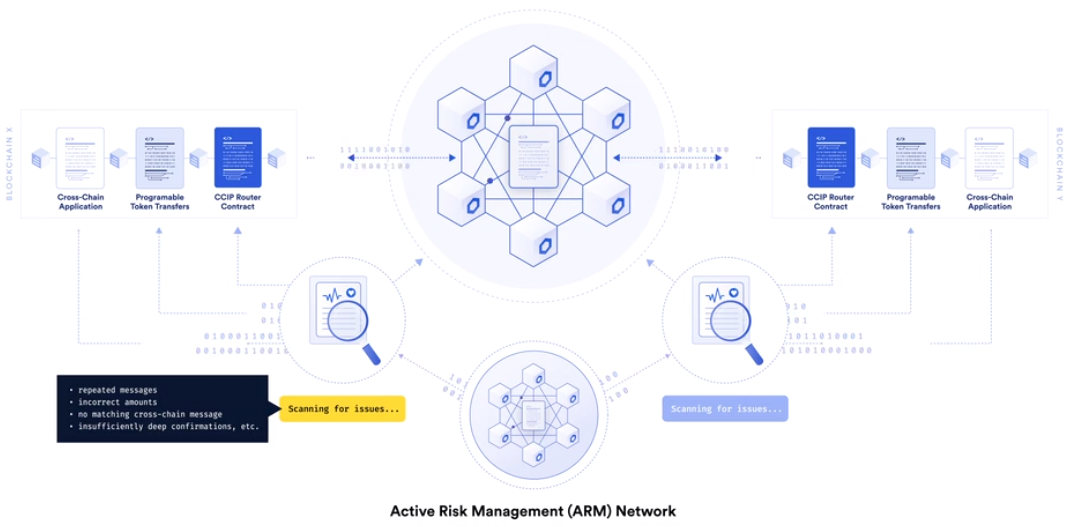
Developers and businesses can leverage CCIP to unlock a variety of use cases, including the transfer of tokenized assets and NFTs between blockchains, cross-chain collateral, gaming, and data storage.
Pioneering blockchain integration for financial institutions
CCIP is also intended to bridge the gap between the on-chain and off-chain worlds. SWIFT has already begun exploring the potential of CCIP in collaboration with over a dozen financial institutions and financial market infrastructure providers. Token transfers between public and private blockchains will be facilitated through the existing SWIFT messaging infrastructure.
In addition to SWIFT, the Swiss SIX Digital Exchange (SDX) and prominent participants such as the Australia and New Zealand Banking Group (ANZ), BNP Paribas, BNY Mellon, Citi, Clearstream, Euroclear, Lloyds Banking Group, and The Depository Trust and Clearing Corporation (DTCC) are involved in the joint efforts for blockchain interoperability. They highlight the growing interest in blockchain technology in the digital exchange space.
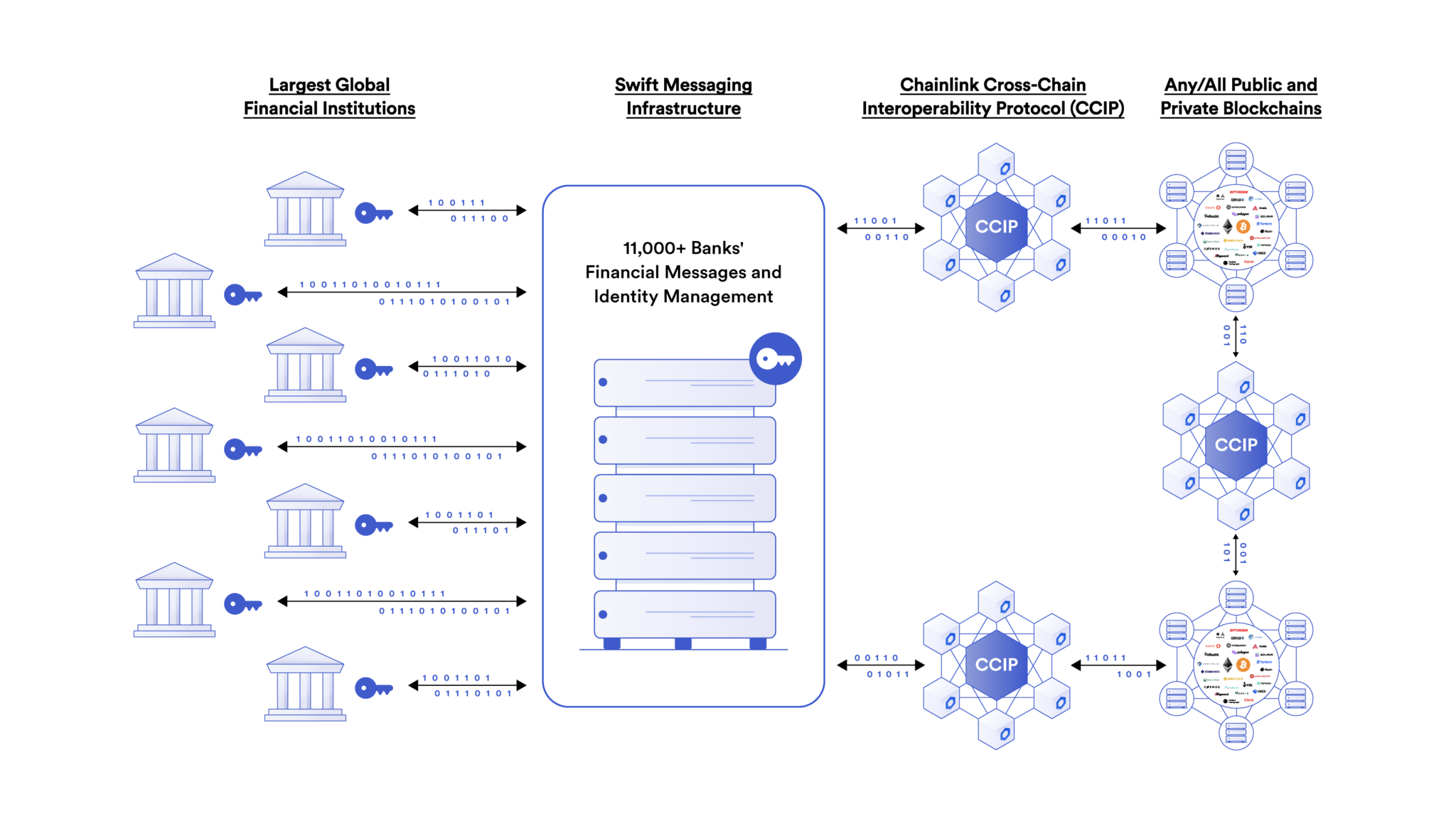
SWIFT's exploration of blockchain technology represents a significant development in the adoption of this technology by the financial industry. By focusing on interoperability, SWIFT aims to create a more efficient and cost-effective environment for settling tokenized assets. This initiative could have far-reaching implications for the financial industry and potentially lead to widespread adoption of blockchain technology.
SWIFT and Chainlink: Bridging traditional finance and blockchain
Sergey Nazarov, the co-founder of Chainlink, expressed optimism about the potential impact of these tests. If successful, they could pave the way for greater interconnectivity between banks and public blockchains, thereby strengthening the entire financial ecosystem. Nazarov believes that this could lead to a significant increase in the value flowing from banks into public trading chains, potentially increasing the global market capitalization of the industry by trillions.
Despite the ongoing regulatory challenges faced by leading cryptocurrency exchanges Binance and Coinbase, Nazarov remains optimistic about the future of blockchain integration in the financial sector. He believes that the value of connections to public blockchains will greatly increase as it becomes more acceptable for banks to participate in public markets.