Close Menu
Crypto Valley Journal
    Facebook X (Twitter) Instagram
    Crypto Valley Journal
    • Hot Topics
      • News
      • Minds
    • Focus
      • Background
      • Blockchain
      • Legal & Compliance
      • Non-Fungible Token (NFTs)
    • Investing
      • Markets
      • Financial Products
      • Decentralized Finance (DeFi)
      • Exchange overview
    • Education
      • Basics
      • Glossary
      • Politicians on crypto
    • Statistics
      • Bitcoin-ETF-Flows
      • Ethereum-ETF-Flows
      • Crypto market data
      • On-chain data
    • Academy
      • Overview
      • Part 1: Blockchain
      • Part 2: Money
      • Part 3: Bitcoin
      • Part 4: Cryptocurrencies
      • Part 5: Decentralized Finance
      • Part 6: Investing
    • English
      • Deutsch
    Crypto Valley Journal
    You are at:Home»Education»Basics»Google introduces Willow quantum chip: the risk for Bitcoin remains low
    Google introduces Willow quantum chip: the risk for Bitcoin remains low

    Google introduces Willow quantum chip: the risk for Bitcoin remains low

    By Editorial Office CVJ.CH on 12. December 2024 Basics

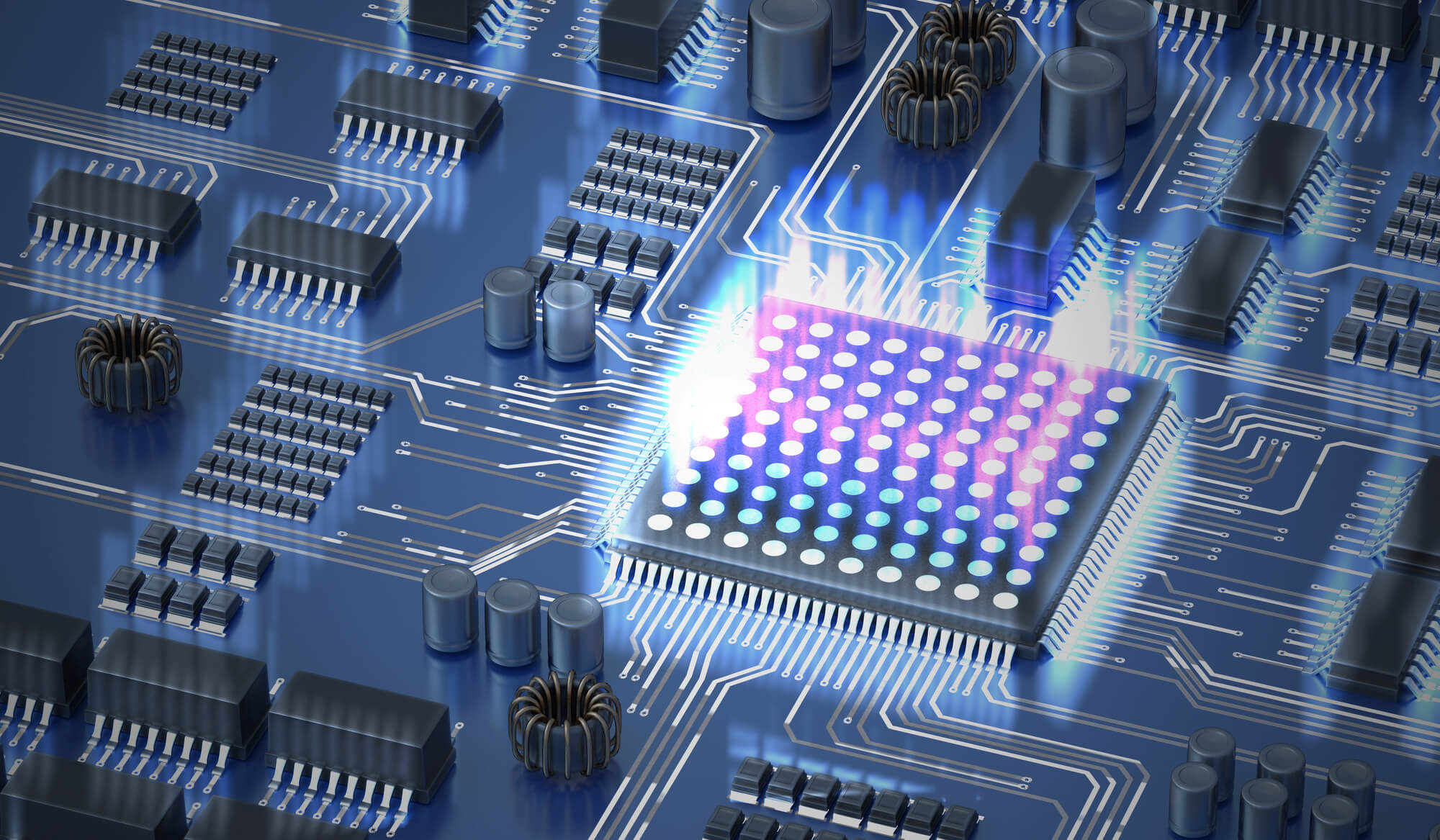
    The tech giant Google announced a breakthrough this week with the introduction of the "Willow" chip. The computing power of the quantum computer is exponentially stronger than that of a conventional supercomputer, raising questions about the security of Bitcoin and blockchain technology.

    Quantum computers perform complex calculations by utilizing the principles of quantum mechanics. This allows them to solve specific tasks like optimization, cryptography, and simulations much faster than classical computers. According to Google, their Willow chip can solve complex problems in less than five minutes, which would take a supercomputer approximately 10 quadrillion years to process. However, the threat to Bitcoin is smaller than some skeptics might assume.

    Subscribe to our newsletter

    The best articles of the week, directly delivered into your mailbox.

    Bitcoin wallets remain secure against quantum computers

    Bitcoin uses the cryptographic hash function SHA-256 to secure transactions and generate new blocks by solving complex mathematical puzzles. Many other systems, such as SSL certificates and secure data storage, also rely on this function for encryption. Quantum computers could potentially threaten the security of SHA-256 by breaking its underlying cryptographic algorithms, which would allow a quantum computer to crack the private key of an address. Satoshi Nakamoto's wallet, containing over one million Bitcoin (valued at $100 billion today), would be a prime target.

    On the one hand, today's quantum computers are nowhere near powerful enough to break Bitcoin's encryption. The processing power of this technology is measured in quantum bits ("qubits"). Estimates suggest that more than 13 million qubits would be needed to compromise Bitcoin wallets. By comparison, Google's Willow chip achieves fewer than 105 qubits. Moreover, Bitcoin could protect itself by transitioning its blockchain to quantum-resistant cryptographic algorithms, which researchers have already developed.

    The Threat to Bitcoin Mining

    Quantum computers could pose a threat to mining if they solve proof-of-work puzzles exponentially faster than traditional miners. This could lead to a 51% attack, where a single entity controls the majority of the mining power. In this scenario, the quantum computer could alter the network's rules and enrich itself.

    Although advanced quantum computers could theoretically solve these puzzles much faster than conventional machines, several factors mitigate this threat. First, quantum computing performance is expected to improve gradually over the years due to technical challenges in scaling the number of qubits and implementing robust error correction.

    When early quantum computers enter the market, their impact will be limited. Additionally, quantum computers today run for only a few seconds. Extending this runtime would require advanced error correction techniques and millions more qubits, which limits the immediate threat to Bitcoin until quantum-resistant mechanisms are deployed.


    Ray Dalio’s Bridgewater Associates Minds

    Star investor Ray Dalio considers Bitcoin inferior to gold

    Analysis by Bitget Research on Bitcoin quantum computing risks, ECDSA exposure, NIST post-quantum standards, and BIP-360 migration paths. Background

    Bitcoin quantum computing: What recent developments mean for network security

    JPMorgan warns: Recurring DeFi exploits and stagnant ETH-denominated TVL curb institutional engagement in the DeFi sector. DeFi

    JPMorgan: DeFi hacks and TVL losses weigh on institutional investors

    Basics

    Unit bias in crypto: Why cheap coins mislead investors

    Ray Dalio’s Bridgewater Associates Minds

    Star investor Ray Dalio considers Bitcoin inferior to gold

    Analysis by Bitget Research on Bitcoin quantum computing risks, ECDSA exposure, NIST post-quantum standards, and BIP-360 migration paths. Background

    Bitcoin quantum computing: What recent developments mean for network security

    Malicious actors have other targets

    Attackers in possession of a quantum computer would likely target systems with more immediate value before attacking SHA-256 blockchains like Bitcoin. A far easier target would be breaking RSA encryption, which is widely used for secure communication, banking, and government data. Those who store their wealth in banks instead of Bitcoin are at greater risk from quantum computers.

    Malicious actors might also exploit vulnerabilities in critical infrastructure or steal sensitive corporate information. These targets are far more valuable in terms of economic and strategic impact than Bitcoin.


    Share. Facebook Twitter LinkedIn Email Telegram WhatsApp

    About the author

    Editorial Office CVJ.CH

      The CVJ editorial staff consists of a team of Blockchain experts and informs daily and independently about the most exciting news.

      Related Articles

      Admiral Paparo confirmed to the US Senate: INDOPACOM operates an active Bitcoin node and is conducting operational tests to protect military networks.

      US military operates Bitcoin node in the Indo-Pacific

      Bitcoin fails again at the 80'000 USD mark, profit-taking weighs on ETH, SOL and XRP despite Strategy purchase and ceasefire.

      Bitcoin price climbs to 80’000 USD – profit-taking hits ETH, SOL and XRP

      Satzlänge: 32.7% der Sätze enthält mehr als 20 Wörter, was mehr als das empfohlene Maximum von 25% ist. Du solltest versuchen, die Sätze zu kürzen. Bindewörter: Keiner der Sätze beinhaltet Bindewörter. Verwende welche. Gute Ergebnisse (5) Passiv: Du verwendest nicht zu viel Passiv. Das ist großartig! Abgeschlossene Sätze: Es gibt keine sich wiederholenden Satzanfänge. Das ist großartig! Verwendung von Zwischenüberschriften: Gut gemacht! Absatzlänge: Es gibt keine Absätze, die zu lang sind. Gut gemacht! Wortkomplexität: Du nutzt nicht zu viele komplexe Worte, was deinen Text leicht zu lesen macht. Gute Arbeit!

      New documentary seeks to unveil the mystery behind Satoshi Nakamoto

      Canada announces national crypto ATM ban. Roughly 4,000 machines are affected as Ottawa targets fraud and money laundering.
      29. April 2026

      Canada bans crypto ATMs

      OKX, BlackRock and Standard Chartered launch a joint framework that makes tokenized RWAs usable as margin collateral under G-SIB custody.
      29. April 2026

      OKX, BlackRock and Standard Chartered use tokenized treasuries as collateral

      Hoskinson calls support of the CLARITY Act by Garlinghouse and the XRP community insanity and accuses Ripple of harming the industry.
      28. April 2026

      XRP vs. Cardano: Hoskinson calls CLARITY Act support “insanity”

      twitter image button instagram image button linkedin image button youtube image button

      About Crypto Valley Journal
      About Crypto Valley Journal

      On the pulse of the movement

      • Academy
      • Contact
      • Advertising
      • About us
      • Partner
      • Imprint
      • Privacy
      • Disclaimer
      Search

      Type above and press Enter to search. Press Esc to cancel.