Close Menu
Crypto Valley Journal
    Facebook X (Twitter) Instagram
    Crypto Valley Journal
    • Hot Topics
      • News
      • Minds
    • Focus
      • Background
      • Blockchain
      • Legal & Compliance
      • Non-Fungible Token (NFTs)
    • Investing
      • Markets
      • Financial Products
      • Decentralized Finance (DeFi)
      • Exchange overview
    • Education
      • Basics
      • Glossary
      • Politicians on crypto
    • Statistics
      • Bitcoin-ETF-Flows
      • Ethereum-ETF-Flows
      • Crypto market data
      • On-chain data
    • Academy
      • Overview
      • Part 1: Blockchain
      • Part 2: Money
      • Part 3: Bitcoin
      • Part 4: Cryptocurrencies
      • Part 5: Decentralized Finance
      • Part 6: Investing
    • English
      • Deutsch
    Crypto Valley Journal
    You are at:Home » Focus » Background » Bitcoin vaults: A promising new method to store your bitcoins
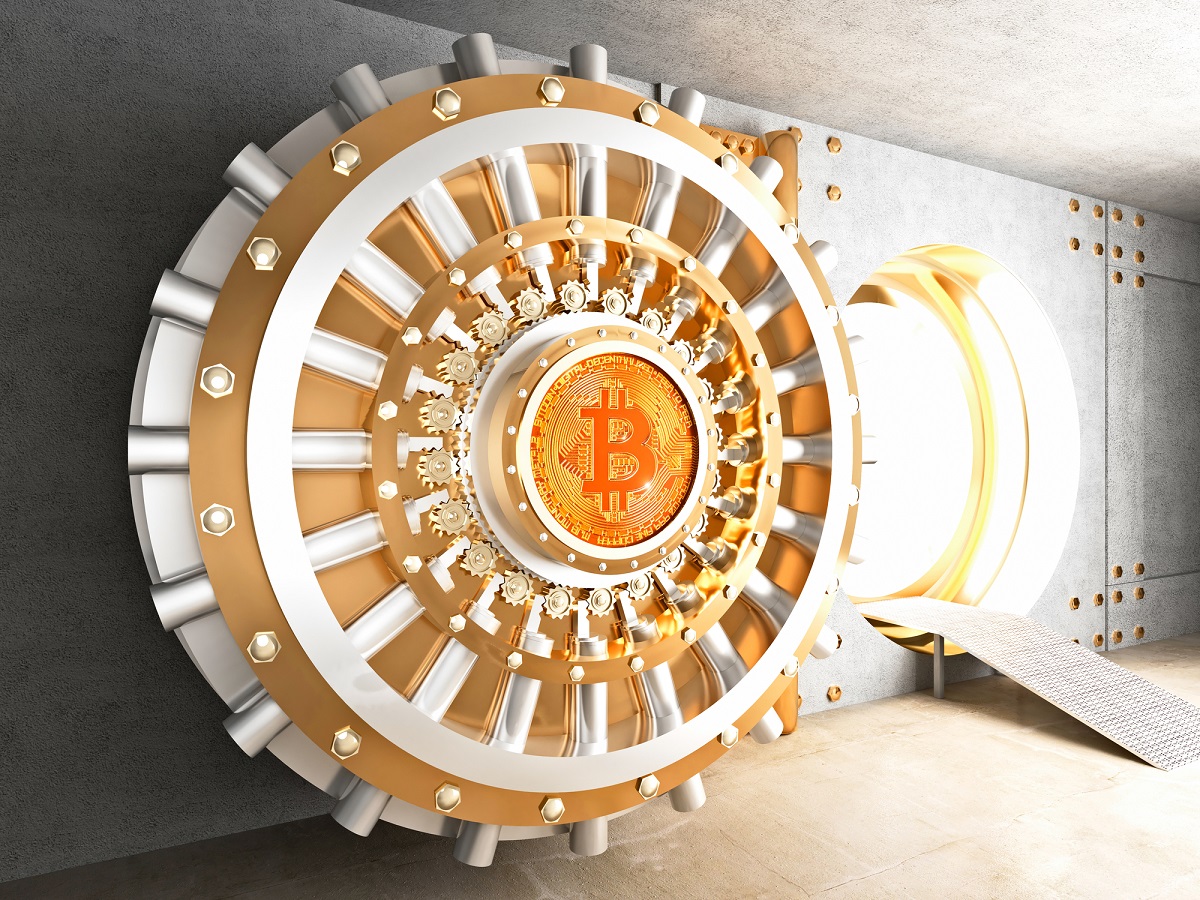
    bitcoin vault

    Bitcoin vaults: A promising new method to store your bitcoins

    By Editorial Office CVJ.CH on 17. April 2020 Background

    If your bank account was compromised during a hacker attack, your bank can “easily” refund the money you have lost. However, if your crypto wallet has been hacked and your bitcoins have been sent to the wrong address, your bitcoins are permanently lost.

    The reason for this is that most cryptocurrencies are not controlled by a central authority. As a result, there is a great need for secure custody solutions for bitcoins and other cryptocurrencies.

    One of the most common ways to protect your bitcoins from attackers is to sign transactions using hardware wallets, where the signing process takes place in an offline environment. Since the private key of hardware wallets does not come into contact with an online server during the signing process, hackers cannot access the private key. However, the process of transfer to and from an offline wallet (cold wallet) is more complex than the process with a conventional online wallet (hot wallet).

    Built-in time delay secures crypto-currencies

    In order to ensure a simpler yet safe storage method, the idea of a “bitcoin vault” was proposed in 2016. The basic idea is that bitcoins are stored with a code that ensures that bitcoins are issued in a limited time frame. The owner can pre-define a time delay for each attempt of transferring bitcoins. This built-in delay allows the actual owner of the bitcoins to have enough time to undo a transaction in case of an attack.

    With the recently launched prototype by bitcoin developer Bryan Bishop, users of bitcoin vaults can also divide their bitcoins into sections. This ensures that a limited number of bitcoins can be sent to specific addresses at a given interval. Moreover, the prototype is introducing the concept of so-called “watchtowers” that monitor the bitcoin vaults. Each time bitcoins are to be transferred, the watchtower will send a message to the owner. If the transfer is not authorized by the owner, the bitcoin vault user can activate a pre-signed transaction that would transfer the bitcoins to a secure cold wallet. This can prevent the bitcoins from being stolen during a hacking attempt.

    A win-win situation for all involved

    The big advantage of this idea is that the technology can be used free of charge by professional custody providers. As with all open source projects in this area, the entire industry ultimately benefits from such solutions. Bryan Bishop’s ultimate goal is therefore to make bitcoin vaults the standard for all cryptocurrencies. As mentioned earlier, Bishop’s open source project is a prototype. The implementation of watchowers etc. is yet to be conclusively defined. This still needs to be evaluated by developers. It will take some time before bitcoin vaults becomes the standard, but the project already looks very promising.


    Share. Facebook Twitter LinkedIn Email Telegram WhatsApp

    About the author

    Editorial Office CVJ.CH
    • Website
    • Twitter
    • LinkedIn

    Since 2018, the editorial team at Crypto Valley Journal has been reporting from Zug - the heart of Switzerland’s Crypto Valley - on Bitcoin, cryptocurrency, blockchain, and regulatory developments in digital assets. Behind the publication’s collective editorial voice is a team of writers with backgrounds in financial markets, law, and technology.

    Related Articles

    A Reuters analysis estimates the Trump family's crypto gains at $2.3 billion, while investors incurred book losses of the same amount.

    Trump family earns $2.3 billion from crypto projects

    IC3 researchers refute three central promises of the AI and blockchain market narrative in a 155-page survey on crypto and AI.

    The synergy between AI and blockchain is overstated

    JPMorgan urges Strategy to rebuild its dollar reserves after the first Bitcoin sale since 2022 and grades digital assets as cautious.

    JPMorgan: Strategy (MSTR) must build up dollar reserves

    A Reuters analysis estimates the Trump family's crypto gains at $2.3 billion, while investors incurred book losses of the same amount.
    9. June 2026

    Trump family earns $2.3 billion from crypto projects

    IC3 researchers refute three central promises of the AI and blockchain market narrative in a 155-page survey on crypto and AI.
    9. June 2026

    The synergy between AI and blockchain is overstated

    Visa, Mastercard, Stripe and Coinbase are planning a stablecoin consortium - a direct attack on Circle's USDC.
    9. June 2026

    Visa and Mastercard plan stablecoin consortium

    twitter image button instagram image button linkedin image button youtube image button

    About Crypto Valley Journal
    About Crypto Valley Journal

    On the pulse of the movement

    • Academy
    • Contact
    • Advertising
    • About us
    • Partner
    • Imprint
    • Privacy
    • Disclaimer
    Search

    Type above and press Enter to search. Press Esc to cancel.