Close Menu
Crypto Valley Journal
    Facebook X (Twitter) Instagram
    Crypto Valley Journal
    • Hot Topics
      • News
      • Minds
    • Focus
      • Background
      • Blockchain
      • Legal & Compliance
      • Non-Fungible Token (NFTs)
    • Investing
      • Markets
      • Financial Products
      • Decentralized Finance (DeFi)
      • Exchange overview
    • Education
      • Basics
      • Glossary
      • Politicians on crypto
    • Statistics
      • Bitcoin-ETF-Flows
      • Ethereum-ETF-Flows
      • Crypto market data
      • On-chain data
    • Academy
      • Overview
      • Part 1: Blockchain
      • Part 2: Money
      • Part 3: Bitcoin
      • Part 4: Cryptocurrencies
      • Part 5: Decentralized Finance
      • Part 6: Investing
    • English
      • Deutsch
    Crypto Valley Journal
    You are at:Home»Glossary»Hardware Wallet
    Hardware wallet comparison 2026: Ledger and Trezor with new flagships. Quantum readiness, data breaches and IP67 as purchasing criteria.

    Hardware Wallet

    By Editorial Office CVJ.CH on 3. April 2020 Glossary

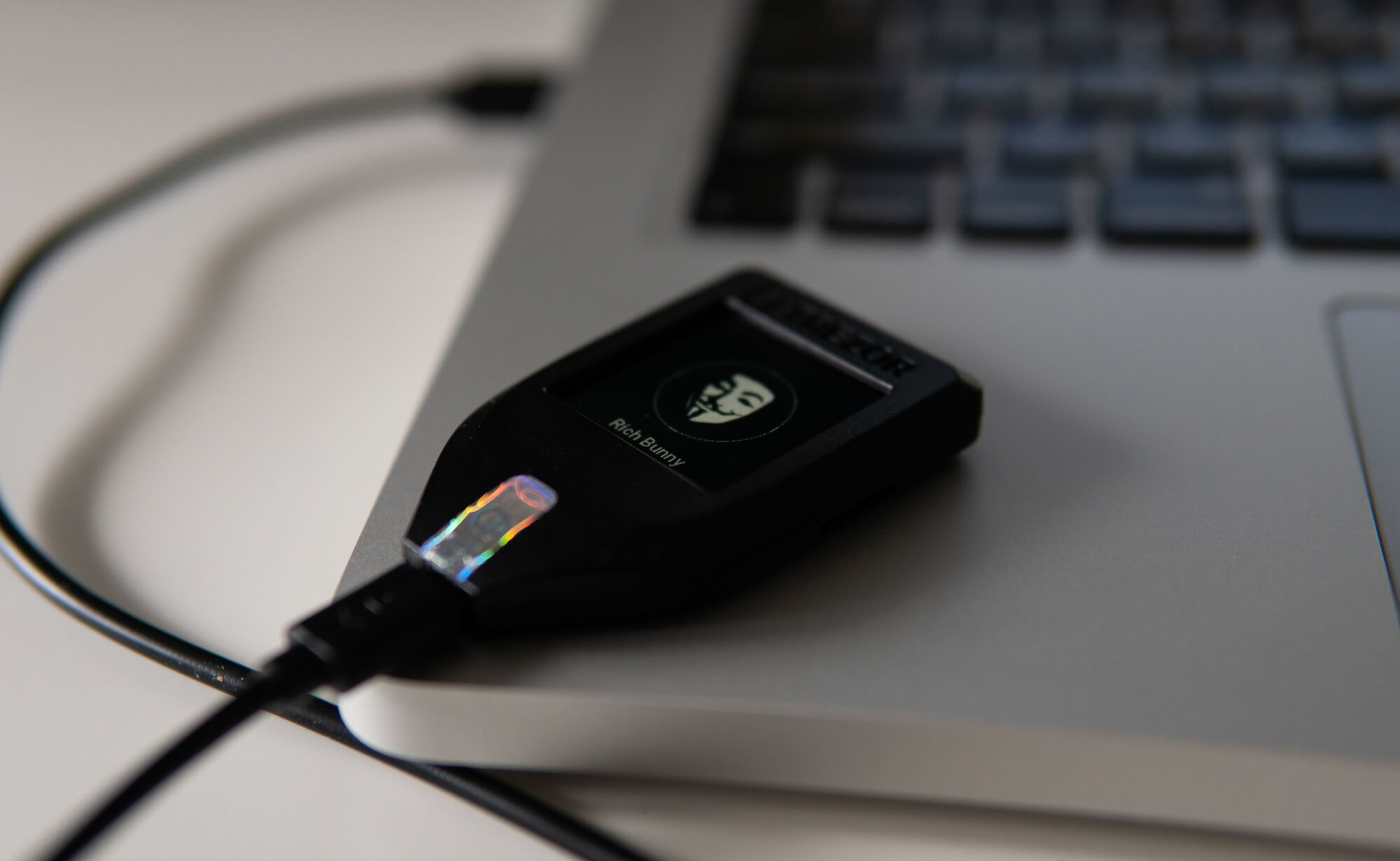
    A hardware wallet is a physical device that can store the private keys of crypto assets offline. In theory, this could be a simple USB flash drive, but this does not provide any additional functionality. Unlike software wallets, which are stored on your computer or smartphone, hardware wallets minimize the exposure of your private keys to the Internet and protect them from online attacks.

    Hardware wallets typically resemble a USB flash drive or small card and connect to your computer or mobile device via USB or Bluetooth. When you want to make a transaction, you connect your hardware wallet to your device and confirm the transaction on the hardware wallet's own screen.

    Benefits of Hardware Wallets

    1. Enhanced Security
      Hardware wallets offer superior security compared to software wallets that store private keys on internet-connected devices. By keeping your private keys offline, hardware wallets significantly reduce the risk of unauthorized access and theft.
    2. Cold Storage
      Hardware wallets effectively act as "cold storage" for your cryptocurrencies, meaning they are isolated from the online environment and less susceptible to cyber threats. This makes them particularly suitable for storing large amounts of cryptocurrency or for long-term investments.

    Well-known hardware wallets like Trezor, Ledger and Bitbox offer different web interfaces to online services. It should be noted that these devices do not support all crypto assets. More importantly, the seeds, or words for recovery in case of loss of the hardware wallet, must be stored securely. Hardware wallets offer the highest security standard for private users when used correctly.

    A word of caution

    Hardware wallets are an essential tool for cryptocurrency holders who value security and want to protect their assets from cyberattacks. By keeping your private keys offline and using a reputable hardware wallet, you can significantly increase the security of your cryptocurrency investments.

    Despite the increased security, it is still important not to let your guard down when using a hardware wallet. For instance Ledger’s library has suffered exploits in the past. The vulnerability allowed malicious code to be injected into the front-end of many Dapps, putting users and their assets at significant risk.

    Analysis by Bitget Research on Bitcoin quantum computing risks, ECDSA exposure, NIST post-quantum standards, and BIP-360 migration paths. Background
    17. April 2026

    Bitcoin quantum computing: What recent developments mean for network security

    Analysis by Bitget Research on Bitcoin quantum computing risks, ECDSA exposure, NIST post-quantum standards, and BIP-360 migration paths.

    XRPL validator analyzes quantum risk: only 0.03% of XRP supply is exposed, compared to up to 35% for Bitcoin. Google sets 2029 deadline. Background
    14. April 2026

    Quantum risk: Is XRP more secure than Bitcoin?

    XRPL validator analyzes quantum risk: only 0.03% of XRP supply is exposed, compared to up to 35% for Bitcoin. Google sets 2029 deadline.

    13. April 2026

    Power Shift in Crypto Exchanges: Retail Overtakes Institutional

    Entdecken Sie die Vorteile von Bitcoin im Portfolio als Werkzeug zur Renditesteigerung und zum Schutz vor Inflation.
    9. April 2026

    Bitcoin’s role within an institutional portfolio

    AI agent security risks grow as autonomous systems shift from analysis to execution in crypto markets, a Bitget and SlowMist report warns.
    8. April 2026

    New research highlights security risks as AI agents shift to execution

    6. April 2026

    Crypto Myths 2026: Four Costly Mistakes Investors Make

    $500 million in minutes: Pump.fun writes ICO history
    3. April 2026

    Have launchpads like Pump.fun destroyed the altcoin market?

    2. April 2026

    Unit bias in crypto: Why cheap coins mislead investors

    Popular Posts
    About Crypto Valley Journal
    About Crypto Valley Journal

    On the pulse of the movement

    • Academy
    • Contact
    • Advertising
    • About us
    • Partner
    • Imprint
    • Privacy
    • Disclaimer
    Search

    Type above and press Enter to search. Press Esc to cancel.