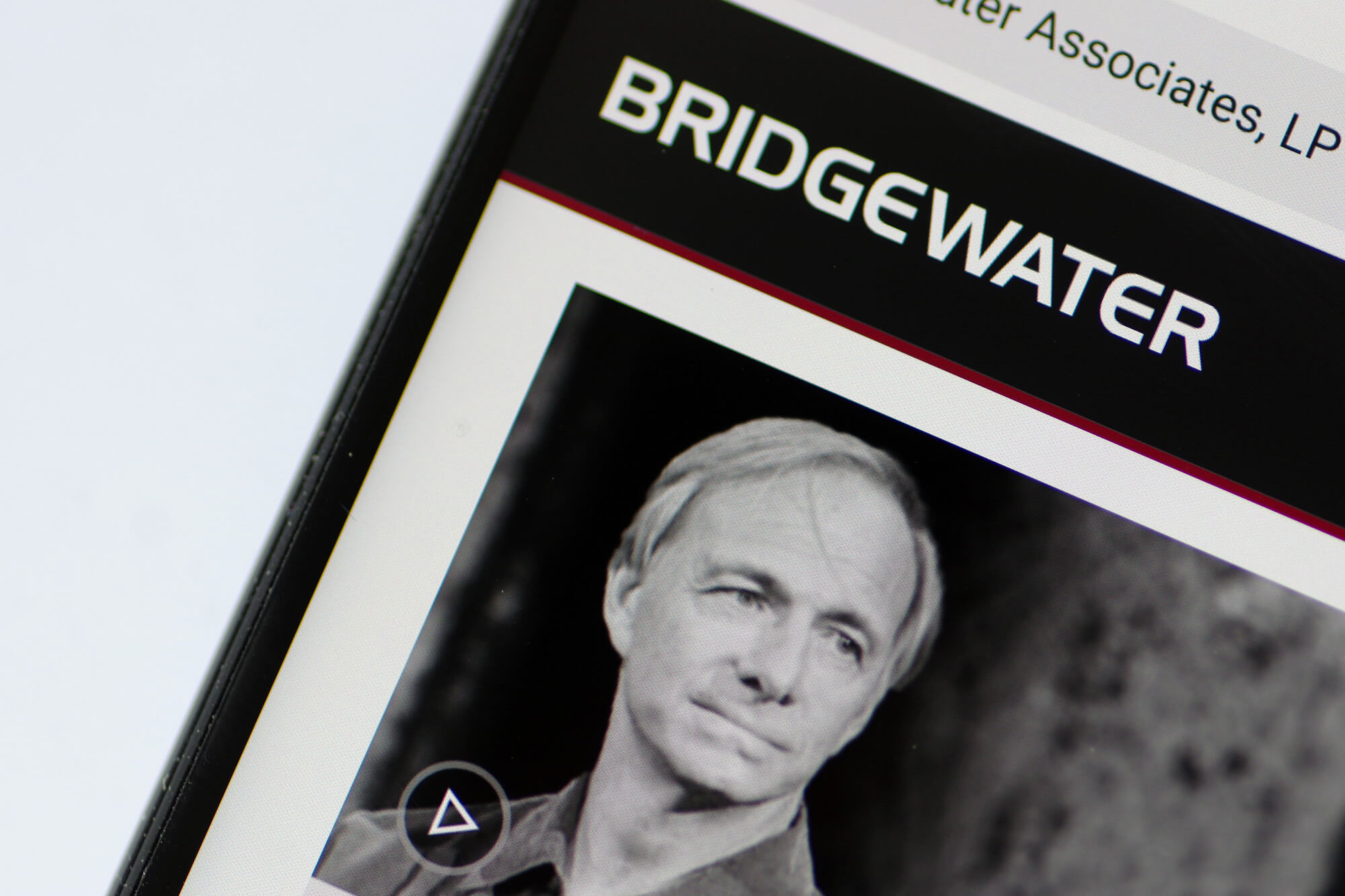
Star investor Ray Dalio advises investors to underweight bonds. Instead, he recommends 10 to 15% of the portfolio in gold plus a small Bitcoin share. Behind that sits his expectation of a US debt crisis, which he says becomes unavoidable in around three years.
Dalio founded Bridgewater Associates, one of the world's largest hedge funds. He is also known for his big cycle theses on sovereign debt and monetary orders. He has held his current position since the book "How Countries Go Broke: The Big Cycle". Since July 2025, he has repeated it in recurring public appearances. Yet the exact range varies: sometimes he names 5 to 15% gold, sometimes 15% for gold and Bitcoin combined. His new post comes days after US government debt crossed USD 40 trillion for the first time. Meanwhile, Bitcoin trades above USD 77,000 and gold sits near a multi-month high.
Dalio prescribes fewer bonds, more gold and Bitcoin
In a LinkedIn post, the investor first calls for cutting the weight of government bonds in a portfolio. As a counterweight, he recommends 10 to 15% gold and a small Bitcoin share. However, he names no exact allocation for Bitcoin. He counts gold and Bitcoin among the kind of money no government can create.
Underlying this is the core thesis of his book. Debt service costs rise faster than demand for new government bonds. Governments therefore have two paths. Either they accept higher interest rates, or the central bank buys the paper with newly created money. In Dalio's account, the second path consequently weakens the currency and drives inflation. Assets outside government control should hedge against exactly this erosion.
Dalio puts the time frame for the escalation at around three years. A precise date does not follow from that. After all, he has repeated the same warning for years in varying form. What is new is thus less the thesis than the moment it meets current budget figures. For a classic 60/40 portfolio of stocks and bonds, the advice means a shift in the defensive part. Anyone underweighting bonds needs a replacement for their role as a buffer. Dalio ultimately assigns that role to gold. Bitcoin remains a satellite position.
Record debt and record deficit behind the warning
US government debt crossed the mark of USD 40 trillion for the first time. In the first ten months of fiscal 2026, the budget deficit added up to USD 1.8 trillion. Overall, that already exceeds the figure for all of fiscal 2025. As a result, the Committee for a Responsible Federal Budget expects more than USD 2 trillion for the full year. In July alone, the federal government was short USD 432 billion.
Debt service in particular is getting more expensive. Secondary sources put net federal interest payments for 2026 at around USD 1.2 trillion. Of that sum, USD 91 billion came due in July. Dalio himself calculates roughly USD 1 trillion in his post. At the same time, the market demands more yield for long maturities. The yield on 30-year Treasuries hit a 19-year high in the same week. An auction of long-dated paper the week before cleared at 5.216%, the highest awarded yield since 2001. These numbers do not prove Dalio's time frame. Still, they show that debt levels and interest costs are rising together.
His entire argument ultimately rests on that combination. Foreign demand is not collapsing so far. According to TIC data, foreign investors held around USD 9.5 trillion in US government bonds as of February 2026. That is 6% more than a year earlier. Japan remains the largest foreign creditor with about USD 1.2 trillion. During the coordinated yen support in early August 2026, Tokyo nevertheless refrained from selling Treasuries. Instead, the central bank drew on a Fed repo facility and avoided additional pressure on the bond market. Dalio's thesis therefore targets less a buyers' strike than the price at which buyers still step in. He has phrased his conclusion in almost unchanged form since 2025 across varying appearances.
"It is impossible that these countries will not experience a debt crisis in the coming years that leads to a sharp loss of value [of money]." - Ray Dalio, founder of Bridgewater Associates




Bitcoin and gold rise at once, for different reasons
Bitcoin trades at USD 77,323, up 6.3% within 24 hours and 22.7% over seven days. In total, its market capitalization reaches around USD 1.552 trillion. At the start of the week, the price stood at about USD 62,800. That works out to a weekly gain of roughly 23%. Bitcoin last posted a better week in 2023. From the record high of USD 126,080 in October 2025, the price still sits about 39% lower. Gold has climbed as well and costs between USD 4,577 and USD 4,634 per troy ounce. As a result, the metal stands at a multi-month high.
The rally began for a different reason. Two days before Dalio's post, Treasury Secretary Scott Bessent announced he would at least double buybacks of long-dated government bonds. The change covers maturities of 10 to 30 years. There, the maximum volume per issue rises from USD 2 billion to at least USD 4 billion. On the same day, President Donald Trump also met representatives of the crypto industry. Together, both events triggered a short squeeze dynamic. The secretary later signaled that more was possible. He named no upper limit.
On bond markets, the announcement worked immediately. The yield on 10-year Treasuries fell 5.7 basis points to 4.647%, the 30-year yield by 9 basis points to 5.196%. Buybacks support liquidity at the long end and push yields down. Moreover, falling yields take away part of the disadvantage of non-yielding assets such as gold and Bitcoin. Dalio's post thus met a market that was already running. As a standalone price driver, it does not qualify. For the institutional debate about hedging, it still offers a reference point.
Why Dalio himself holds barely any Bitcoin
The gap between recommendation and his own portfolio stands out. Bitcoin makes up around 1% of his personal portfolio, according to Dalio. He confirmed that figure in a podcast appearance in late July 2026. During that appearance, he pointed to physical gold bars as his preferred hedge. Originally, back in July 2025, he named a combined allocation of 15% for gold and Bitcoin. That allocation has varied since then, although the direction stays the same.
He set out his reservations about Bitcoin in May 2026 on X. In his account, the cryptocurrency has not fulfilled its expected role as a safe haven. It lacks privacy, he argues, and the price furthermore correlates strongly with tech stocks. Compared with the gold market, he says, Bitcoin is small. Several reports name two further objections. Bitcoin lacks backing by central banks, and future quantum computer attacks could threaten its cryptography. Public filings do not reveal how Bridgewater itself is positioned in gold and Bitcoin. 13F reports capture neither physical metal nor directly held coins.
Michael Saylor pushed back. The Strategy co-founder called gold "analog capital" and Bitcoin "digital capital." His company switched to a Bitcoin standard in August 2020. Since then, he said, Bitcoin has beaten gold on the Sharpe ratio. A Bitwise analysis at least supports the combination of both assets. A portfolio with 15% in gold and Bitcoin would have delivered nearly three times the Sharpe ratio over ten years. The benchmark was a classic 60/40 portfolio. That comparison holds only for the past, though. It says nothing about the arrival of a debt crisis.