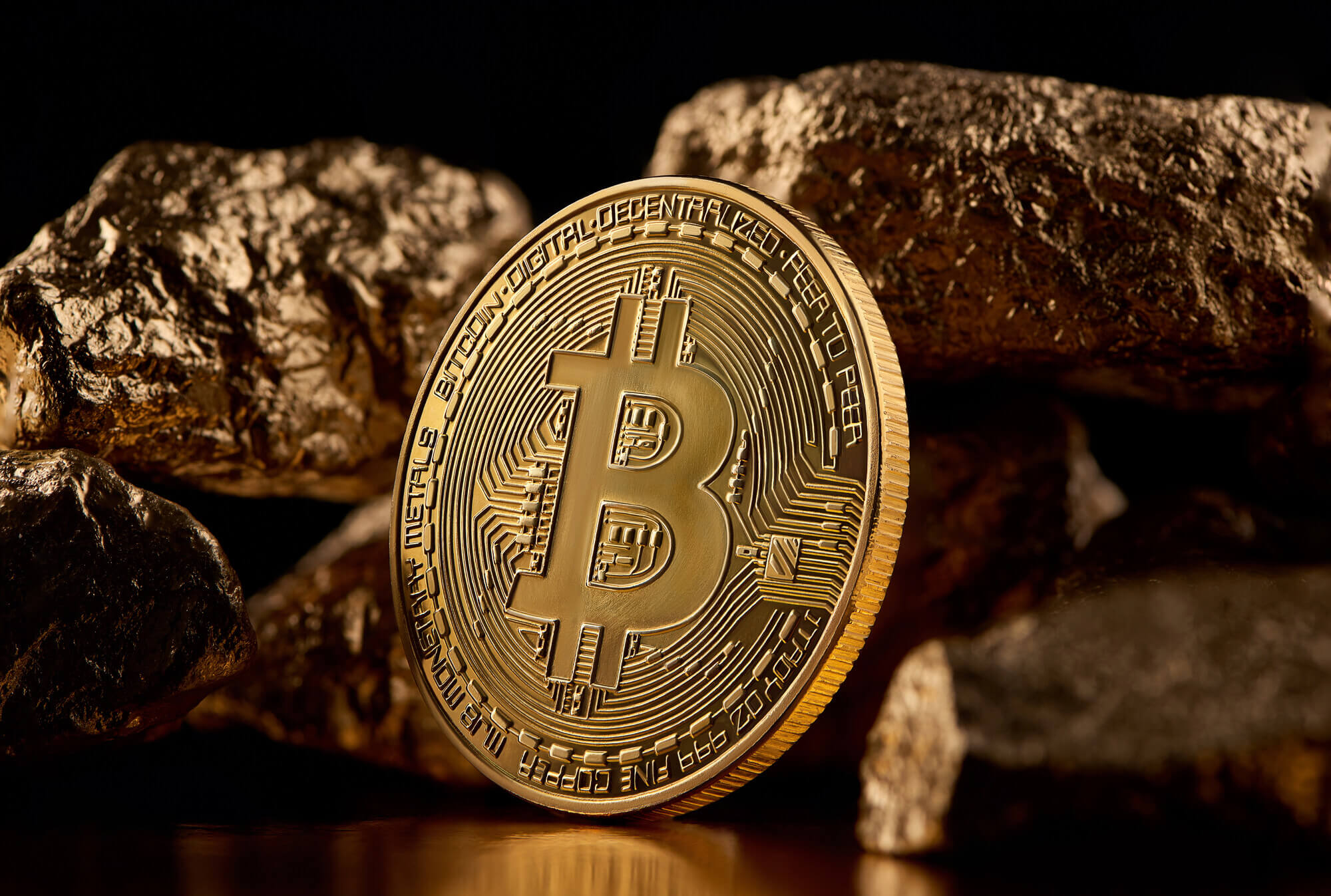
Bitcoin has fundamentally transformed the financial world. Since its launch in 2009, the first cryptocurrency has evolved from a niche experiment into a global phenomenon used by millions of people.
While Bitcoin (BTC) has been trading around USD 100,000 for more than a year, interest in the digital currency is also growing steadily among investors in German-speaking countries. This comprehensive guide explains what Bitcoin is, how the technology works, and why the digital currency may be attractive to investors. You will learn how Bitcoin is regulated in Switzerland, Germany, and Austria, as well as the advantages and disadvantages of the cryptocurrency.
What is Bitcoin? The basic definition
Bitcoin is the world’s first decentralized digital currency, operating without a central bank or government. Unlike euros, Swiss francs, or dollars, Bitcoin exists exclusively in digital form and is not issued by a central authority. Instead, the system is based on a global network of computers that collectively manage and verify all transactions. The defining feature of Bitcoin is its decentralization: no single institution controls the network. Instead, thousands of computers work together to operate the system. This decentralization makes Bitcoin resistant to censorship and manipulation by individual actors.
Bitcoin was created in 2009 with a clear goal: to establish an electronic payment system that enables direct transactions between two parties without the need for a bank or payment service provider as an intermediary. This peer-to-peer principle fundamentally distinguishes Bitcoin from traditional currencies. When you send Bitcoin to someone, the transaction takes place directly from your digital wallet to the recipient’s wallet, without any third party involved.
The total supply of Bitcoin is mathematically capped at 21 million units. This scarcity is hard-coded and cannot be changed. By the end of 2025, more than 19.9 million Bitcoin had already been created, meaning over 95 percent of all Bitcoin that will ever exist are already in circulation. This limited availability makes Bitcoin a scarce asset, similar to gold, which is why it is often referred to as “digital gold.” Unlike central banks, which can print money at will, Bitcoin follows a fixed issuance schedule that prevents inflation through excessive money creation.
How does Bitcoin work? Blockchain technology explained simply
Bitcoin is based on blockchain technology, a kind of digital ledger that records all transactions transparently and immutably. The blockchain is a chain of data blocks that are chronologically linked together. Each block contains a list of transactions as well as a cryptographic reference to the previous block. When you initiate a Bitcoin transaction, it is first broadcast to the network and verified by thousands of computers worldwide. These computers, known as nodes, check whether you actually own the Bitcoin you want to send and whether the transaction complies with the network’s rules.
This is where Bitcoin miners come into play. Miners are specialized computers that solve complex mathematical puzzles in order to add new blocks to the blockchain. This process is called mining and serves two purposes: it secures the network against attacks and simultaneously creates new Bitcoin. Currently, a miner receives 3.125 Bitcoin as a reward for each successfully added block, in addition to transaction fees. The mining process is deliberately computationally intensive. On average, a new block is created every ten minutes, regardless of how many miners participate in the network. The more computing power is available to the network, the more difficult the mathematical puzzles automatically become.
The security of Bitcoin is based on cryptographic methods. Each Bitcoin address is associated with a public and a private key. The public key functions like an account number that you can share with others to receive Bitcoin. The private key is like a password that should never be shared, as only this key can authorize transactions from your address. Once a transaction has been confirmed in a block and that block has been added to the blockchain, it is practically immutable. To reverse a confirmed transaction, an attacker would need to control more than 50 percent of the network’s total computing power, which is practically impossible and extremely costly given the size of the Bitcoin network.


History: From Satoshi Nakamoto to today
Bitcoin was introduced in 2008 through a whitepaper titled “Bitcoin: A Peer-to-Peer Electronic Cash System.” The author published the document under the pseudonym Satoshi Nakamoto. To this day, Satoshi’s true identity remains unknown, and it is unclear whether the name represents an individual or a group. On January 3, 2009, Satoshi mined the first Bitcoin block, known as the genesis block. Embedded in this block was a message: “The Times 03/Jan/2009 Chancellor on brink of second bailout for banks” – a reference to the 2008 financial crisis and possibly the motivation behind Bitcoin’s creation. The first Bitcoin transaction soon followed, between Satoshi and developer Hal Finney.
In its early years, Bitcoin had virtually no measurable value. The first documented commercial transaction took place in May 2010, when a programmer paid 10,000 Bitcoin for two pizzas. At the time, the value was only a few cents per Bitcoin. This transaction is still celebrated within the Bitcoin community as Bitcoin Pizza Day. Bitcoin went through several major development phases: in 2013, the price surpassed USD 1,000 for the first time before collapsing again. In 2017, it experienced a spectacular rise to nearly USD 20,000, followed by a multi-year bear market. Bitcoin reached its previous peak in October 2025 at over USD 126,000.
Advantages and disadvantages at a glance
Bitcoin offers several advantages that traditional currencies cannot provide. Decentralization means that no central authority can control or shut down the network. For users in countries with unstable currencies or authoritarian regimes, Bitcoin can represent an alternative. The transparency of the blockchain allows anyone to track all transactions, which strengthens trust in the system. The limited total supply of 21 million Bitcoin protects against inflation caused by excessive money creation. Unlike central banks, which can print money at will, Bitcoin follows a fixed issuance schedule. This mathematically guaranteed scarcity makes Bitcoin a potential store of value. In addition, Bitcoin enables international transfers without intermediaries, which can be faster and more cost-efficient than traditional bank transfers.
However, Bitcoin also comes with significant disadvantages. Price volatility is extreme: fluctuations of 10 to 20 percent within a few days are not uncommon. This volatility makes Bitcoin unsuitable for everyday payments and poses substantial risks for investors. The energy consumption of the Bitcoin network is considerable, as the mining process requires enormous computing power. While the increasing use of renewable energy mitigates this criticism to some extent, it remains a point of contention. Scalability is another challenge: the Bitcoin network can currently process around seven transactions per second, far fewer than Visa or Mastercard. Solutions such as the Lightning Network aim to increase capacity.
The irreversibility of transactions is both a blessing and a curse. While it protects against fraud, it also means that mistakes or stolen Bitcoin cannot be reversed. Regulatory uncertainty remains a risk factor. Although Bitcoin is legal in many countries, regulatory frameworks could change. In addition, securely storing Bitcoin requires technical understanding. Anyone who loses their private keys loses access to their Bitcoin permanently. An estimated 3 to 4 million Bitcoin are already lost forever.
How can Bitcoin be used?
Today, Bitcoin fulfills several functions that partly differ from the original vision of an everyday means of payment. The most common use is as an investment or speculative asset. Many investors view Bitcoin as a long-term store of value, similar to gold, and expect price appreciation. Institutional investors such as asset managers and publicly listed companies have built substantial Bitcoin holdings in recent years. Its role as a store of value is gaining importance. In times of economic uncertainty or high inflation, investors look for alternatives to traditional currencies. Due to its scarcity and decentralization, Bitcoin is often described as “digital gold.”
As a means of payment, Bitcoin is increasingly accepted, albeit with limitations. In Switzerland, some shops, restaurants, and online stores accept Bitcoin. The Swiss city of Zug even accepts Bitcoin for tax payments up to a certain amount. Acceptance is also growing in Germany and Austria, though at a slower pace. For international transfers, Bitcoin can offer advantages, as transactions are processed without banks and are typically confirmed within minutes to hours.
There are specific use cases in the DACH region. Switzerland has more than 150 Bitcoin ATMs where users can buy or sell Bitcoin with cash. Austria also offers a growing network of Bitcoin ATMs. German investors increasingly use regulated platforms such as Bitpanda or specialized services like Relai, a Swiss Bitcoin app that focuses on simplicity and self-custody.
Bitcoin in Switzerland, Germany, and Austria
Regulatory treatment of Bitcoin differs across the DACH region, although all three countries generally pursue crypto-friendly approaches. Switzerland is considered a pioneer and hosts the “Crypto Valley” in Zug, home to more than 1,200 blockchain companies. The Swiss Financial Market Supervisory Authority (FINMA) regulates Bitcoin as a means of payment and follows a principle-based approach: “same business, same risks, same rules.” In October 2025, the Swiss Federal Council proposed amendments to the Financial Institutions Act to introduce new categories for crypto institutions. Switzerland thus continues to position itself as a leading hub for crypto companies. The Swiss blockchain industry employs around 6,000 people, and some cantons accept cryptocurrencies as legal means of payment.
Germany officially recognized Bitcoin as a financial instrument as early as 2013, a milestone for regulatory clarity. The Federal Financial Supervisory Authority (BaFin) has established clear guidelines for crypto companies, including extensive requirements for anti-money laundering and risk management. Private investors benefit from a tax advantage: cryptocurrencies held for more than one year are exempt from capital gains tax. Austria also follows a progressive approach, with the EU-wide MiCA regulation creating harmonized standards.
Frequently asked questions about Bitcoin
1. Is Bitcoin legal?
Yes, Bitcoin is fully legal in Switzerland, Germany, and Austria. Switzerland recognizes Bitcoin as a means of payment, Germany treats it as a financial instrument, and Austria permits trading and ownership. However, crypto companies are subject to regulatory requirements, particularly regarding anti-money laundering.
2. How secure is Bitcoin?
The Bitcoin network itself is considered extremely secure. Blockchain technology makes it practically impossible to manipulate confirmed transactions. However, risks exist in storage. Anyone who loses their private keys permanently loses access to their Bitcoin. Security measures such as hardware wallets are essential.
3. Can you pay with Bitcoin?
Yes, but acceptance is still limited. In the DACH region, selected merchants and online shops accept Bitcoin. Switzerland leads with higher adoption, including some municipalities that accept Bitcoin for tax payments. For everyday purchases, Bitcoin remains a niche solution due to its volatility.
4. How much does one Bitcoin cost?
The price of Bitcoin fluctuates significantly. At the end of 2025, it stands at around USD 90,000, after reaching an all-time high of over USD 126,000 in October 2025. The price is determined by supply and demand and can change by several percentage points daily.
5. How do you buy Bitcoin?
Bitcoin can be purchased via crypto exchanges or specialized service providers. The process typically involves registration, identity verification, depositing fiat currency, and purchasing Bitcoin. Alternatively, Bitcoin ATMs in Switzerland and Austria allow purchases with cash.
6. Do I have to buy a whole Bitcoin?
No. Bitcoin is divisible into smaller units. The smallest unit is called a satoshi. One satoshi equals 0.00000001 Bitcoin. You can therefore buy fractions, such as 0.001 Bitcoin.
7. How is Bitcoin taxed?
Tax treatment differs across the DACH region. In Germany, gains are tax-free after a holding period of one year. In Switzerland, Bitcoin held by private individuals is considered tax-free private assets, although holdings are subject to wealth tax. Austria taxes crypto gains at 27.5 percent capital gains tax.
8. What is the difference between Bitcoin and Ethereum?
Bitcoin focuses on value storage and payments, while Ethereum is a platform for decentralized applications and smart contracts. Since 2022, Ethereum has used proof-of-stake instead of proof-of-work, which is more energy-efficient. Bitcoin remains the largest cryptocurrency, while Ethereum is the second largest.
Conclusion: Bitcoin as part of the digital future
Since 2009, Bitcoin has evolved from an experiment into a global financial instrument. The first decentralized digital currency combines innovative technology with a fundamentally different approach to money and trust. While traditional currencies rely on trust in central banks and governments, Bitcoin is based on mathematical algorithms and a transparent, decentralized network.
In the DACH region, clear regulatory frameworks create a comparatively secure environment for Bitcoin users. Switzerland positions itself as a leading crypto hub, Germany offers tax advantages for long-term investors, and Austria continues to develop its infrastructure. The growing number of regulated platforms and service providers makes access to Bitcoin easier. Whether Bitcoin will ultimately function as “digital gold,” an everyday means of payment, or both remains open. For beginners, the key principles are clear: educate yourself thoroughly, understand the risks, use secure storage methods, and invest only what you can afford to lose.