For some months now, Europe has been sliding into an energy crisis. As a result, voices that want to ban energy-intensive proof of work based bitcoin mining are getting louder. In the end, the question arises: Isn't a free market the most efficient distribution for all energy-intensive use cases?
Bitcoin's energy consumption has been a hotly debated topic since its original discovery. Specifically, critics refer to the energy consumption for running proof of work mining, which provides the Bitcoin network with the necessary security. For example, former crisis manager at Swissgrid Paul Niggli concludes that Bitcoin should be banned completely. According to his calculations, a single transaction consumes as much electricity as a household in one and a half months. Can the current energy crisis be overcome with a simple Bitcoin ban?
Origin of Bitcoin energy consumption
To understand Bitcoin's energy consumption, a few things about the network's technology need to be clarified. Bitcoin is a decentralized network for the direct transfer of value. It uses blockchain technology to prevent the so-called double spending problem. The underlying proof of work algorithm enables transaction verification without a third party entity that prevents double spending of the same holdings in traditional systems.
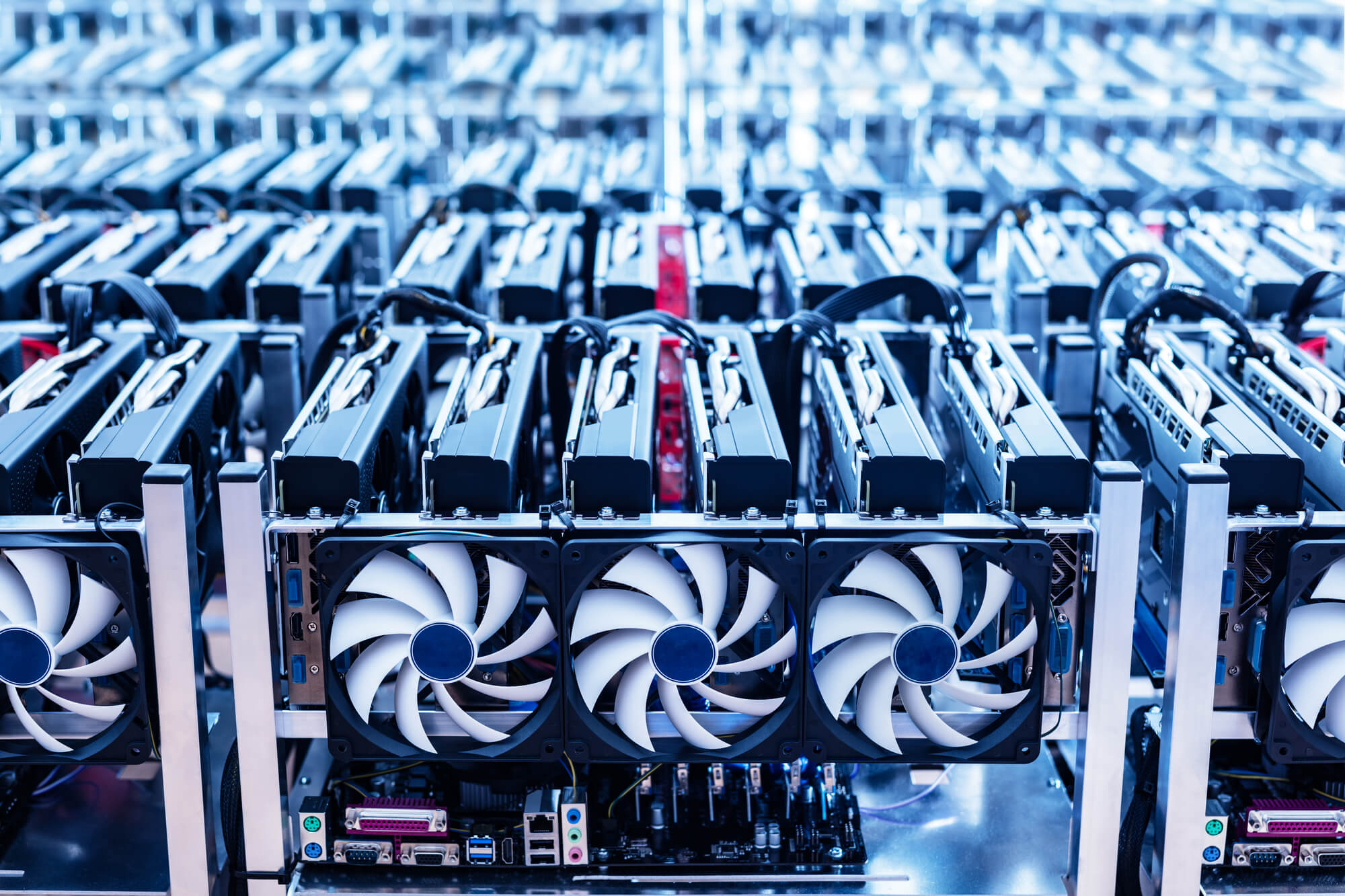
Network participants must solve specific cryptographic problems to verify the validity of transactions. Miners accomplish this with customized computers that compute hashes around the clock. This requires real resources (computing electricity and energy), making a malicious takeover of the network extremely costly. Currently, Bitcoin is home to about $400 billion in digital assets. Decentralized and resource-intensive protection of the blockchain is therefore essential.
How much energy does the network really need?
Again and again, so called "milk-book" (simple) calculations are circulated that compare the energy consumption of individual Bitcoin transactions with everyday consumption. As of September 2022, the energy consumption of the entire network is around 130 terawatt hours (TWh) per year. So, the obvious calculation is to divide that number by the approximate number of transactions per year, suggesting a household's electricity consumption in about 45 days per single transaction. In fact, however, this metric so often used by critics reveals absolute ignorance of the underlying blockchain technology.
The number of transactions of the Bitcoin network does not have a strong correlation with the energy consumption. As described above, the energy is primarily used to secure the blockchain and for mining. The majority of Bitcoin's electricity consumption is therefore used to "mine" new coins, while the energy required for the actual validation of transactions is minimal.
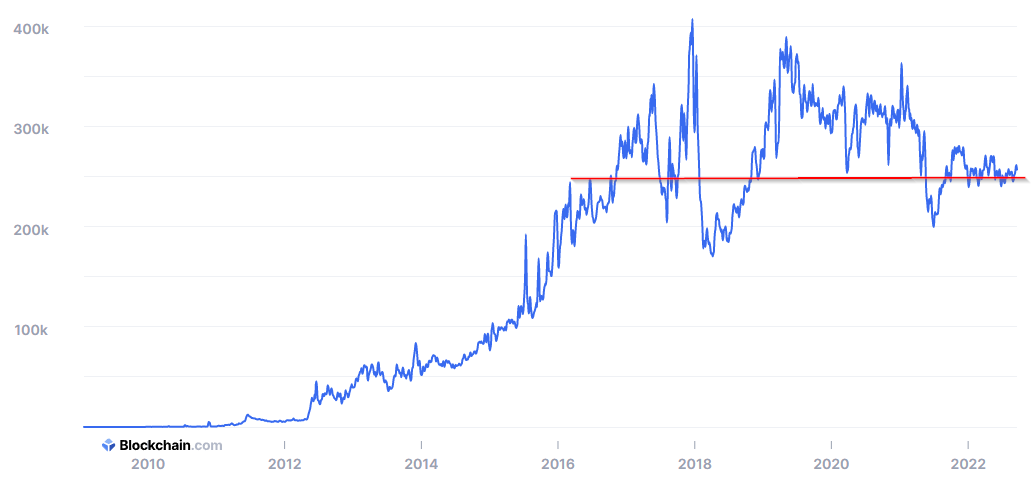
This can also be verified empirically. Since the number of Bitcoin transactions is determined by the size and time interval of the individual blocks, we are at a similar level as six years ago. If we compare this to the energy consumption of the network, a direct correlation with the hashrate of the network - not the individual transactions - becomes obvious. So comparing a transaction with the average Swiss household is thoroughly senseless.
Bitcoin as a future benefit
As early as 2010, shortly after the first transaction on the Bitcoin network, the pseudonymous inventor Satoshi Nakamoto commented on the solution to the problem. It was the same situation as with gold and gold mining. The marginal cost of gold mining is usually close to the price of gold. Gold mining is also a waste, but this "waste" is apparently less than the benefit of having gold as a medium of exchange.
"I think this will also be the case with Bitcoin. The benefits of the exchanges enabled by Bitcoin will far exceed the cost of energy consumption. Therefore, it would be a waste not to have Bitcoin." - Satoshi Nakamoto, founder of the Bitcoin network
If we apply this to Bitcoin, the net benefits of a global, permission-free network easily dwarf the downsides of energy consumption. The system is the only way for hundreds of millions of people to gain access to a fair, devaluation-protected, and censorship-resistant monetary network in the near future. To continue maintaining this, we must be prepared to accept even the relatively small share of additional emissions.