Close Menu
Crypto Valley Journal
    Facebook X (Twitter) Instagram
    Crypto Valley Journal
    • Hot Topics
      • News
      • Minds
    • Focus
      • Background
      • Blockchain
      • Legal & Compliance
      • Non-Fungible Token (NFTs)
    • Investing
      • Markets
      • Financial Products
      • Decentralized Finance (DeFi)
      • Exchange overview
    • Education
      • Basics
      • Glossary
      • Politicians on crypto
    • Statistics
      • Bitcoin-ETF-Flows
      • Ethereum-ETF-Flows
      • Crypto market data
      • On-chain data
    • Academy
      • Overview
      • Part 1: Blockchain
      • Part 2: Money
      • Part 3: Bitcoin
      • Part 4: Cryptocurrencies
      • Part 5: Decentralized Finance
      • Part 6: Investing
    • English
      • Deutsch
    Crypto Valley Journal
    You are at:Home»Hot Topics»News»Paxos forced to stop issuing BUSD stablecoin
    Paxos muss Emmission von BUSD-Stablecoin einstellen

    Paxos forced to stop issuing BUSD stablecoin

    By Editorial Office CVJ.CH on 13. February 2023 News

    New York regulators have instructed the crypto company Paxos to halt the issuance of its dollar-backed stablecoin, Binance USD (BUSD). This decision follows an investigation by the Securities and Exchange Commission (SEC) and is part of a wider regulatory crackdown in the United States.

    SEC staff have sent Paxos, the stablecoin issuer, a "Wells Notice" letter, which informs companies and individuals of potential enforcement actions. According to The Wall Street Journal, the notice claims that the listed digital asset Binance USD (BUSD) issued by Paxos is an unregistered security. In addition to the SEC, another regulatory agency has now intervened. The New York Department of Financial Services (NYDFS) has demanded that Paxos Trust Co. cease issuing additional BUSD tokens, marking the end for the third-largest stablecoin by market capitalization.

    Update: The NYDFS decision is primarily based on Paxos' business relationship with crypto exchange Binance, according to a blog post by the regulator. No violations regarding the stablecoin's reserves were found. 

    BUSD: a stablecoin regulated under US law

    Mostly pegged to the US dollar, stablecoins have established themselves as key pillars in the emerging crypto ecosystem. They serve as the base currency on centralized exchanges and as a dollar alternative on their decentralized counterparts (DEXes). Stablecoins bridge the gap between the benefits of cryptocurrencies and the more stable fiat currencies, including faster and cheaper transactions.
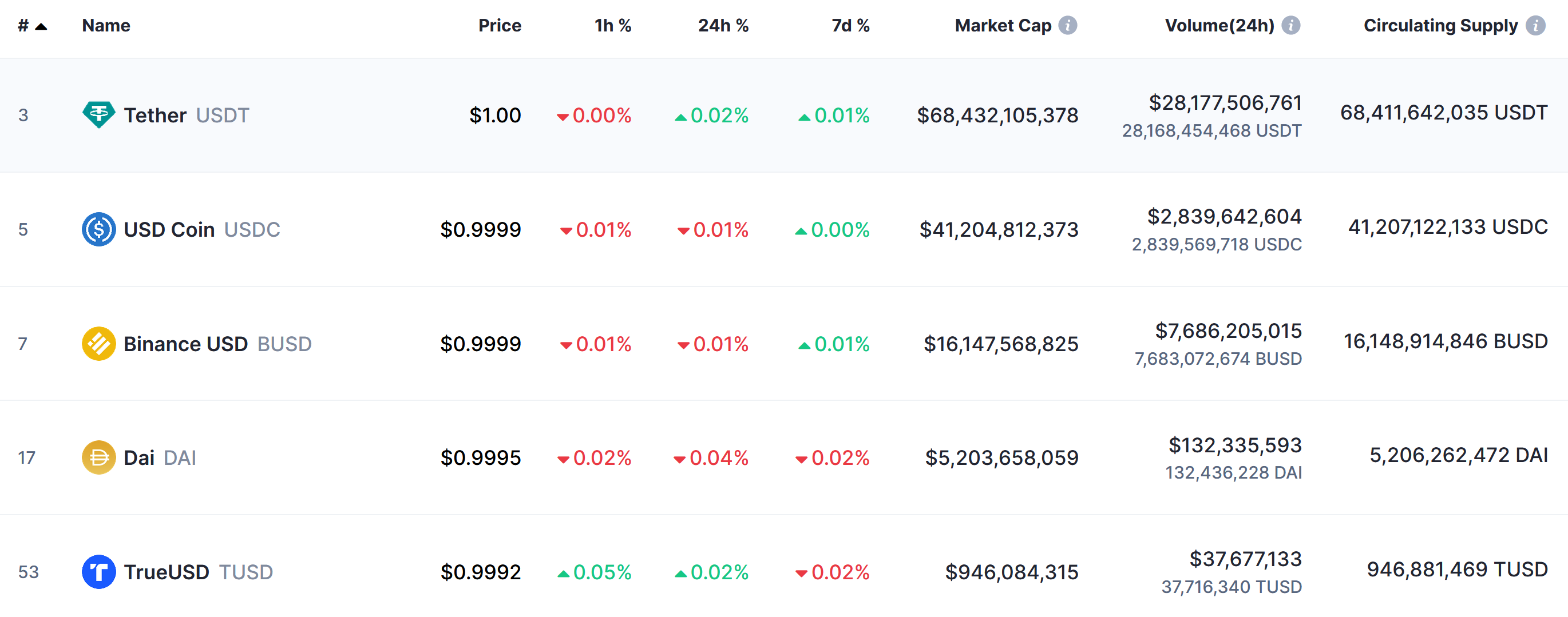
    Excerpt of the top 5 stablecoins by market capitalization / Source: CoinMarketCap

    Right after Tether (USDT) and USD Coin (USDC), Binance USD (BUSD) ranks third among all stablecoins by market capitalization. The digital asset was launched in 2019 as part of a partnership between Paxos and Binance, with Paxos serving as the issuer of the stablecoin with a branding license from the largest cryptocurrency exchange, which has been using BUSD as its primary currency pair for a while. The regulator responsible ahs been the New York Department of Financial Services (NYDFS). The agency regularly reviewed various requirements such as capital reserves, consumer protection, and anti-money laundering measures at Paxos. Binance USD (BUSD) was therefore considered one of the best-regulated stablecoins in the market.


    Ray Dalio’s Bridgewater Associates Minds

    Star investor Ray Dalio considers Bitcoin inferior to gold

    Analysis by Bitget Research on Bitcoin quantum computing risks, ECDSA exposure, NIST post-quantum standards, and BIP-360 migration paths. Background

    Bitcoin quantum computing: What recent developments mean for network security

    JPMorgan warns: Recurring DeFi exploits and stagnant ETH-denominated TVL curb institutional engagement in the DeFi sector. DeFi

    JPMorgan: DeFi hacks and TVL losses weigh on institutional investors

    Basics

    Unit bias in crypto: Why cheap coins mislead investors

    Ray Dalio’s Bridgewater Associates Minds

    Star investor Ray Dalio considers Bitcoin inferior to gold

    Analysis by Bitget Research on Bitcoin quantum computing risks, ECDSA exposure, NIST post-quantum standards, and BIP-360 migration paths. Background

    Bitcoin quantum computing: What recent developments mean for network security

    US regulators are cracking down

    Since the collapse of the cryptocurrency exchange FTX, the industry has been faced with tougher measures by US regulatory agencies. In particular, the Securities and Exchange Commission (SEC) has stepped up its efforts. Operating under the motto "regulation through enforcement," the agency is taking direct action against companies it considers within its jurisdiction. The SEC appears to have identified staking services and stablecoins such as BUSD as the first areas of focus.

    The current coup by the SEC is attracting a lot of criticism for its chairman, Gary Gensler, not only from industry representatives but also from within the SEC itself. SEC Commissioner Hester Peirce expressed her clear dissatisfaction with the agency's current approach in a blog post. As mentioned in an interview with CVJ.CH two years ago, Peirce sees a significant deficit in comprehensive regulations. The lawsuit against the cryptocurrency exchange Kraken underscores this tendency.

    "Most concerning, though, is that our solution to a registration violation is to shut down entirely a program that has served people well. [...] A paternalistic and lazy regulator settles on a solution like the one in this settlement: do not initiate a public process to develop a workable registration process that provides valuable information to investors, just shut it down." - Hester Peirce, one of the five SEC commissioners


    Share. Facebook Twitter LinkedIn Email Telegram WhatsApp

    About the author

    Editorial Office CVJ.CH

      The CVJ editorial staff consists of a team of Blockchain experts and informs daily and independently about the most exciting news.

      Related Articles

      Hoskinson calls support of the CLARITY Act by Garlinghouse and the XRP community insanity and accuses Ripple of harming the industry.

      XRP vs. Cardano: Hoskinson calls CLARITY Act support “insanity”

      Trump would sign the CLARITY Act immediately. But the Senate is blocking it, and a May deadline could push the law back to 2030.

      Trump wants to sign CLARITY Act immediately, but chances drop to 50%

      CVJ.CH Weekly review calendar week

      Weekly review calendar week 17 – 2026

      Hoskinson calls support of the CLARITY Act by Garlinghouse and the XRP community insanity and accuses Ripple of harming the industry.
      28. April 2026

      XRP vs. Cardano: Hoskinson calls CLARITY Act support “insanity”

      Trump would sign the CLARITY Act immediately. But the Senate is blocking it, and a May deadline could push the law back to 2030.
      27. April 2026

      Trump wants to sign CLARITY Act immediately, but chances drop to 50%

      CVJ.CH Weekly review calendar week
      25. April 2026

      Weekly review calendar week 17 – 2026

      twitter image button instagram image button linkedin image button youtube image button

      About Crypto Valley Journal
      About Crypto Valley Journal

      On the pulse of the movement

      • Academy
      • Contact
      • Advertising
      • About us
      • Partner
      • Imprint
      • Privacy
      • Disclaimer
      Search

      Type above and press Enter to search. Press Esc to cancel.