What has been happening around Blockchain Technology and Cryptocurrencies this week? The most relevant local and international developments as well as appealing background reports in a pointed and compact way in retrospect in our weekly review.
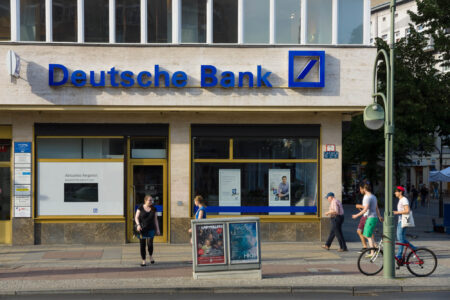
After a long period of restraint, banks are starting to expand their services to cryptocurrencies due to strong customer demand. This trend can be observed particularly in the United States. However, in the "crypto nation" Switzerland, the big banks have been slow to act. The largest Swiss bank, UBS, has been negative about Bitcoin & Co. without exception in the past. Criticism was primarily directed at its volatility and regulatory lack of clarity. Now the bank dared to take a first step this week. UBS is currently investigating various options to ensure that wealthy clients have access to digital assets. These may include in-house services or investment instruments from third parties.
Asset managers are increasingly interested in cryptocurrencies as an alternative asset class. What partly prevents them from allocating is the regulatory uncertainty. The global fragmentation of the legal framework around digital assets does not allow for a unified approach. Already, more than 100 jurisdictions and 15 supranational entities have taken formal steps to regulate crypto-financial products. Among the international leaders in terms of legal certainty are Switzerland, Liechtenstein and Singapore. In these countries, regulators have been quick to respond and have taken the necessary steps to establish a comprehensive legal framework. Meanwhile, other nations are in the process of creating regulations for dealing with digital assets. Bans are becoming rarer and rarer, and overall the picture of global crypto regulation is showing signs of improvement.
Only a few months ago, US automaker Tesla made a multi-billion dollar investment in Bitcoin. CEO Elon Musk called himself a "big proponent" of the cryptocurrency, while enabling Bitcoin payments for Tesla vehicles. The decision was seen as an important step for the institutional adoption of the digital currency. This week, the US company changed its mind. According to Musk, Tesla is concerned about the increasing energy demand for fossil fuels, which is needed to secure the Bitcoin network. Accordingly, the company has decided to exclude Bitcoin as a payment option for new vehicles. The crypto community's reaction was decidedly negative, pointing to studies that estimated the share of renewable energy sources used in Bitcoin mining at 40-75%.
Non-fungible tokens (NFTs) attracted a lot of attention last year. The highlight was the sale of a digital artwork at the traditional auction house Christie's for nearly USD 70 million. Tokens are unique virtual assets on the blockchain. Primarily, they are used for art in the form of images, videos or music. However, the potential use cases go far beyond that. As of this week, it is possible to sell non-fungible tokens (NFTs) on eBay. The technology has attracted many new users to the crypto world and continues its march into the broader mainstream.
In addition: A nascent trend can be seen in the landscape of institutional crypto-backed lending. According to Arcane Research, the current size of the traditional collateralized lending market is estimated at $20 trillion. In contrast, the CeFi Bitcoin loan market is approximately 400,000 Bitcoin (BTC) in size, which is equivalent to around $30 billion, depending on the BTC exchange rate. Consequently, there is significant growth potential. In contrast to "Decentralized Finance" (DeFi), CeFi (Centralized Finance) refers to crypto lending through centralized intermediaries. An analysis on the current state of the area and its growth potential.
Selected articles in the weekly review:
The major Swiss bank wants to offer wealthy clients the opportunity to invest in crypto asset.
https://cryptovalleyjournal.com/hot-topics/news/ubs-wants-to-offer-cryptocurrencies-to-clients/
Global legal certainty around cryptocurrencies is on a steady rise.
The company makes a U-turn and discontinues Bitcoin as a payment method.
The online marketplace is diving into the world of non-fungible tokens (NFTs).
Institutional adoption of crypto-related lending products and services has significant growth potential. A Dive into Centralized Finance (CEFI).
Would you like to receive the Weekly review and other interesting formats via push message?