
What happened this week in the world of blockchain and cryptocurrencies? The most relevant local and international developments as well as insightful background reports, concise and to the point in the weekly review.
Selected articles of the week:
The US Senate Banking Committee postponed the planned vote on the CLARITY Act again after crypto exchange Coinbase withdrew its support hours before the session. CEO Brian Armstrong called the revised 182-page version “worse than the status quo” and particularly criticized the ban on yield-bearing stablecoins, weakened CFTC authority, and expanded government surveillance powers. Over 40 banking associations led by the American Bankers Association successfully lobbied to prohibit stablecoin interest payments – arguing this could drain 6.6 trillion USD in deposits. The banking lobby is primarily acting out of self-interest: major US banks pay savers an average of only 0.39 percent interest on deposits, while short-term US Treasury bonds yield 3.89 percent – a margin of over 3 percentage points that flows directly into bank balance sheets. Stablecoins with yields of 4 to 5 percent fundamentally threaten this profitable business model, which is why the industry prefers regulatory hurdles over competition. The bill, originally introduced in May 2025, passed the House of Representatives in July with 294 to 134 votes, but requires 60 Senate votes and bipartisan majorities. Observers fear further delays until 2027 due to the upcoming midterm elections in November.

Coinbase withdraws support for CLARITY Act. Banking lobby fights stablecoin yields and the Senate postpones the vote.
Major US banks continue to hold back on crypto offerings
Despite Bitcoin ETF momentum and regulatory progress, leading US banks continue to offer retail customers no broad crypto custody or trading services. An analysis of the top 25 institutions shows that banks like JPMorgan, Bank of America, Wells Fargo, and Goldman Sachs restrict access to wealthy institutional clients or primarily enable crypto exposure through structured products. PNC is among the few exceptions with active custody offerings, while Citi, Fifth Third, and State Street are still in evaluation phases. From a banking perspective, custody is significantly more complex than ETF distribution, as it means operational responsibility and direct contact with on-chain assets. Regulatory uncertainty, liability risks, and capital requirements are slowing institutional engagement, not technical limitations. The crypto market with approximately 3 trillion USD in market capitalization remains a niche compared to real estate (400 trillion USD), bonds (145 trillion USD), or gold (30 trillion USD). While ETFs enable regulated access, they do not replace custody or trading infrastructure within the banks themselves.

US banks and crypto: despite the ETF boom, custody and trading remain rare and are mostly available only to wealthy clients.
Former NYC Mayor Eric Adams launches questionable memecoin
Former New York City Mayor Eric Adams unveiled the NYC token on January 12 at Times Square, a Solana-based memecoin that reached a market capitalization of 540 million USD and crashed approximately 80 percent to 87 million USD within 30 minutes. On-chain analysis showed extreme centralization: the ten largest wallets controlled 98.73 percent of all tokens, with 70 percent held in a single address. Blockchain analytics firm Bubblemaps documented suspicious activities by wallet 9Ty4M, which was linked to the token deployer and withdrew approximately 2.5 million USDC at the market peak, before 1.5 million flowed back after a 60 percent price decline – a pattern of classic rug-pull mechanics. Adams had previously positioned himself as crypto-friendly and converted his first three mayoral salaries into Bitcoin and Ethereum, but significantly reduced his public engagement after the FTX collapse in 2022. His successor Zohran Mamdani immediately reversed Adams’ blockchain-related decrees upon taking office. Adams claimed the token would fund “educational programs against antisemitism” and blockchain scholarships, but neither official partners nor whitepapers nor transparent governance structures were identified.
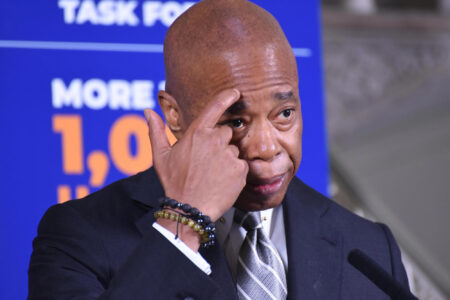
Former NYC Mayor Eric Adams launched NYC Token, which crashed 80 percent within 30 minutes. Blockchain analysts document liquidity withdrawal.
Dispute over the future: ZCash development team resigns
The entire development team of the Electric Coin Company (ECC), responsible for privacy coin Zcash, resigned collectively in early January. CEO Josh Swihart spoke of a “constructive dismissal” by the Bootstrap directorate and accused board members Zaki Manian, Christina Garman, Alan Fairless, and Michelle Lai of no longer aligning with the original Zcash mission. The ECC emerged from the Zerocoin project, which in 2016 enabled practical use of zk-SNARKs for privacy transactions with 3 million USD in startup capital. ZCash offers optional privacy through transparent and shielded addresses, with only 25 to 30 percent of transactions using privacy features – in contrast to Monero, which enforces privacy by default. The ZEC price fell 16 percent within 24 hours, while Monero climbed 50 percent over the year to a new all-time high of over 700 USD. The departed team founded an independent company and plans to develop cashZ, a privacy wallet based on the original Zashi code. The Zcash protocol itself remains operational despite the leadership crisis.

The entire development team at Electric Coin Company resigns. A governance conflict shakes Zcash, while Monero benefits.
Community tokens instead of venture capital?
In addition: AI tool developers Geoffrey Huntley and Steve Yegge are financing their work through community tokens launched on Solana instead of traditional venture capital investors. The tokens RALPH and GAS were launched independently on the platform Bags.fm, without direct involvement of the developers. Huntley generated 300,000 USD in revenue in his bank account within seven days, while Yegge still holds 49,000 USD in outstanding royalties on Bags.fm. Huntley’s “Ralph Wiggum Technique” – a bash loop method for repeated execution of Claude Code until task completion – was developed in July 2025 and was formalized as an official plugin by Anthropic’s Boris Cherny in late 2025. Yegge’s multi-agent orchestrator “Gas Town,” launched on January 1, coordinates up to 30 parallel AI agents through the Go-based Beads framework after three failed iterations within a year. Bags.fm automatically distributes 1 percent of total trading volume to developers, with the platform processing over 1 billion USD in trading volume within 30 days. The model enables developers to generate income without equity dilution or VC obligations, but presupposes established developers with existing communities – most tokens on similar platforms become worthless.

Ralph and Gas Town: AI developers receive community funding through Solana memecoins instead of venture capital.