What has been happening this week in the world of blockchain and cryptocurrencies? Current events and background reports in our weekly review.
Selected articles of the week:
The software firm Strategy now holds roughly 844,000 bitcoin, about 4% of the maximum supply of 21 million units. Its total acquisition cost stands at USD 63.69 billion, an average of USD 75,500 per bitcoin. In an interview, CEO Phong Le has now put a figure on the company’s pain threshold for the first time. He sees a serious debt risk only if bitcoin falls to between USD 8,000 and USD 10,000, a decline of roughly 85%. Until then, the company feels very secure with its balance sheet. The remarks are no coincidence: in June, the firm’s volatile debt securities rattled the markets. To reassure investors, Strategy topped up its cash reserves to around USD 3 billion through equity and bitcoin sales. In the short term, that should ease liquidity risks.

Strategy CEO Phong Le confirms the company stays a Bitcoin buyer and sees debt risks only if Bitcoin falls below USD 10,000.
Crypto.com opens up to institutional capital
Trading exchange Crypto.com is opening up to institutional capital for the first time in its roughly ten-year history. Citadel Securities, the market-making giant owned by billionaire Ken Griffin, is investing USD 400 million and values the platform at USD 20 billion. Until now, Crypto.com had financed itself and avoided institutional backers. For Citadel Securities, the move is part of a series: in November 2025, USD 200 million flowed into rival exchange Kraken, also at a valuation of USD 20 billion, alongside a USD 500 million round at Ripple. The timing is notable, as bitcoin is down roughly 27% since the start of the year. The entire crypto sector has shrunk from its peak of USD 4.27 trillion to about USD 2.2 trillion. Citadel President Jim Esposito attributes the commitment to the growing convergence of traditional financial markets and digital infrastructure.

Citadel Securities takes a USD 400 million stake in Crypto.com at a USD 20 billion valuation, the exchange’s first institutional funding round.
Robinhood’s blockchain storms the ranking of the most active networks
The convergence of traditional finance and blockchain is evident not only among exchanges but also in the products themselves. Robinhood’s own network, Robinhood Chain, generated cumulative DEX trading volume of USD 3.1 billion in its first seven days. According to an analysis by investment house Bernstein, that already ranks it among the five most active blockchains. The Layer 2 solution, built on Arbitrum, recorded 17 million transactions and just under 350,000 active addresses. Deposited capital exceeded USD 100 million within 15 days. At the core of the offering are tokenized stocks, which Robinhood offers in more than 120 countries, though not in the US. Investors do not acquire genuine ownership but rather debt securities issued by a Jersey subsidiary, without any voting rights. A large share of the volume, however, is tied to memecoin activity.

Robinhood Chain gathered roughly $3.1 billion in DEX volume in its first week and now ranks among the five largest chains.
Trump’s crypto millions block the first US federal law
How tightly crypto regulation and politics are intertwined is currently on display in Washington. US President Donald Trump met this week at the White House with Republican senators Bernie Moreno and Cynthia Lummis to negotiate the contested ethics clause of the Clarity Act. The law would be the first comprehensive US federal legislation on digital assets and would clarify the division of responsibilities between the securities regulator SEC and the futures market regulator CFTC. The point of contention is whether officeholders may profit from their own crypto holdings. The issue concerns Trump directly: a disclosure in June reported roughly USD 515 million from the sale of World Liberty Financial tokens. An amendment that would have barred the president, vice president and Congress from such holdings had previously narrowly failed. Majority Leader John Thune has promised a vote before the August recess. If it does not succeed, a fresh attempt before the November midterm elections is considered unlikely.
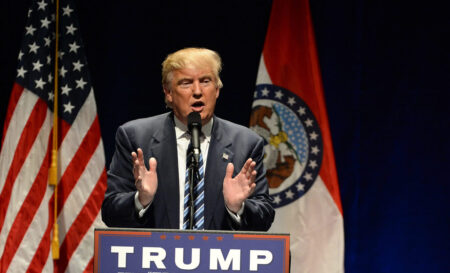
Trump meets Republican senators to resolve the Clarity Act ethics clause, the last hurdle before a possible Senate vote on the crypto bill.
Justice Department buries a USD 722 million fraud case
In addition: the US Justice Department has dropped the charges against Matthew Goettsche, founder of the crypto fraud scheme BitClub Network. The Ponzi scheme, disguised as a mining operation, caused investor losses of around USD 722 million between 2014 and 2019. The dismissal came just weeks before the trial scheduled for October and precludes any renewed prosecution. The timing is striking: two Trump-aligned lawyers had previously advocated on Goettsche’s behalf. The department justifies the step with the age of the seven-year-old case and denies any political pressure. The case nonetheless fits a pattern. Since early 2025, the Justice Department disbanded its crypto task force, the SEC withdrew its cases against Coinbase, Kraken and Consensys, and Trump pardoned prominent convicts such as Ross Ulbricht and Binance founder Changpeng Zhao.

The DOJ dropped its USD 722 million BitClub Ponzi case against Goettsche just before trial, after two Trump-linked lawyers intervened.