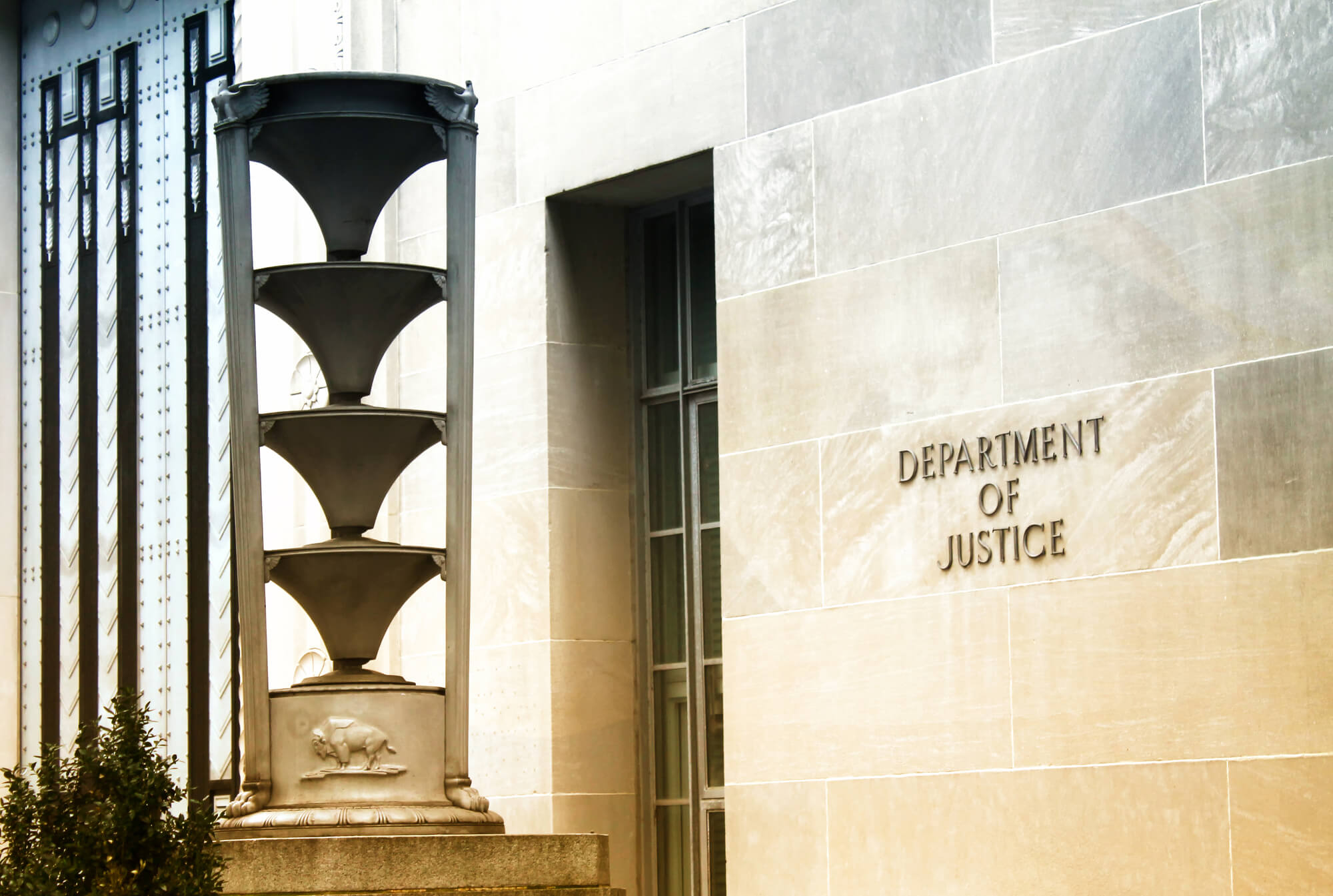
The US Justice Department has ordered the charges against BitClub mastermind Matthew Goettsche dropped for good. He is the alleged head of a USD 722 million Ponzi scheme. The reversal comes shortly before the scheduled trial, after two lawyers close to Trump intervened with the DOJ.
BitClub Network was an MLM-style crypto mining pyramid scheme. The platform claimed to pool investor deposits to buy mining hardware and computing capacity and to pay out the returns. In reality, the operator reported fictitious profits, according to the indictment. It paid earlier investors out of the deposits of new participants. The scheme ran from April 2014 to December 2019, with Goettsche as founder. In late 2019, prosecutors in the District of New Jersey charged him and several co-defendants. The counts included wire fraud conspiracy and the sale of unregistered securities. In total, investors are said to have lost around USD 722 million. The case against Goettsche has now dragged on for more than seven years.
DOJ makes an abrupt reversal in the BitClub case against Goettsche
As recently as February 2026, prosecutors had told the court in writing that a jury trial was necessary. A few months later, that position flipped into its opposite. In early July 2026, the office of the Deputy Attorney General in Washington ordered the charges dismissed with prejudice. The instruction went to the New Jersey prosecutors, who had originally driven the case forward. The legal wording is therefore decisive. A dismissal "with prejudice" counts as final, and no renewed indictment in the same matter can follow afterward. For Goettsche, the prospect of criminal prosecution in this case falls away.
The parties were still negotiating the final terms at the time of reporting, however. According to Bloomberg Law, the trial was set for October 2026 and was imminent. Nevertheless, the Justice Department presents the step as a routine review of the case. A spokeswoman pointed to the long duration of the proceedings and to ongoing efforts to return money to defrauded investors. The agency routinely reviews cases that have been pending for several years. It thus disputes the account that outside pressure triggered the reversal.
"This particular case has been pending for seven years, and the government is in the process of recovering a substantial amount owed to investors. The DOJ's decision has nothing to do with alleged pressure from Goettsche's lawyers." - Emily Covington, DOJ spokeswoman
Two Trump-linked lawyers lobbied for Goettsche
Two people intervened with the Justice Department for a dismissal of the case. Both are close to President Donald Trump. Bradford Cohen is a criminal defense attorney from Florida who once appeared on Trump's reality show "The Apprentice." Brett Tolman is also part of Trump's circle. The conservative justice reform advocate has already helped several clients secure pardons from the president.
Their closeness to the political leadership casts the official routine narrative in a different light. The Justice Department does deny any connection between the lobbying and the decision. Nevertheless, the reversal coincides in time with the interventions. What stands out is that the New Jersey prosecutors had run the case themselves for years. Only then did the instruction arrive from Washington. Direct proof of a causal link is still missing. The timing and the profile of those involved nonetheless fuel doubts about the independence of the step.




BitClub's pyramid scheme behind the USD 722 million
BitClub Network sold investors shares in supposed bitcoin mining pools. Anyone who paid in was meant to share in the returns of the computing capacity. At the same time, they had to recruit new members. The model thus carried the traits of a classic multi-level marketing scheme. In the mid-2010s, BitClub ranked among the larger fraud cases of this kind. Yet the promised mining profits existed only on paper, according to the indictment.
The operator financed payouts to early investors out of the deposits of new participants. Those who joined early profited at the expense of later investors. Such structures consequently collapse as soon as the inflow of fresh capital dries up. In the end, around USD 722 million came together this way. Three co-defendants have also already pleaded guilty.
Joseph Frank Abel admitted his involvement and the sale of unregistered securities in 2020. Gordon Brad Beckstead, a former accountant from Nevada, pleaded guilty to money laundering conspiracy in 2022. He had previously concealed more than USD 60 million in BitClub income, causing around USD 20 million in tax liabilities. A Romanian programmer pleaded guilty as the third defendant as well. How Goettsche himself thought about his investors emerges from internal documents in the case. He had built his business model "on the backs of idiots," they state. As his stated goal, he named retiring rich.
Case fits into Trump's crypto policy shift
The Goettsche case does not stand alone. In April 2025, the Justice Department first dissolved its National Cryptocurrency Enforcement Team. Deputy Attorney General Todd Blanche ordered the immediate shutdown. The DOJ was "not a digital assets regulator," he said in justifying the step. A "reckless strategy of regulation by prosecution" had marked the previous administration, he added. The agency pointed to a Trump executive order on digital assets from January 2025.
At the same time, the SEC withdrew numerous cases under its new Crypto Task Force. Those affected included Coinbase, Kraken, Consensys, Justin Sun, Robinhood, OpenSea and Cumberland. With Ripple, by contrast, the agency reached a settlement. Trump himself also pardoned several prominent convicted crypto figures.
These include Silk Road founder Ross Ulbricht in January 2025 and Binance founder Changpeng "CZ" Zhao in October 2025. Likewise, BitMEX co-founders Arthur Hayes, Benjamin Delo and Samuel Reed received pardons in March 2025. The same pardon covered former manager Gregory Dwyer. In December 2025, Trump also announced he would review the case of Samourai Wallet co-founder Keonne Rodriguez. A court had sentenced Rodriguez to five years in prison for money laundering. A decision there is still pending. Overall, the federal government has noticeably scaled back crypto enforcement. The dismissal in the BitClub case therefore appears less as an outlier. It looks more like another building block of a deliberate change of course.