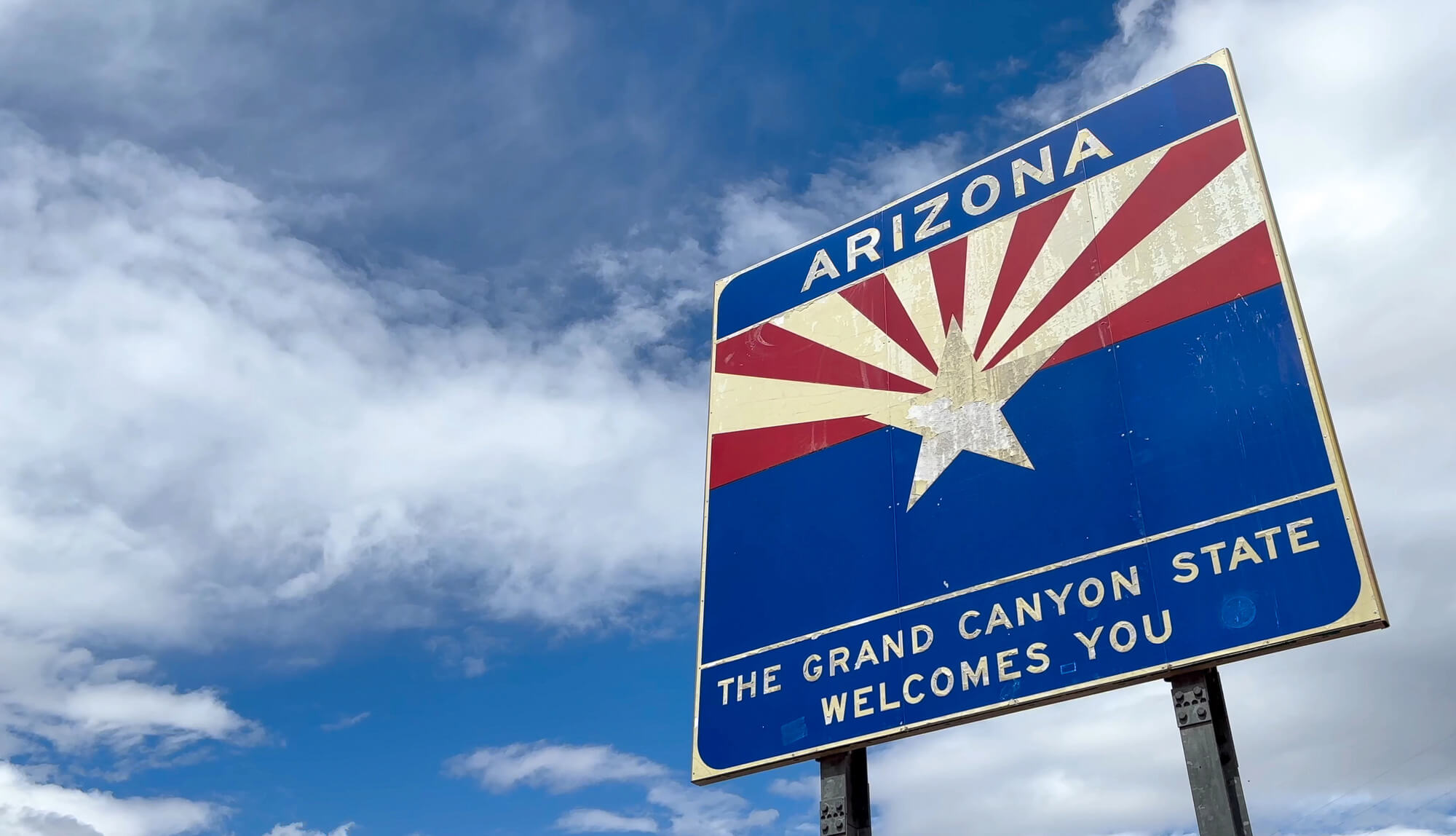
Arizona Attorney General Kris Mayes has filed 20 misdemeanor charges against KalshiEx LLC and Kalshi Trading LLC in Maricopa County Court. The charges accuse the company of operating an illegal gambling enterprise and offering prohibited bets on election outcomes.
This marks the first time a US state has pursued criminal action against a prediction market operator. Four of the counts relate to election betting. These cover contracts on the 2028 presidential race, the 2026 Arizona governor's race, and two additional local election markets. Prosecutors also allege Kalshi offered unauthorized bets on professional and college sports, as well as on the passage of the SAVE Act. Each count carries fines between $10,000 and $20,000, with a total maximum exposure of $400,000.
Kalshi's preemptive strike falls flat
The charges came just five days after Kalshi filed preemptive civil lawsuits against Arizona, Utah, and Iowa on March 12. With these lawsuits, the company sought to block state action before it materialized. Arizona, however, was not deterred.
"Kalshi may market itself as a 'prediction market,' but in reality it operates an illegal gambling operation and accepts bets on Arizona elections. Both violate Arizona law. No company gets to decide for itself which laws it follows." - Kris Mayes, Attorney General, Arizona
Under Arizona law, election betting is explicitly prohibited. At the same time, any gambling enterprise operating in the state requires a license. Kalshi holds no such license and argues that its CFTC approval as a Designated Contract Market is sufficient.
CFTC backs Kalshi
CFTC Chairman Michael Selig, a Trump appointee, responded sharply to the charges. He called it a jurisdictional dispute and deemed criminal prosecution entirely inappropriate. According to the federal agency, Kalshi's event contracts qualify as "swaps" under the Commodity Exchange Act (CEA). As such, they fall exclusively under federal jurisdiction.
In February 2026, the CFTC had already filed an amicus brief with the Ninth Circuit in support of Crypto.com against Nevada. State regulation would reintroduce the "regulatory fragmentation" that Congress deliberately eliminated with the Dodd-Frank Act, the agency argued. Earlier in 2026, the Trump-era CFTC also withdrew a proposed ban on election betting initiated under the Biden administration. In effect, the federal agency is actively supporting the prediction market industry, while individual states push back.




Kalshi: illegal gambling or regulated financial market?
Arizona is not an isolated case. By January 2026, there had been over 19 state actions against Kalshi. Cease-and-desist orders came from Illinois, Montana, Ohio, Nevada, Maryland, and New Jersey. Yet Arizona's move represents the first criminal prosecution. The Commodity Exchange Act contains an explicit preemption clause designed to override state gambling laws. At the core lies the question of whether Kalshi's event contracts fall under this clause. Kalshi received CFTC approval as a Designated Contract Market in 2020. In late 2024, a federal court allowed the company to trade election contracts after it sued the CFTC under then-Chairman Rostin Behnam. Early in 2025, Kalshi launched sports event contracts, triggering immediate state pushback.
Federal courts remain split on this issue. New Jersey granted Kalshi a preliminary injunction in April 2025, establishing federal preemption. Tennessee followed with a similar ruling in February 2026. Maryland, on the other hand, denied Kalshi's motion in August 2025. Nevada then dissolved a previously granted injunction in Kalshi's favor in November 2025. Currently, the Third Circuit Court of Appeals is reviewing the New Jersey case. Its ruling is expected to set a national standard. In Massachusetts, an appellate court temporarily stayed an injunction against Kalshi. An expedited briefing process is now underway. Adding complexity is the Supreme Court's Loper Bright decision from 2024. Since then, courts conduct independent interpretations rather than deferring to agency positions. As a result, the CFTC faces a higher bar to enforce its jurisdictional claims.
Billion-dollar valuation meets state resistance
The criminal escalation hits Kalshi during a phase of rapid growth. In November 2025, the company raised $1 billion, led by Sequoia and CapitalG. At that time, the valuation stood at $11 billion. For a new round, Kalshi is now targeting a $20 billion valuation. Trading volume in 2025 reached nearly $23 billion. Revenue surged 994 percent to roughly $260 million. Around 89 percent of that came from sports event contracts. During the week of March 9 to 15, 2026, Kalshi recorded a record weekly volume of $2.9 billion, driven by March Madness. Meanwhile, the Robinhood partnership now accounts for over 50 percent of total trading volume. In total, the platform counts 5.1 million monthly active users.
Competitor Polymarket is also feeling the regulatory headwinds. The platform returned to the US market in December 2025 after shutting down operations in 2022 due to a CFTC settlement. The acquisition of CFTC-regulated exchange QCEX in July 2025 enabled this return. In January 2026, Nevada obtained a temporary restraining order against Polymarket. Following these developments, Crypto.com voluntarily suspended sports contracts in several states after receiving cease-and-desist orders.
Still, Arizona's action signals that individual states are not willing to surrender their gambling authority without a fight. The US prediction market sector generated over $44 billion in trading volume in 2025. In February 2026 alone, Kalshi and Polymarket combined for nearly $18 billion. The larger the market grows, the more aggressively state regulators respond.