Close Menu
Crypto Valley Journal
    Facebook X (Twitter) Instagram
    Crypto Valley Journal
    • Hot Topics
      • News
      • Minds
    • Focus
      • Background
      • Blockchain
      • Legal & Compliance
      • Non-Fungible Token (NFTs)
    • Investing
      • Markets
      • Financial Products
      • Decentralized Finance (DeFi)
      • Exchange overview
    • Education
      • Basics
      • Glossary
      • Politicians on crypto
    • Statistics
      • Bitcoin-ETF-Flows
      • Ethereum-ETF-Flows
      • Crypto market data
      • On-chain data
    • Academy
      • Overview
      • Part 1: Blockchain
      • Part 2: Money
      • Part 3: Bitcoin
      • Part 4: Cryptocurrencies
      • Part 5: Decentralized Finance
      • Part 6: Investing
    • English
      • Deutsch
    Crypto Valley Journal
    You are at:Home » Focus » Legal & Compliance » Trezor integrates AOPP to simplify withdrawals to non-custodial wallets
    Hardware wallet comparison 2026: Ledger and Trezor with new flagships. Quantum readiness, data breaches and IP67 as purchasing criteria.

    Trezor integrates AOPP to simplify withdrawals to non-custodial wallets

    By Editorial Office CVJ.CH on 27. January 2022 Legal & Compliance

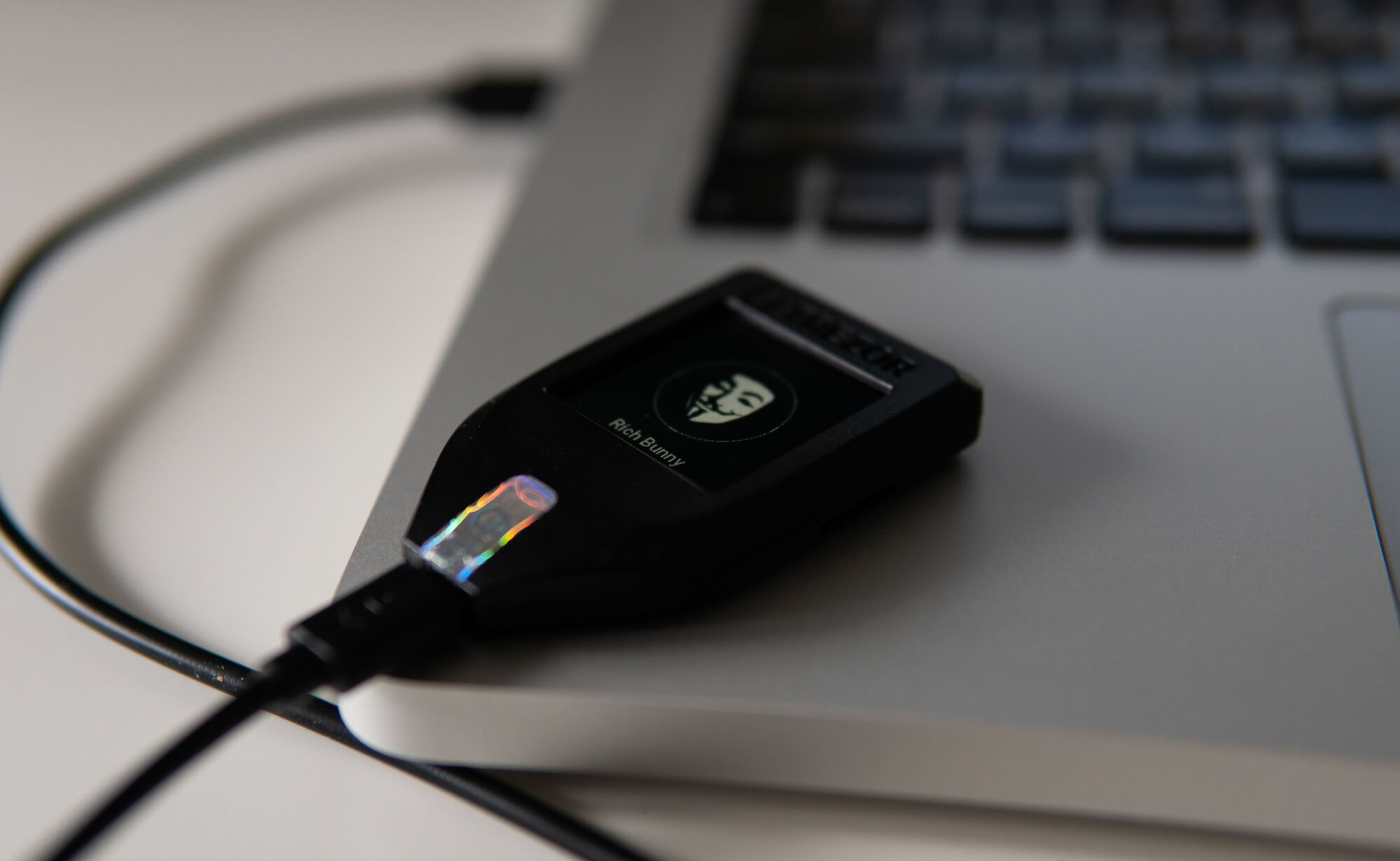
    In Switzerland a Virtual Asset Service Provider (VASP) - any financial intermediary dealing with crypto assets - is legally obliged to require proof of ownership of a customer's wallet address before withdrawals and deposits can be made. Trezor, one of the leading hardware wallet companies, is looking to simplify this process.

    Hardware wallet manufacturer Trezor is the latest to integrate the Address Ownership Proof Protocol (AOPP), a solution for providing proof of wallet address ownership, in a move to comply with enhanced regulatory requirements for Virtual Asset Service Providers (VASPs) as set by the Swiss Financial Market Supervisory Authority (FINMA) in accordance with the Financial Action Task Force (FATF) Travel Rule.

    Ownership proof for non-custodial wallets

    As one of the most proactive regulators, FINMA’s implementation of the Travel Rule requires VASPs to verify that their customer owns the withdrawal address when transacting to and from non-custodial wallets (also called unhosted wallets). Transfers involving unhosted wallets not controlled by their clients are nearly impossible anymore. The user must prove they own the unhosted wallet using suitable technical means. Currently, most VASPs do this by asking users to submit a screenshot of their wallet or conduct a Satoshi Test, whereby a specific amount of coins are sent to a verified wallet to confirm their receipt.

    “We see increased usage of non-custodial wallets, as the regulations in Switzerland are encouraging customers to transact outside of crypto exchanges. But the current verification processes are laborious and risky for consumers and compliance teams alike. Using AOPP, a VASP can accurately identify and transact with any non-custodial wallet and allow users to provide wallet ownership proofs easily, without manual effort. This greatly reduces the compliance costs and operational burden, while ensuring privacy and data protection for users and VASPs.” - Lucas Betschart, CEO of 21 Analytics

    Marek Palatinus, CEO of SatoshiLabs, the maker of the Trezor hardware wallet, agrees with the sentiment. He thinks AOPP makes it simpler and faster for users to withdraw their crypto assets to a safe place for their coins. Swiss VASPs such as SEBA Bank and Relai, as well as hardware and software wallets Bitbox, BlueWallet, and Sparrow have also joined in implementing AOPP to increase user confidence and satisfy compliance requirements.


    Share. Facebook Twitter LinkedIn Email Telegram WhatsApp

    About the author

    Editorial Office CVJ.CH
    • Website
    • Twitter
    • LinkedIn

    The CVJ.CH editorial staff consists of a team of Blockchain experts and informs daily and independently about the most exciting news.

    Related Articles

    Die Bank of England prüft Alternativen zu Haltelimits für Sterling-Stablecoins. Branchenkritik trifft auf konservative Reservepflichten.

    Bank of England opens up to alternatives for stablecoin holding limits

    SEC plans Innovation Exemption for tokenized stocks in May 2026. DTCC pilot launches July, NYSE rules already active.

    SEC prepares “Innovation Exemption” for tokenized stocks

    CME and ICE press CFTC and Congress to put Hyperliquid under oversight. At stake: 700 million USD in daily oil perpetual volume.

    CME and ICE push regulators to act against Hyperliquid

    Senator Warren accuses the OCC of granting illegal trust bank charters to nine crypto firms, including Coinbase and Ripple, citing the National Bank Act.
    19. May 2026

    Warren accuses OCC of illegal crypto trust charters

    Die Bank of England prüft Alternativen zu Haltelimits für Sterling-Stablecoins. Branchenkritik trifft auf konservative Reservepflichten.
    19. May 2026

    Bank of England opens up to alternatives for stablecoin holding limits

    PostFinance opens its crypto offering with 22 coins to Swiss corporate clients. Custody runs via Sygnum, execution only, starting in May 2026.
    19. May 2026

    PostFinance opens crypto offering to corporate clients

    twitter image button instagram image button linkedin image button youtube image button

    About Crypto Valley Journal
    About Crypto Valley Journal

    On the pulse of the movement

    • Academy
    • Contact
    • Advertising
    • About us
    • Partner
    • Imprint
    • Privacy
    • Disclaimer
    Search

    Type above and press Enter to search. Press Esc to cancel.