
Good Morning!
Not all ecosystems survived unscathed… Terra-LUNA-UST took some hits. First off, I think it is important to understand the specifics of what Terra is offering:
- LUNA: the governance token with a mint/burn mechanism to control the UST peg
- UST: the stablecoin pegged to the US dollar
- Anchor Protocol: offers the highest fixed deposit rate of 19.5% paid out in UST and is not a governance token
- Staking or bonding your LUNA will result in a minimum lock-up period of three weeks
The UST - LUNA peg works in the following way:
- 1 UST can always be exchanged for $1 worth of LUNA. E.g.: UST is at $0.95 (below peg) - in this case, anyone can buy UST at $0.95 and burn it to receive $1 worth of LUNA. This will result in UST reproaching its peg and the user receiving a $0.05 risk-free profit.
- UST is at $1.05 (above peg) - in this case, users could buy $1 worth of LUNA and burn it to receive 1 UST (worth $1.05), also resulting in UST regaining peg with the user receiving a $0.05 risk-free profit.
Interplay of UST and LUNA
So, when UST is minted, LUNA is burned. In other words, as the demand for UST goes up, the supply of LUNA goes down (and vice versa). There is a strong correlation between the UST market capitalisation and the price of LUNA. For example, in the autumn of 2021, we saw a large increase in the demand for UST due to the increasing popularity of the Anchor savings protocol and the new developed DeFi protocols on top of Terra. This led to the burning of LUNA = reduced supply (deflation). With less LUNA in circulation, combined with the popularity of the Anchor Protocol, LUNA’s price increased significantly. UST market capitalisation and the LUNA price both moved nearly 300% higher.
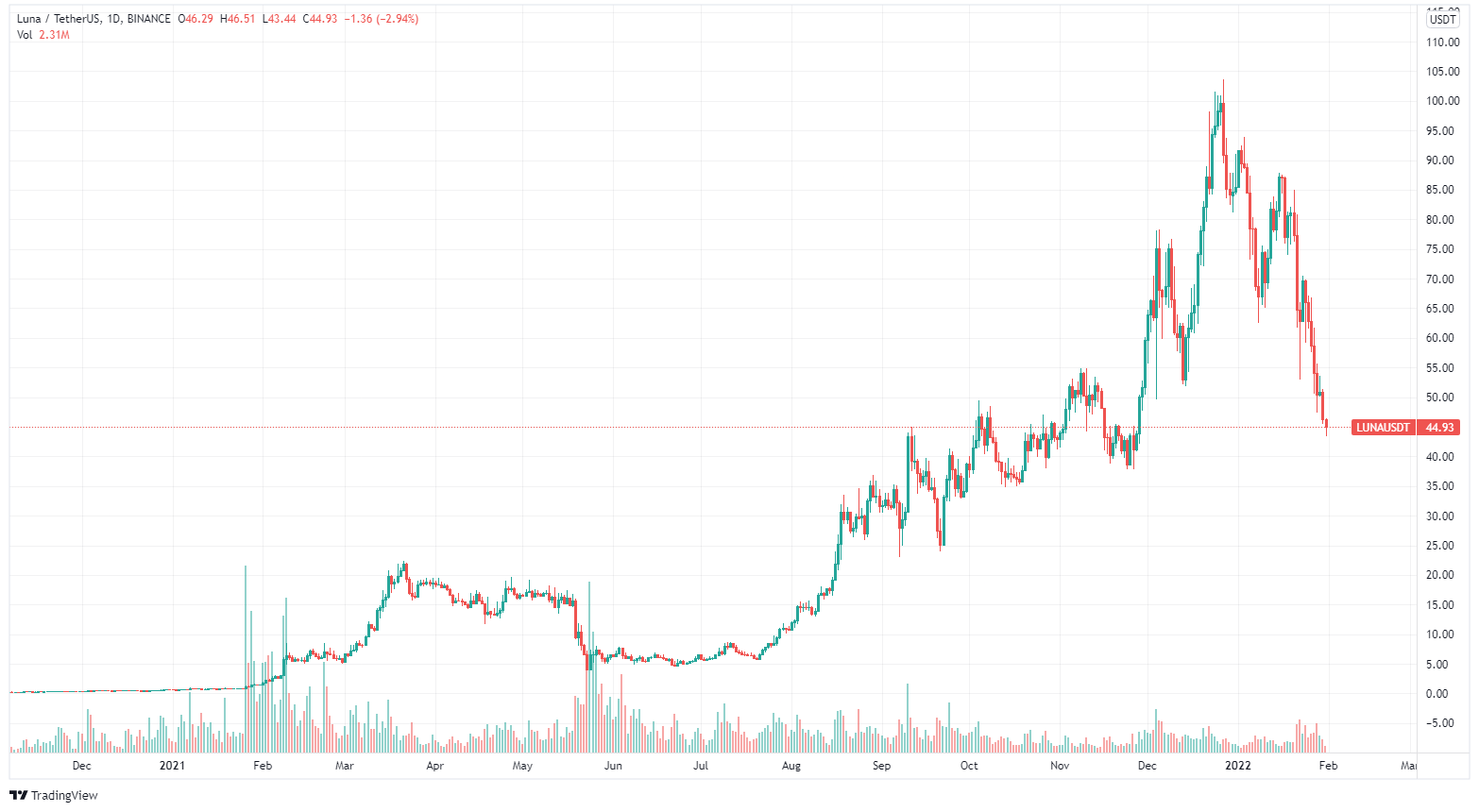
You see, at Terra’s core is the demand for UST, and the Anchor Protocol was the initial driver for that demand. But how is the Anchor Protocol able to pay such high-fixed rates across bull and bear cycles? The quick and dirty answer is that if we are in a bull market...
- More people are interested in borrowing UST on a collateralised basis (mainly LUNA or ETH), and pay a higher fixed rate than the 19.5%. That is the first revenue source.
- The second one comes from the staked LUNA (the protocol takes a cut of your staking rewards).
- The next comes from the bonded assets (your collateral: there is also a revenue cut, which goes back to the Anchor Protocol).
- The last revenue source comes from the Anchor Protocol governance token ANC as incentive airdrops.
The Anchor Protocol
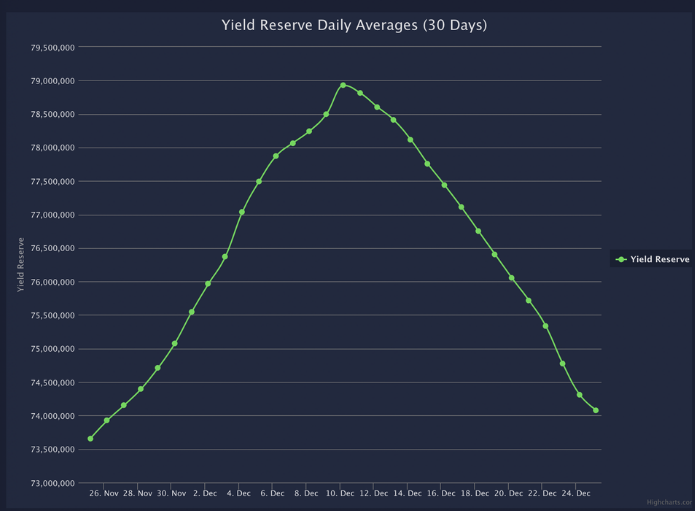
Most of the surplus of the Anchor Protocol revenues goes into their so-called YR (yield reserve). You can see below that when crypto prices increase overall, the yield reserve accumulates, and when markets cool off, the yield reserve decreases. Do Kwon (the founder of Terra) believes that over 55% of the time effective money market rates in the crypto ecosystem are above the 19.5% Anchor Protocol fixed deposit rate. Over time, this would result in an overall surplus of the YR. In case a bear market takes longer than expected, the YR will be used down to zero, and the 19.5% fixed deposit rate will be readjusted. Do Kwon believes that with the staking rewards plus the ANC airdrop incentives, the fixed rate will be at around 15%.
This sounds like a safe bet, does it not? Well, there is always a tail risk, especially in the crypto market. The fact that the Terra ecosystem started to grow mainly on the DeFi side, with various protocols that offered high yield farming incentives, the risk of a fast deleveraging when overall crypto prices start to drop was always looming on the horizon. To be honest, the overall ecosystem of Terra managed the price crash very well, but some additional optionality of the exit liquidity tail risk did strike, and (as usual) all at the same time. For example, when the unwinding of those high yield farming incentive pools started, the amount of UST, which was swapped to USDT, left the market makers with no choice but to move their price lower.
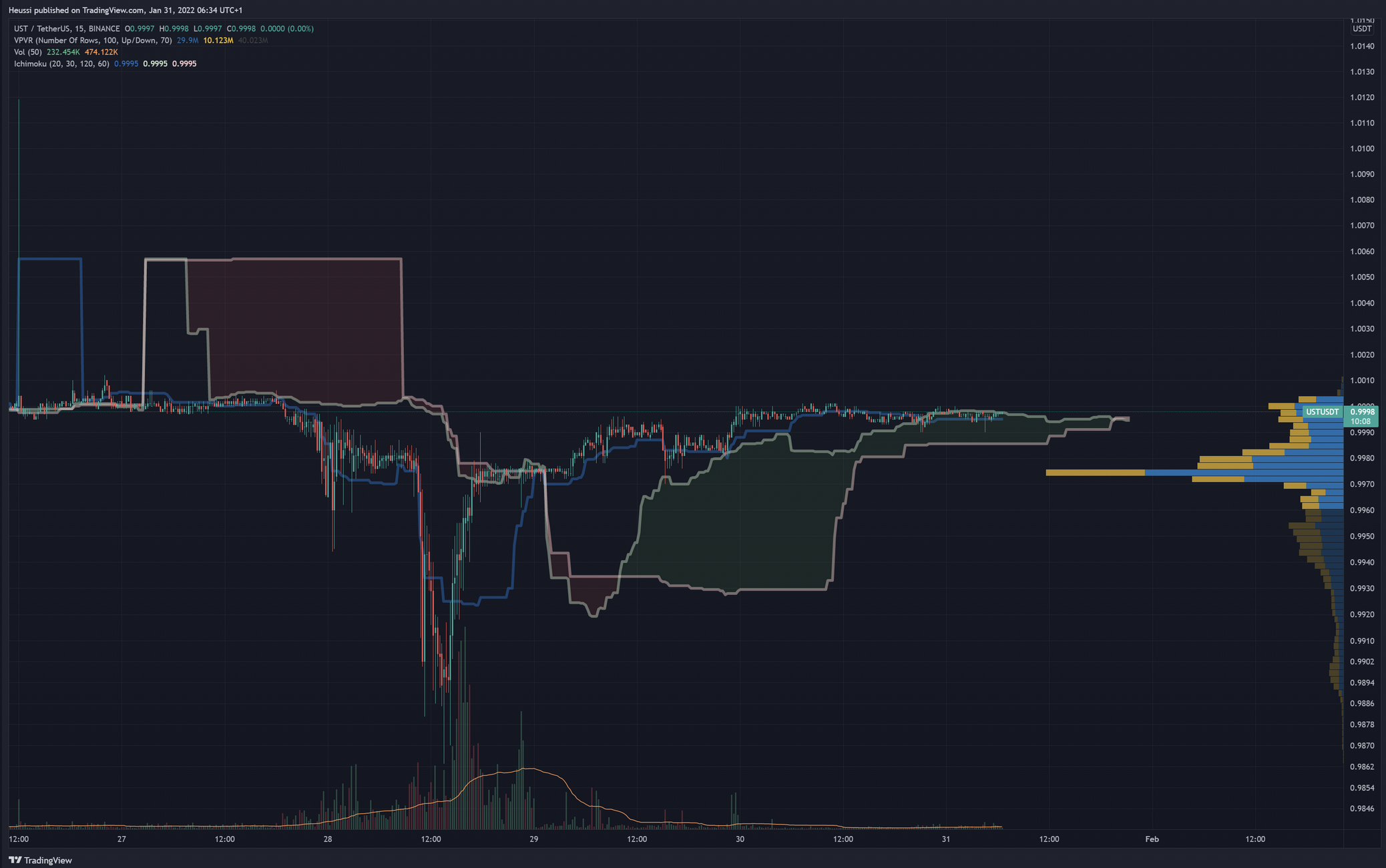
This triggered some real panic because traders not only lost (or were close to being liquidated) on their borrowed positions on the Anchor Protocol, they also now faced a 1.5% loss on their full UST capital if they wanted to fully unwind their Terra exposure. The panic was short-lived with the peg back to almost 1:1.

Stability in the ecosystem
I think two main points helped the stability of the overall Terra ecosystem:
- The three-week lock-up period on your staked or bonded assets (it slows down the wave of exit liquidity)
- The new protocols, e.g. Kujira Orca and the Whitewhale Protocol. The Kujira Orca Protocol is incentivising traders to take liquidation trades, similar to what you can do when Maker vaults are liquidated. The Whitewhale Protocol is an arbitrage vault where you can put your UST liquidity, and the arbitrage bot will work its magic, which helps to move the peg back in line.
What I like about the Terra ecosystem, on the whole, is the tight correlation of UST demand, which shows adoption and a growing user base, as well as the use cases with the LUNA price.
Let us see how this all unfolds in the next bull run.
All intellectual property, proprietary and other rights and interests in this publication and the subject matter hereof are owned by Crypto Broker AG including, without limitation, all registered design, copyright, trademark and service mark rights.
Disclaimer
This publication provided by Crypto Broker AG, a corporate entity registered under Swiss law, is published for information purposes only. This publication shall not constitute any investment advice respectively does not constitute an offer, solicitation or recommendation to acquire or dispose of any investment or to engage in any other transaction. This publication is not intended for solicitation purposes but only for use as general information. All descriptions, examples and calculations contained in this publication are for illustrative purposes only. While reasonable care has been taken in the preparation of this publication to provide details that are accurate and not misleading at the time of publication, Crypto Broker AG (a) does not make any representations or warranties regarding the information contained herein, whether express or implied, including without limitation any implied warranty of merchantability or fitness for a particular purpose or any warranty with respect to the accuracy, correctness, quality, completeness or timeliness of such information, and (b) shall not be responsible or liable for any third party’s use of any information contained herein under any circumstances, including, without limitation, in connection with actual trading or otherwise or for any errors or omissions contained in this publication.
Risk disclosure
Investments in virtual currencies are high-risk investments with the risk of total loss of the investment and you should not invest in virtual currencies unless you understand and can bear the risks involved with such investments. No information provided in this publication shall constitute investment advice. Crypto Broker AG excludes its liability for any losses arising from the use of, or reliance on, information provided in this publication.