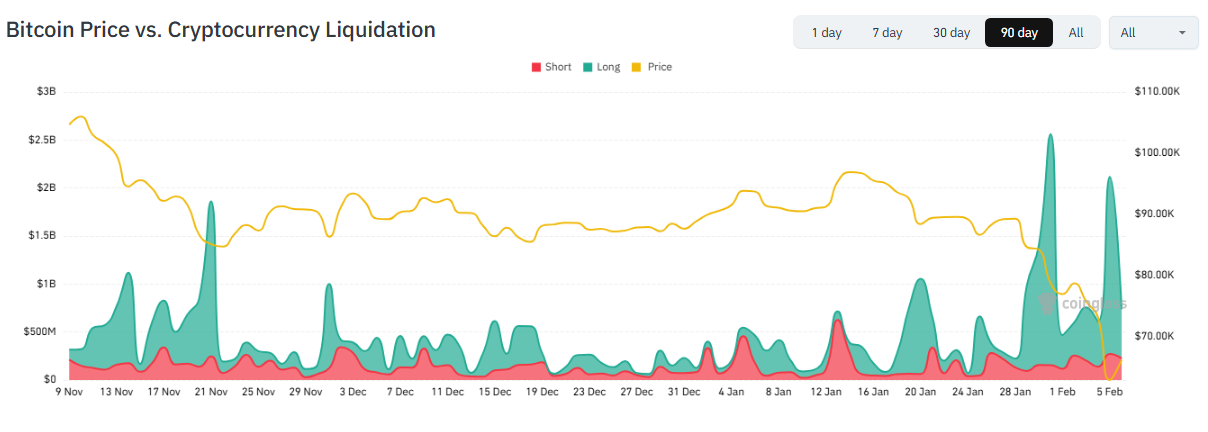
Bitcoin fell to $60,033 during early Asian trading. The nearly 14 percent single-day decline marks the lowest level in over a year. Since the start of 2026, the cryptocurrency has lost 26 percent.
From its all-time high above $127,000 in October 2025, the drawdown now stands at nearly 50 percent. This wipes out all gains since President Donald Trump's election in November 2024. Bitcoin had already broken below the $70,000 level on February 5. The intraday decline from midnight reached 10.5 percent. That makes it the sharpest single-day drop since the collapse of FTX on November 8, 2022. Within 24 hours, the price fell as much as 15 percent and briefly touched the $60,000 mark.
Billion-dollar liquidations hit leveraged positions
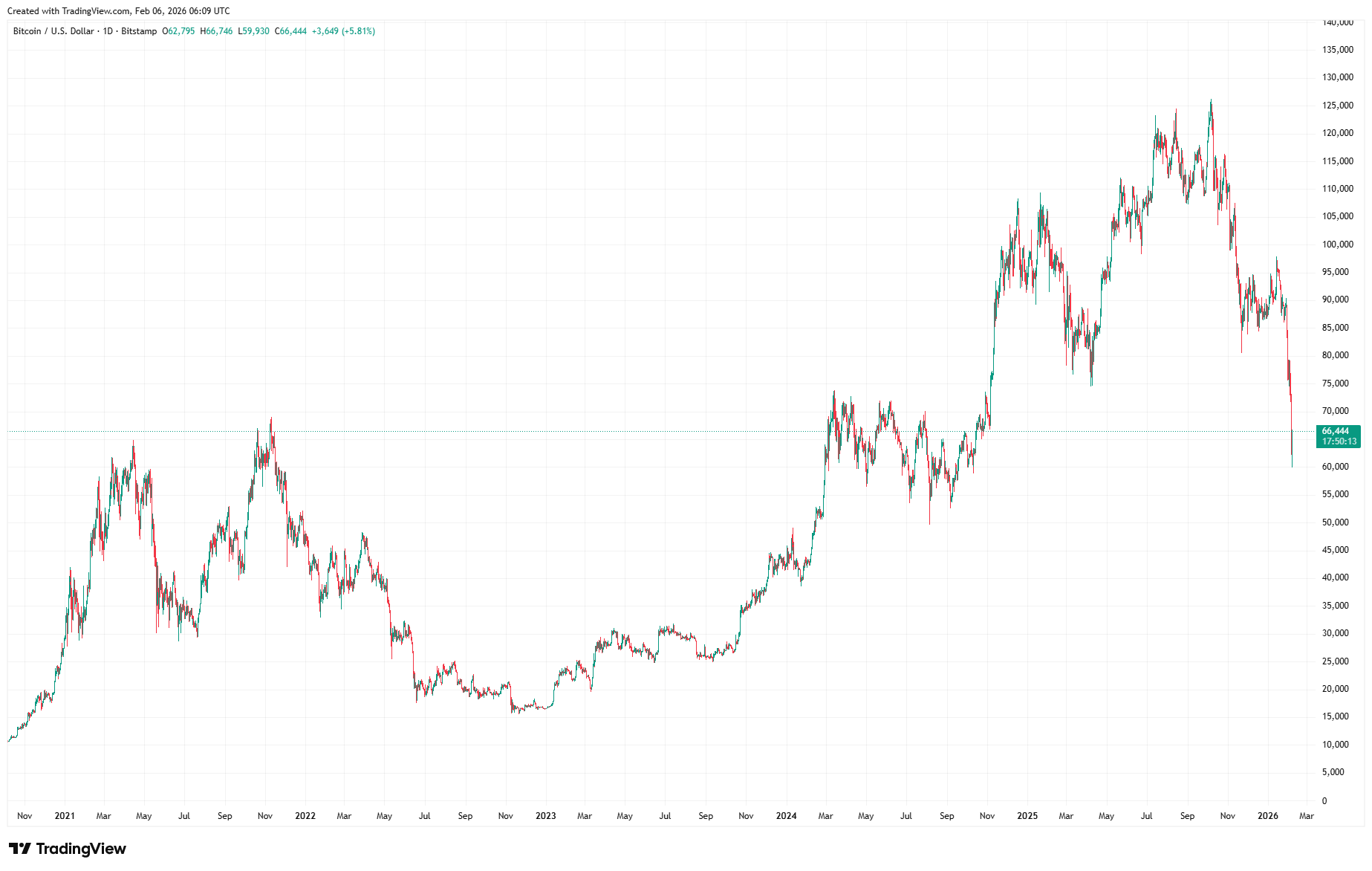
The crash triggered a cascade of forced liquidations. More than $2.58 billion in leveraged crypto positions vanished. Around 82 percent of these liquidations came from long traders who had bet on rising prices. In total, the selloff hit over 530,000 traders.
Bitcoin accounted for the largest liquidated positions at over $1.3 billion. Ethereum followed with roughly $570 million, and Solana with nearly $190 million. The single largest liquidation occurred on the Hyperliquid platform, an ETH-USD position worth $222.65 million.
The total crypto market lost around $350 billion in market capitalization on February 6. Over the past week, roughly half a trillion dollars vanished. And in just 22 days, losses across digital assets exceeded $900 billion.
ETF outflows accelerate downward pressure
Institutional demand has fundamentally reversed. US spot Bitcoin ETFs, which bought 46,000 Bitcoin in the prior year, became net sellers in 2026. From November 2025 through January 2026, the spot Bitcoin ETF complex lost approximately $6.2 billion in net capital. This produced the longest sustained outflow streak since these products launched.
A look at individual days underscores the scale. On January 29, investors withdrew nearly $818 million. Net outflows on February 4 amounted to $545 million. Before the weekend, another $510 million followed, led by BlackRock's IBIT. Over the past two weeks, outflows totaled $2.8 billion according to CoinGlass.
Bitcoin now trades well below the average price that ETF investors paid for their holdings. This could trigger further selling.



Strategy falls below cost basis
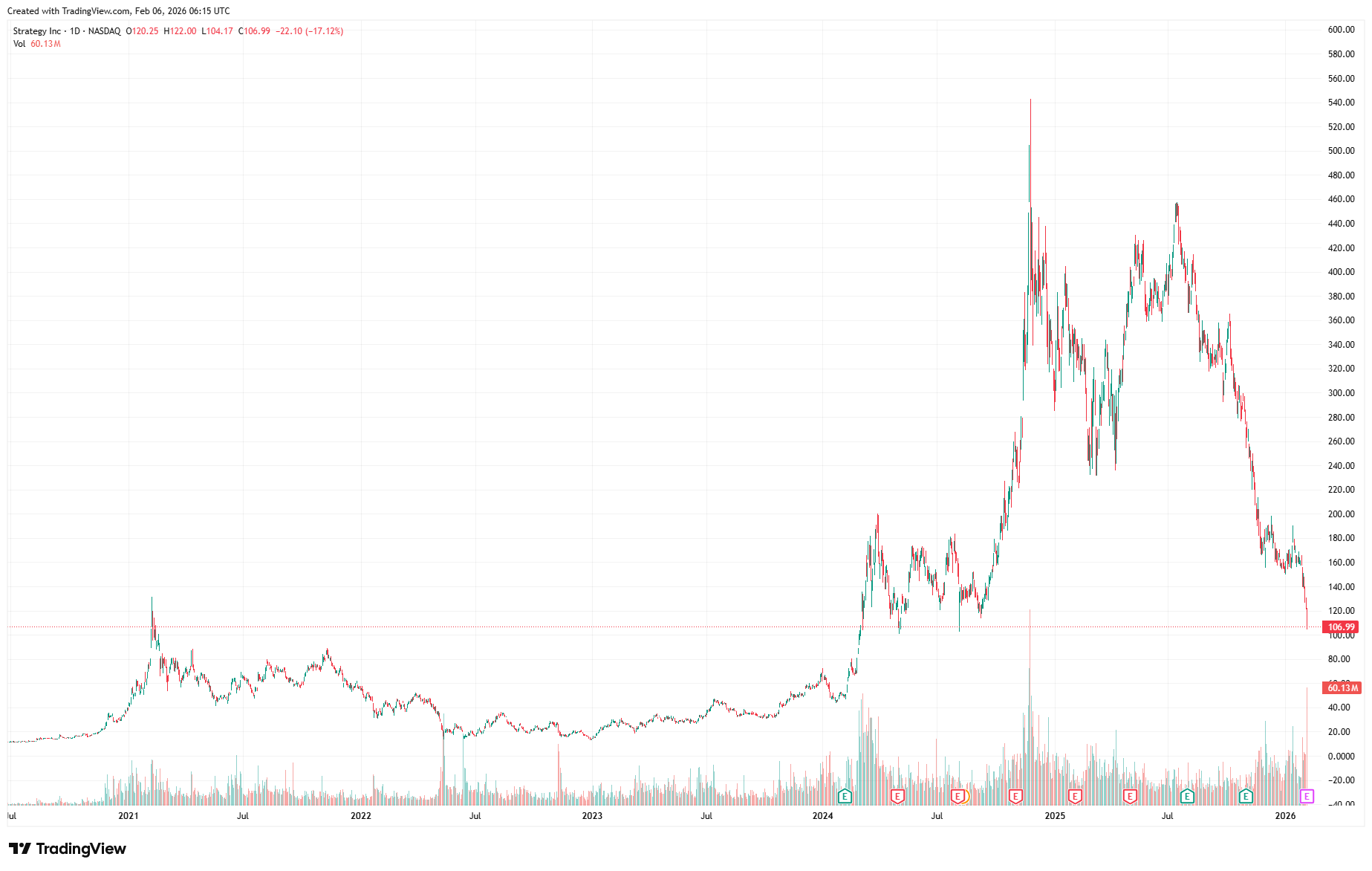
Strategy, formerly MicroStrategy and the largest corporate holder of Bitcoin, faces particular pressure. The stock plunged more than 17 percent on Thursday. At that point, Bitcoin's price had already fallen below Strategy's average acquisition cost of roughly $76,000 per coin.
MSTR shares fell to $106. From the all-time high of $460, that represents a decline of over 75 percent. At the same time, the market capitalization shrank from over $130 billion to $35 billion. In addition, the company reported a $12 billion loss in the fourth quarter. This loss stemmed from the mark-to-market valuation of its Bitcoin holdings.
Analysts see no acute insolvency risk. Strategy holds 712,647 unencumbered Bitcoin worth over $45 billion. Against this stand convertible notes of $8.2 billion. Not a single Bitcoin serves as collateral, so there is no risk of a forced sale at this point.
Crypto winter, not a correction
The selloff extends well beyond Bitcoin. Ethereum sits near $1,900, a 29 percent decline in seven days. Solana broke through the psychological $100 mark on February 4 and crashed below $80. Both altcoins lead the list of worst performers among major cryptocurrencies in 2026. Meanwhile, silver also lost 14 percent in a single day. It now trades nearly 40 percent below its record high from a week earlier.
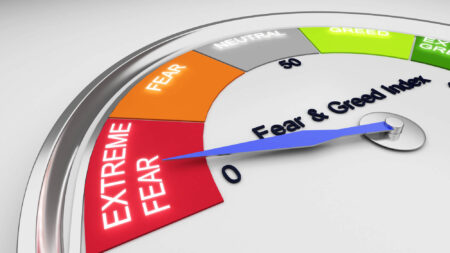
Technical indicators support this assessment. Bitcoin broke below its 365-day moving average for the first time since March 2022. Both the 50-day and 200-day moving averages are falling. The Fear and Greed Index stands at 14, corresponding to extreme fear. Investors are pulling out of riskier assets and rotating into traditional safe havens like gold.
Fed policy and macro environment weigh on markets
The Federal Reserve held its benchmark rate at 3.50 to 3.75 percent in January 2026. This followed three consecutive rate cuts in 2025. Inflation remains elevated. President Trump's tariff policies could push goods inflation higher in the coming months.
Markets continue to price in roughly two quarter-point cuts for 2026. Morgan Stanley projects cuts in June and September. Fed Chair Powell's term ends in May 2026, creating additional uncertainty about the future path of monetary policy. The room for monetary easing remains limited as long as inflation data shows no clear cooling.