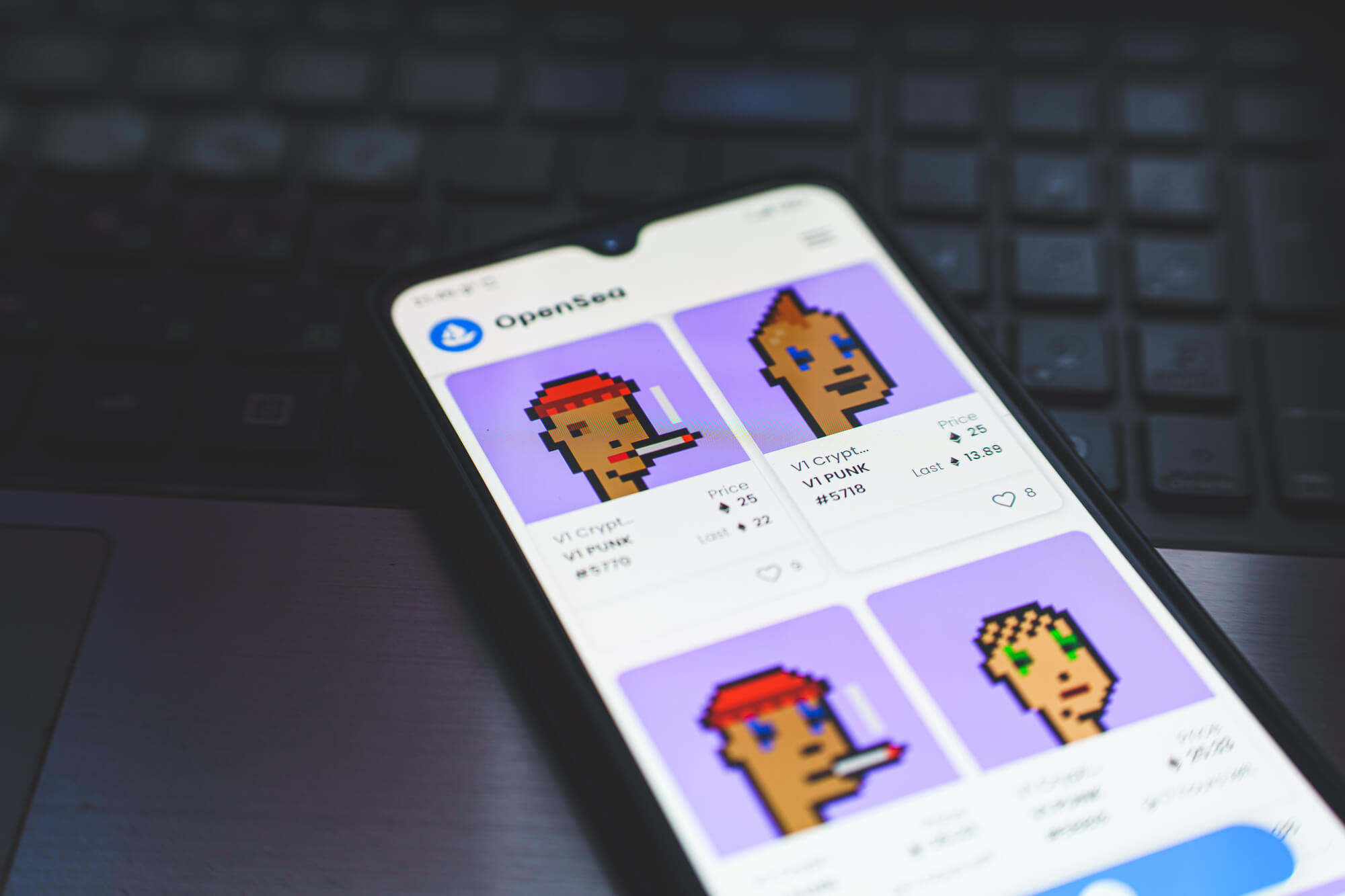
Since gaining mainstream popularity during the last two years, non-fungible tokens (NFTs) have continued to make headlines in the world of blockchain. Currently they're mainly used as profile pictures in social media networks such as Twitter. Many interpret this is a sign that more people are ready for an ownership economy.
In 2021, NFTs generated roughly $10.67 billion in trading volume. In Web3, where decentralized ownership and rewards to creators and communities are becoming mainstream, NFTs have clearly found their place. When people talk about owning an NFT, they often describe it in terms of proof of ownership of an original work of art or music on the blockchain. This sometimes includes the rights to this original creation and all of the values that are attached to the asset. So the ownership is provable and verifiable by anyone on-chain – even though the digital copies may be easily “right-click-saved.” This is why buyers are willing to splurge on even the highest-priced NFTs.
The NFT profile picture craze
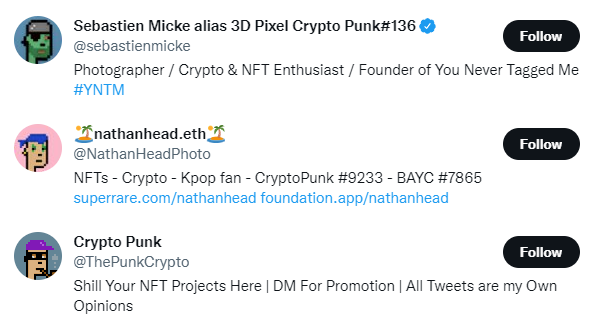
Using NFTs as Profile pictures (PFPs) started on the Ethereum blockchain in 2017 when 10,000 unique avatars called CryptoPunks were minted and shared for free. These NFTs were seen as collectibles at first but crypto blockchain enthusiasts began using them on social media as a symbol of their unconventional and pseudonymous identity with the crypto community.
While most of the NFTs are initially purchased for enjoyment of their artistic value with nominal price, others are purchased later more for their ability to offer social identity and community. Famous Bored Ape Yacht Club (BAYC) pieces aren’t your typical piece of art. They appear simplistic in nature but their popularity drives buyers to fork out hundreds of thousands of dollars on a single bored ape because of its utility. Holders including celebrities and casuals alike get access and recognition to an exclusive community.
Just a toy for rich people?
As logic suggests, very expensive things are almost exclusively bought by very rich people. The same applies to NFTs. The potential worth of an NFT is determined by scarcity, utility and how others perceive the NFT. Similar to how a wealthy person shows off their status via luxury goods, an NFT owner shows off their digital assets through profile pictures on social media.
Since BAYC NFTs launched early last year, blockchain influencers and celebrities globally have purchased these NFTs at exorbitant prices. This shows off their social status and the craze for NFTs. From Paris Hilton, Reese Witherspoon, Snoop Dog to Eva Longoria and Serena Williams, these celebrities have expressed their love for digital avatars and commitment to the crypto community. Some have purchased CryptoPunks, Doodles, and World of Women NFTs.
On Discord groups, Telegram chats, or Twitter, you’re likely to see users sporting their NFT PFPs. This signals to other community members that the user is actively engaged in crypto. They are likely to be a member of various sub-communities within the space – from communities based around specific projects to actual clubs, like friends with benefits (FWB).
Social currency in an ownership economy
NFTs demonstrate digital asset ownership, provenance, and authenticity which is one of the visions of Web3 – allowing unique ownership of digital assets. Web2 introduced us to proliferation and participation on the internet. But it also gave ownership of our data to a handful of tech companies for monetization and profiteering. Web3, however, has the potential to redistribute the control, ownership and rewards to creators and communities.
With Web3, we can envision a world in which decentralization and ownership are mainstream using NFT as a tool. This is an evolutionary step toward technology adoption, where online content and technology are increasingly created, operated, and controlled by the people who use them. Such adoption of communally owned products and services allows for a more equitable society.
At the start of 2022, Twitter launched its new NFT profile picture verification feature. Now, users can connect their Ethereum wallet to their Twitter account and select any NFT as their Twitter profile picture. This allowed users to prove the ownership of their NFTs to their social media following.
Twitter as a case study
With a user base of over 330 million worldwide, Twitter is getting the adoption of NFT profile pictures to a mainstream userbase. The platform is opening up the curiosity of a new audience to a world where decentralized ownership thrives. Twitter’s feature shows us that while anyone can save a digital avatar, only the owner of an NFT can prove ownership by plugging in their Ethereum wallet and getting the hexagon verification. This is a game-changer as the first mainstream web2 company embraces the web3 identity as part of their core products.
Meta (ex Facebook) also recently announced that they will add NFTs to Instagram. All these adoptions by big brands project the growth potential of NFT technology and increased utility for efficiencies and authentication. They join a crowded bandwagon of NFT investors subscribed to the mindset that NFTs can be exchanged for social status across web2 and web3 world, and in all the metaverses.
As the trend of NFT profile pictures takes off, one can assume several implications NFTs will have on the mainstream. First, it will drive a conversation about NFTs and whether their value can be embraced beyond the metaverse. This conversation will open the door for crypto beginners to gradually increase their knowledge of web3 in a way that’s as socially valuable as it is profitable.