A summarizing review of what has been happening at the crypto markets of the past week. A look at trending sectors, liquidity, volatility, spreads and more. The weekly report in cooperation with market data provider Kaiko.
The last 7 days in cryptocurrency markets:
- Price Movements: The tokens for the decentralized derivatives exchanges dYdX and GMX have surged since the collapse of FTX.
- Market Liquidity: Dollar trading volumes for BTC markets dropped to two year lows relative to Tether.
- Derivatives: BNB funding rates dip to their most negative this year.
- Macro Trends: BTC's correlation with equities has rebounded from yearly lows following three weeks of low volatility.
Markets rebound in anticipation of Fed pivot
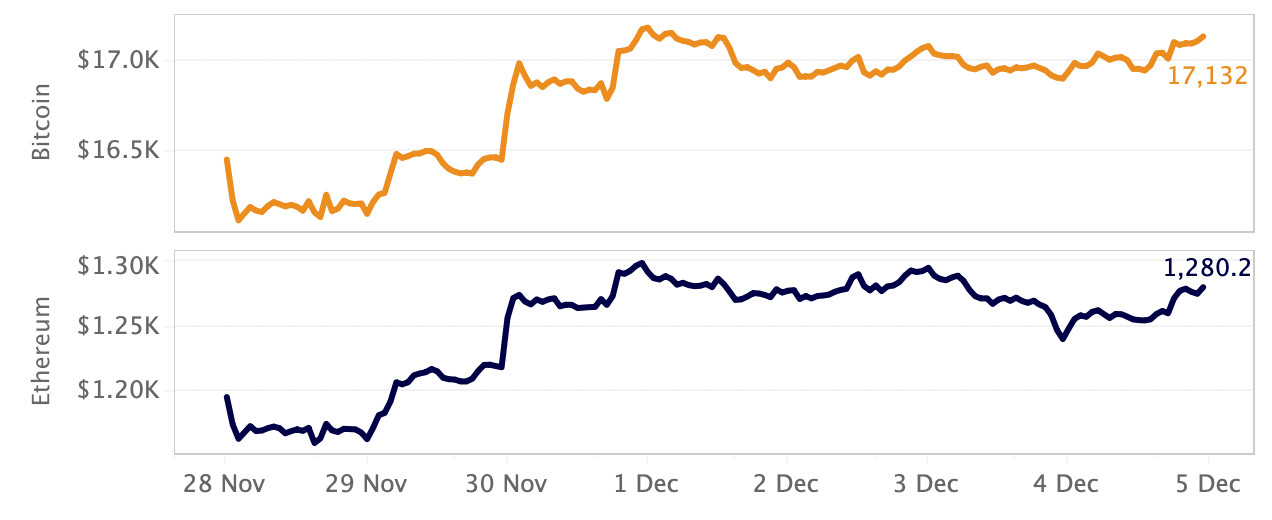
Markets traded up on the week to begin December as investors seem to be buying the Fed pivot story, predicting that May 2023 will be the peak in the benchmark policy rate. Binance’s BNB chain was hit by two attacks in the same week with a combined $20m in liquidity drained across two of its protocols. Meanwhile, Coinbase Wallet removed support for XRP, BCH, ETC and XLM citing low usage and disabled NFT transfers on its iOS wallet app after Apple demanded 30% of all gas fees on in-app transactions. Finally, MakerDAO voted to hike DAI rewards to 1%, Aave froze lending activities on 17 assets and SBF continued a string of media appearances attempting to rebuild his image.
Derivative DEX tokens outperform
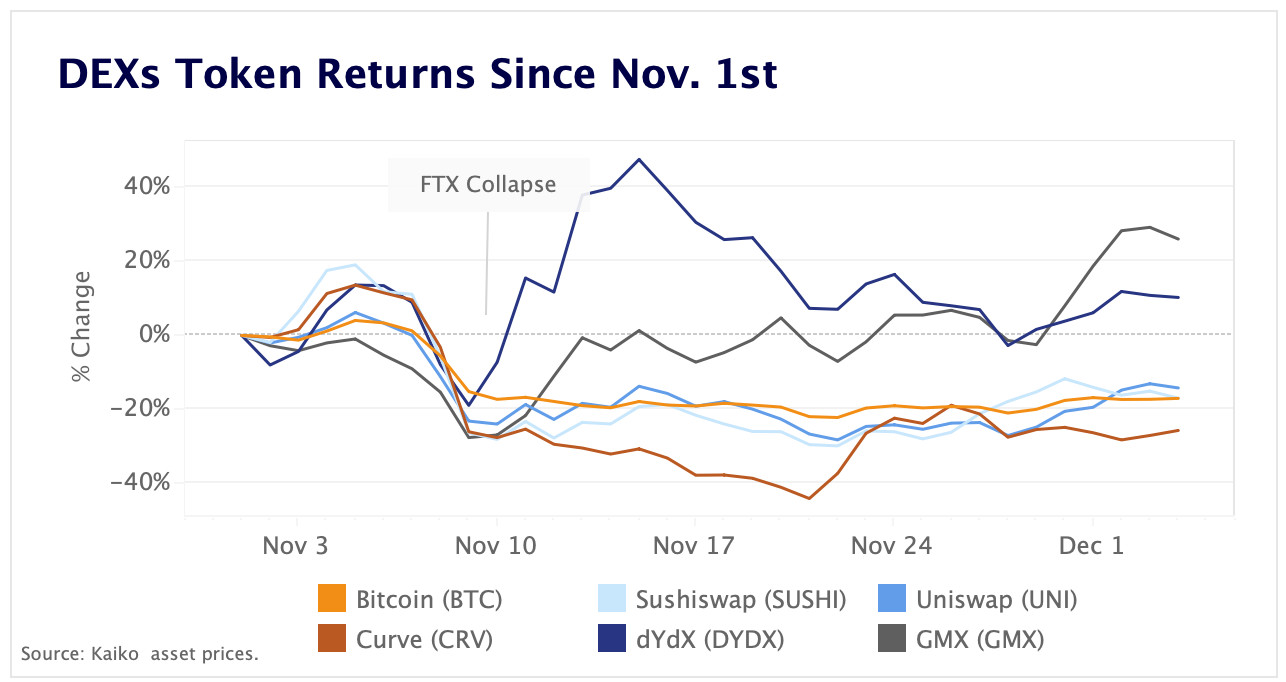
The tokens associated with the decentralized derivatives exchanges dYdX and GMX have outperformed both BTC and non-derivatives DEXs in recent weeks. dYdX and GMX’s tokens are up 26% and 10.3% respectively since November 1st while BTC is down 17%. Other DEX tokens are down double digits despite a shift in narrative around decentralized trading and custody following the collapse of the centralized exchange FTX.
Open interest on GMX surged to a high of nearly $200mn USD on November 26 but has since fallen to $120mn; dYdX’s open interest stands at over $300mn. So, while these decentralized alternatives have gained serious traction, they are still small compared to centralized derivatives exchanges.
APE recovers 50% from all-time lows ahead of staking roll out
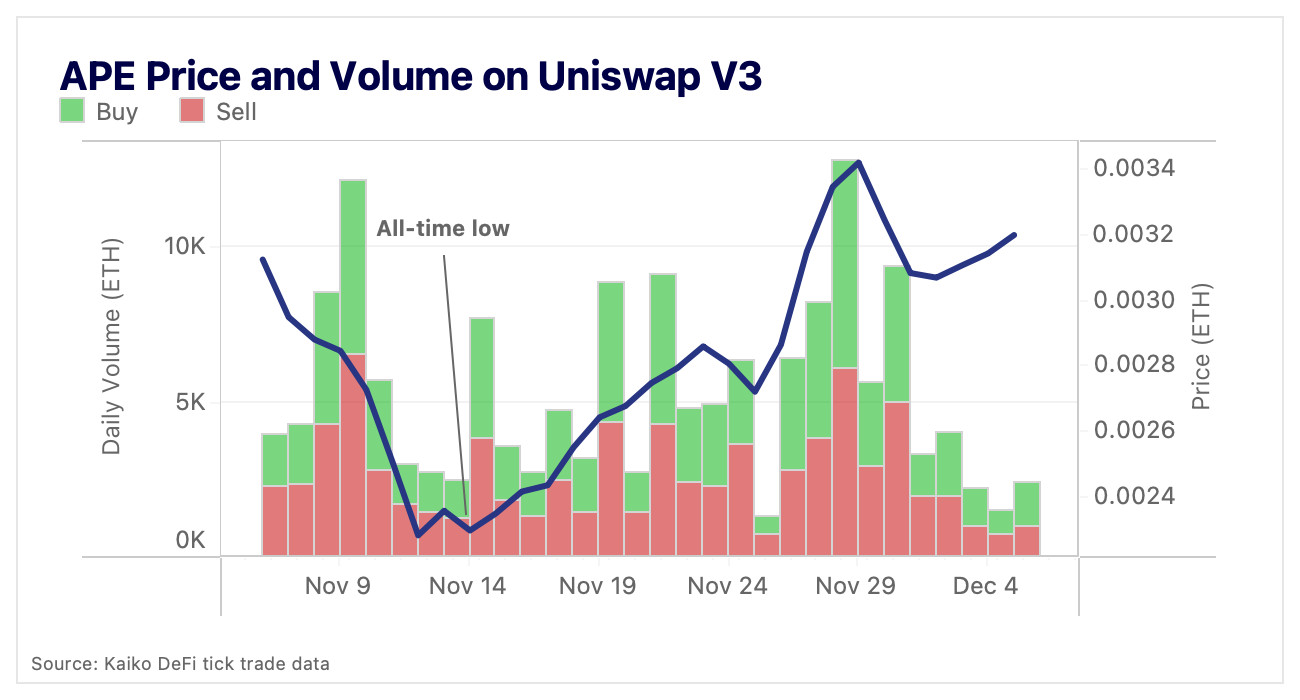
Apecoin (APE), the token associated with Bored Ape Yacht Club and Yuga Labs, surged ahead of staking going live on December 5. Currently, the token’s primary use case is governance, though it will also be used to “provide access to certain parts of the ecosystem that are otherwise unavailable.” Interestingly, Vitalik Buterin, cofounder of Ethereum, criticized governance tokens last week amidst excitement over APE staking.
Staking will begin with a pre-distribution period, during which users will be able to stake their NFTs and/or tokens before rewards are distributed. This is intended to reduce the likelihood of a “gas war”, caused by Yuga Labs’ Otherside release. APE hit all-time lows in both USD and ETH terms in the wake of FTX’s collapse, but has since surged over 50% as traders speculate and BAYC NFT holders accumulate the token to maximize their staking rewards.
Trade volumes hold steady despite record exchange outflows
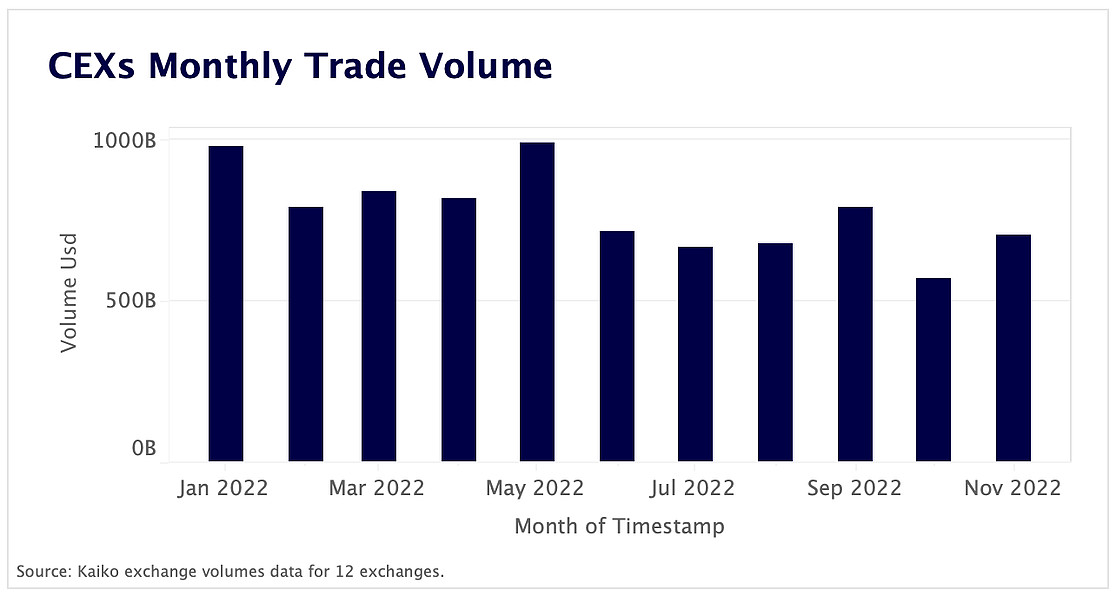
Monthly trade volume jumped by 23% to $705B for the largest exchanges in November, bolstered by FTX-related volatility. The increase was mainly driven by Binance which registered a 30% increase in trading activity. Coinbase and Kraken also saw their volume rise while smaller exchanges’ volume fell.
As discussed in our previous Deep Dive, it seems likely that both Binance and U.S.-regulated exchanges like Coinbase and Kraken could benefit from FTX’s demise. U.S.-regulated exchanges may benefit from increased volume from users and institutions who have become more wary of off-shore exchanges. Binance may benefit, despite not having an official headquarters, because it has projected an image of strength through the crisis and because it has by far the best liquidity of any centralized exchange.
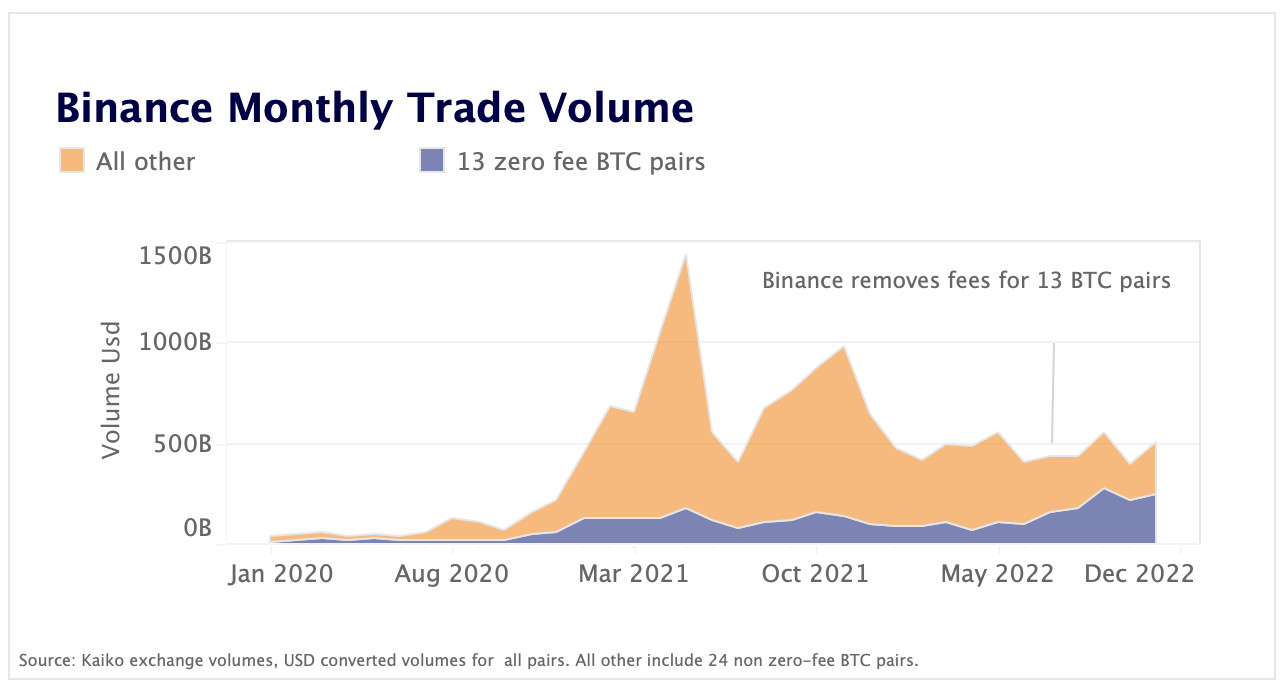
In July Binance removed trading fees for 13 Bitcoin pairs which considerably boosted trading activity on its platforms. Zero-fee BTC trading accounted for half of all trading volumes on the exchange in November up from 25% in June.
The U.S. Dollar loses crypto market share
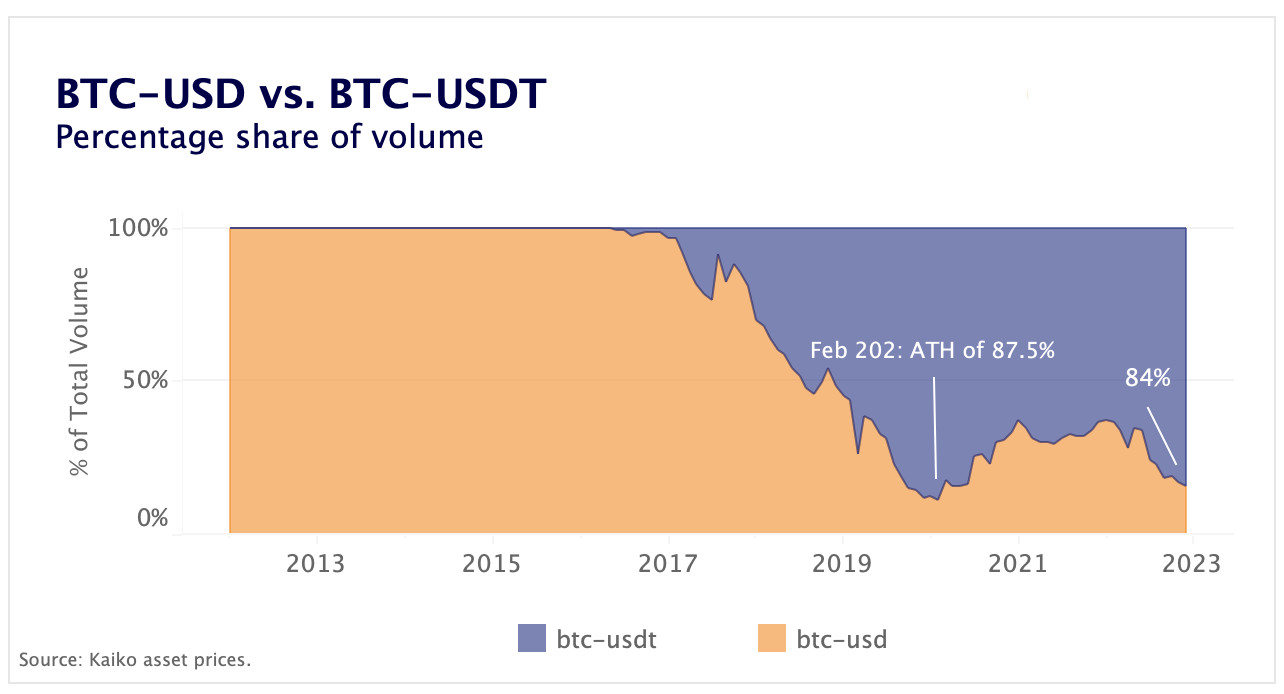
BTC-USDT trading volume relative to BTC-USD hit its highest level in over two years last week, reaching 84% of market share. Historically, BTC-USD vs. BTC-USDT trading volume could be considered an indicator of institutional inflows into crypto. During the 2021 bull market, institutional traders poured funds into crypto markets via U.S. platforms, boosting market share for BTC-USD relative to BTC-USDT. This trend has since reversed.
The trend has been exacerbated by the rising dominance of Binance on spot markets. The outsized influence of USDT markets on BTC's price discovery has raised concerns amid renewed rumors that Tether’s parent company is lending its own token against crypto collateral and could experience liquidity issues.




Negative sentiment surrounds BNB perps
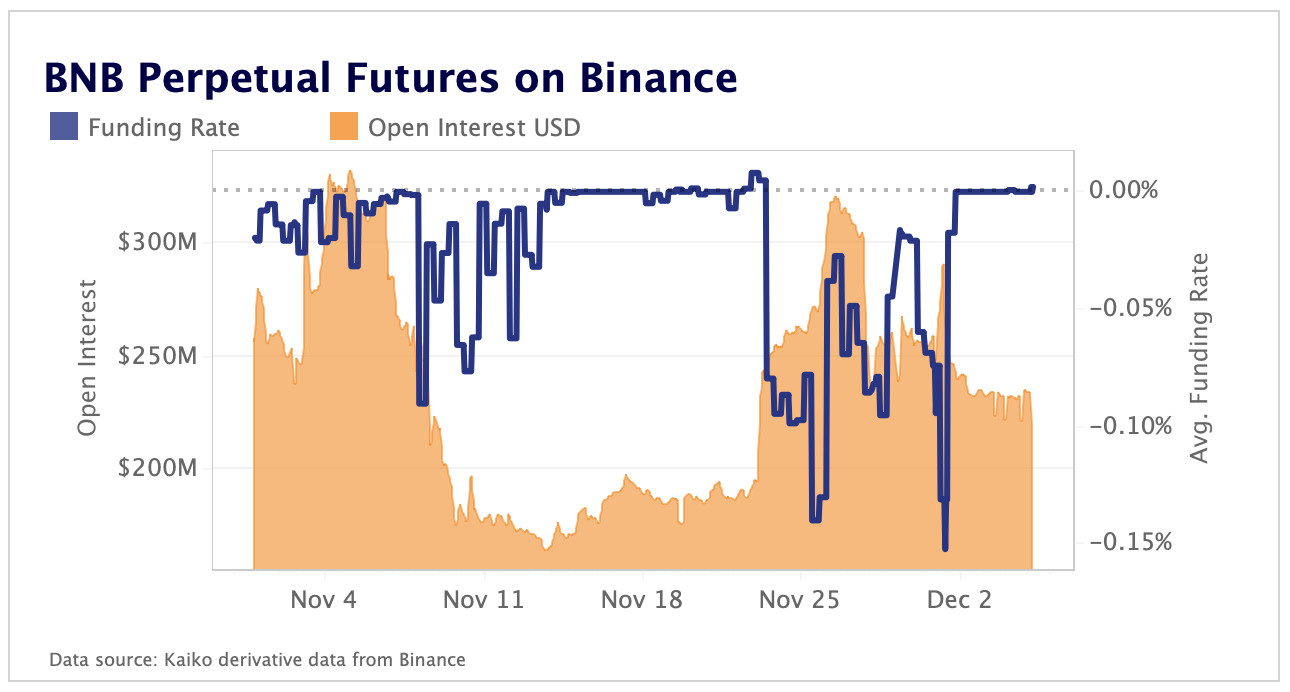
BNB perpetual futures activity on Binance is showing clear signs of uncertainty surrounding the exchange’s native token. As was the case for most tokens, open interest measured in USD plummeted following the collapse of FTX. However, BNB’s open interest rose over 70% in the following weeks. Interestingly, this rally in open interest coincided with BNB's lowest funding rates of the year.
Negative funding combined with a rise in open interest indicates more short positions were being taken up. While funding has bounced back to neutral to start December, there are clear shades of negativity regarding BNB from the perpetual futures markets as exchange tokens and their purpose come under more scrutiny than ever.
U.S. inflation gauges show signs of easing
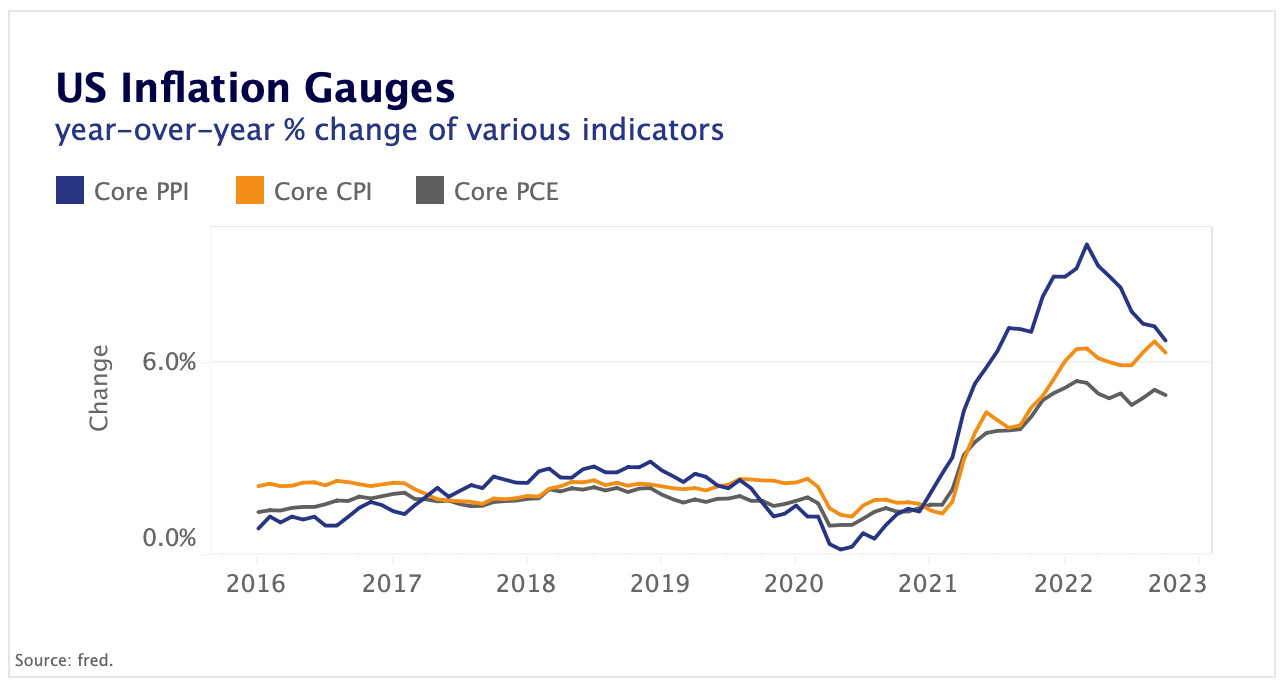
The Fed’s preferred inflation gauge – the Personal Consumption Expenditures (PCE) – rose less than expected in October, adding to hopes that price pressures in the U.S. are easing. The reading comes after two other widely followed inflation indicators – the consumer and producer price index – also slowed in October. The U.S. central bank is expected to slow down the pace of monetary tightening this month after an unprecedented series of four consecutive 75bps increases. However, the Fed has also signalled that the level of interest rates will likely stay higher for longer, fueling recession fears. This is bad news for risk assets which tend to suffer during periods of recession, with equities losing on average between 20-30% of their value.
BTC's correlation with equities rebounds
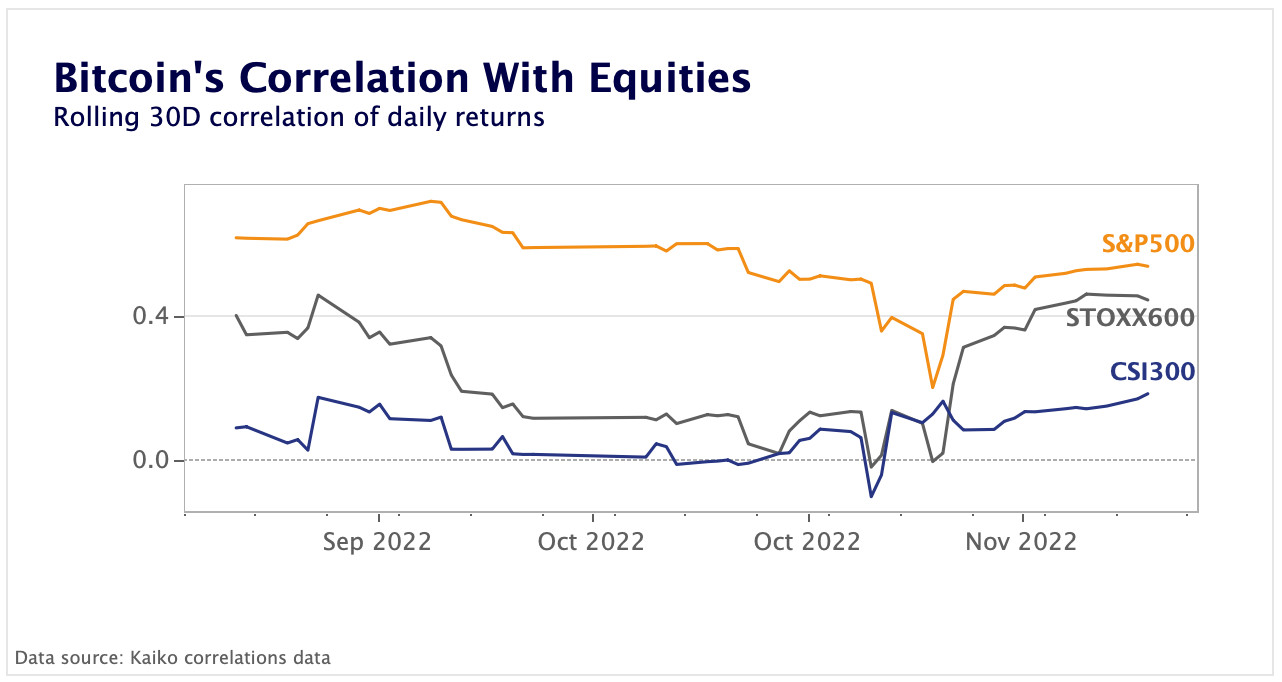
While Bitcoin's (BTC) correlation with equities fell to a yearly low after the collapse of FTX, it has rebounded over the past few weeks. Interestingly, BTC has been mostly uncorrelated with Chinese markets over the past year. However, its correlation with China’s equity benchmark (the CSI 300) has been on the rise in November and currently hovers around .2, double the 2022 average.
Hopes that China will relax its stringent zero-covid policy – after the largest wave of protests in decades – have been among the main narratives driving markets over the past week. Overall, research suggests that China’s reopening will have a significant impact on global risk sentiment despite the country’s limited integration in the global financial system.