
The failure of the US-based Silicon Valley Bank (SVB) has caused a crisis in the stablecoin market. Around 8% of the reserves of the second-largest stablecoin, USDC, are held by the US financial institution, which led to panic in the crypto markets over the weekend.
USD Coin (USDC) has established itself as the primary base currency for DeFi applications, with a market capitalization of $40 billion. The token is issued by regulated US institution Circle Financial and is widely regarded as the best-regulated stablecoin. The USDC reserves are held at major banking giants, and a comprehensive audit is conducted annually by "Big Four" auditor Deloitte. Ironically, it was precisely this high degree of compliance that proved to be a major issue, leading to a market-wide de-pegging of billions of dollars' worth of stablecoins.
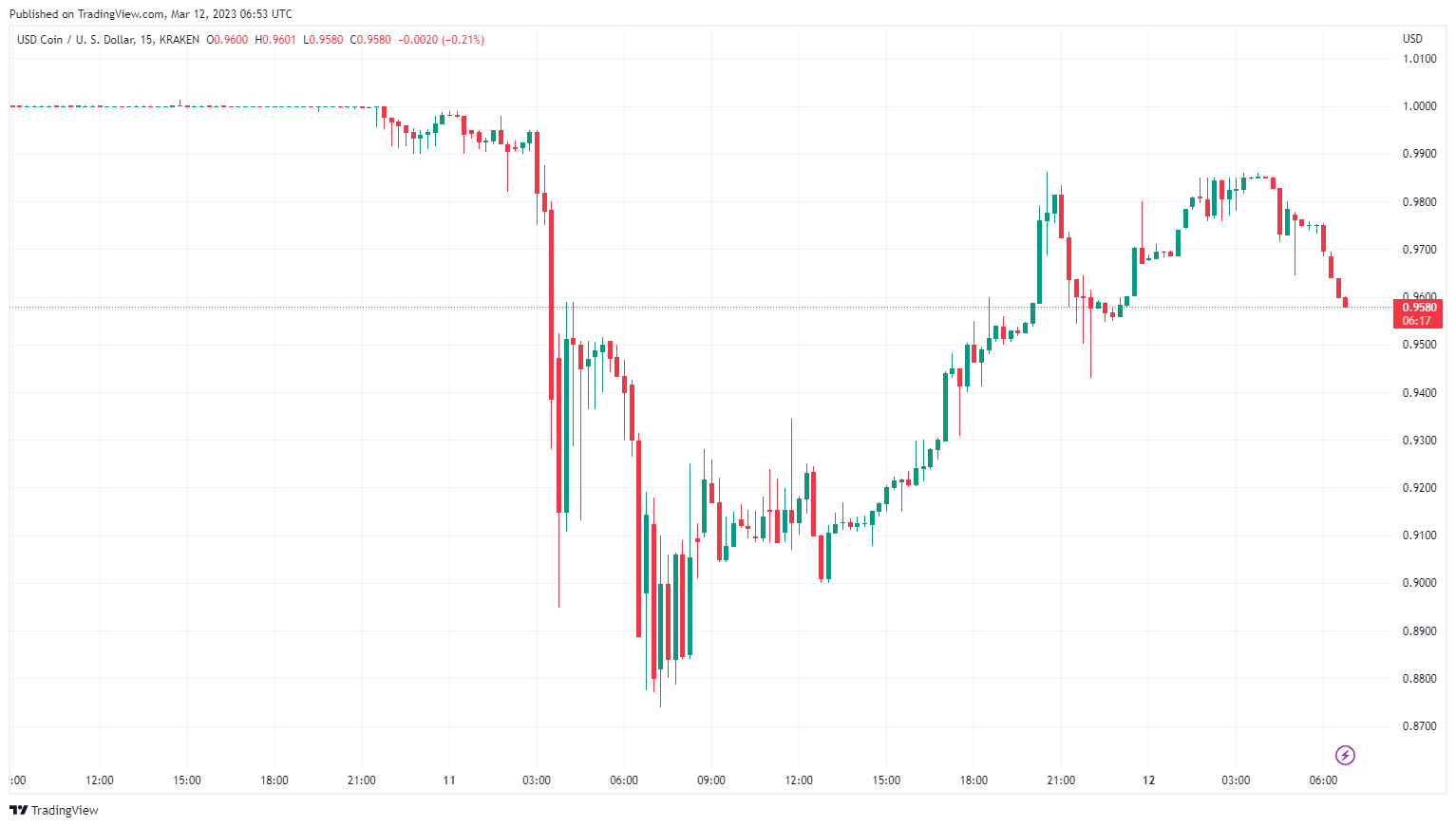
8% of USDC reserves at Silicon Valley Bank (SVB)
USDC is fully collateralized with a combination of cash and US Treasuries, as stated on Circle's website. Specifically, USDC is 77% (32.4 billion USD) backed by US Treasury bills (with a maturity of three months or less) and 23% (9.7 billion USD) by cash held at a range of institutions. The Treasuries are held at BNY Mellon, with active liquidity and asset management handled by BlackRock. The issue arises from the custody of the cash.

Last week, Circle took measures to reduce bank risk and deposited 5.4 billion USD in cash with BNY Mellon, one of the largest and most stable financial institutions in the world, known for its solid balance sheet as a custodian bank. 1 billion USD is held at the private bank Customers Bank, while the remaining 3.3 billion USD (8% of USDC reserves) in cash was held by the Silicon Valley Bank (SVB). On Thursday, Circle initiated the transfer of these funds to other banking partners, but did not receive the funds by close of business.




SVB: biggest bank failure since 2008
Since 2020, the Silicon Valley Bank has been investing excessively in longer-term mortgage-backed securities with maturities exceeding 10 years, rather than in shorter-term Treasuries or mortgage-backed securities with maturities of less than five years. Following the inversion of the yield curve in the United States, this resulted in a classic asset-liability mismatch. A bank run of billions of US dollars ended in a liquidity crisis.
On Friday, the Federal Deposit Insurance Corporation (FDIC) assumed control of the financial institution's deposits, and the Silicon Valley Bank was closed by the authorities due to inadequate liquidity. The collapse of the SVB was the largest bank failure in terms of assets since the 2007-2008 financial crisis and the second-largest in US history after the collapse of Washington Mutual.
Some analysts attribute the bank's amateurish balance sheet management, while others blame the chaotic interest rate decisions of the Federal Reserve. Now it remains to be seen whether the FDIC, as the bankruptcy administrator, will achieve a swift takeover by another bank or even seek a bailout. Otherwise, the financial regulatory agency would issue promissory notes (bankruptcy certificates) to depositors and pay out the residual value to customers, including Circle Financial, after liquidating the existing assets.
Ripple effect through the DeFi markets
In the world of decentralized finance applications (DeFi), there are various types of stablecoins. In addition to centralized ones like USDT and USDC, there are protocol-based, over-collateralized dollar coins. Projects like MakerDAO and Frax Finance allow for the creation of stablecoins against the deposit of cryptocurrency as collateral. In the event of a decline in the value of the collateral, the loan is programmatically liquidated. This is a robust system in itself.
However, as a stabilization mechanism, the largest decentralized stablecoin protocols also introduced competing stablecoins as collateral. Since USDC was mostly regarded as a top-regulated blockchain dollar, many of these protocols developed dependencies on Circle's stablecoin. The market leader, DAI, for example, is secured by over 60% in USDC. The de-pegging of the stablecoin thus dragged the "decentralized" alternatives into the abyss.
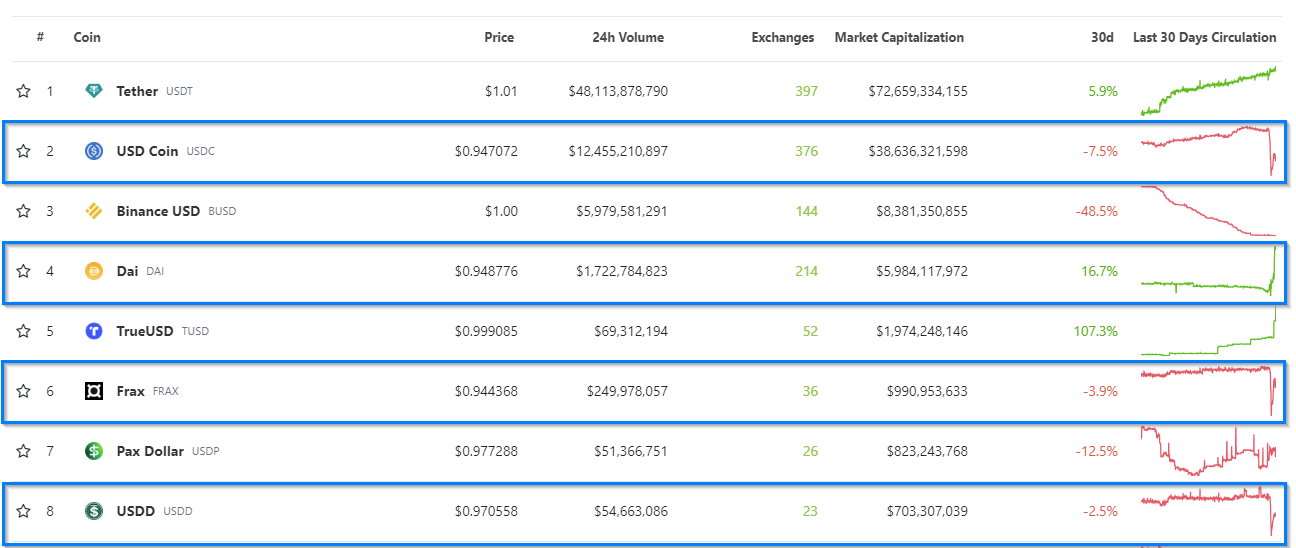
Now it's up to Circle to contain the chaos in the stablecoin markets. In a statement over the weekend, the company announced that the redemption of USDC for fiat money would continue as usual on Monday. If there is no rescue operation for SVB, Circle will cover any shortfalls from its own funds and possibly with external capital. This is mandated by the legal requirements for the transfer of securities.