The Office of Information and Regulatory Affairs (OIRA) completed its review of a proposed rule by the US Department of Labor on March 24. The rule is titled "Fiduciary Duties in Selecting Designated Investment Alternatives."
It aims to enable cryptocurrencies and other alternative investments in American 401(k) retirement plans. As a result, the world's largest private retirement market is moving one step closer to digital assets. Nearly $14 trillion sits in the 401(k) system. Furthermore, over 90 million Americans enrolled in defined-contribution plans currently have no access to alternative investments. This includes crypto, private equity, and venture capital alike. The Department of Labor (DOL) can now publish the proposal for public comment in the coming weeks.
Regulatory safe harbor for employers
At the core of the proposed rule is a regulatory "safe harbor." It shields employers from lawsuits alleging fiduciary duty violations when they include alternative investments in their 401(k) plans. This lack of legal certainty has been the biggest obstacle so far. Because of it, employers feared liability risks tied to underperformance or high fees on alternative products.
The ERISA Act of 1974 requires fiduciaries to meet strict duty-of-care standards toward plan participants. Without a clear regulatory framework, plan administrators avoided more complex asset classes. Therefore, the safe harbor would significantly reduce this risk. For the first time, it would give employers a defined legal framework for crypto assets, private credit, real estate, and infrastructure projects.
Moreover, 401(k) plans face a structural challenge. Unlike professionally managed defined-benefit plans, they are participant-directed and require daily valuation. Illiquid positions such as private equity or certain crypto investments therefore place special demands on product structure.
Executive order as the starting point
President Trump signed an executive order on August 7, 2025, titled "Democratizing Access to Alternative Assets for 401(k) Investors." It directed the Department of Labor to review ERISA guidelines for alternative investments within 180 days. The deadline expired on February 3, 2026.
Already in August 2025, the DOL rescinded a restrictive supplementary statement from December 2021. On January 13, 2026, the responsible subdivision EBSA submitted the proposed rule to OIRA. The review then took approximately two months.
Notably, the range of targeted asset classes is broad. In addition to cryptocurrencies and digital assets, the executive order lists private equity, venture capital, and private credit. It also covers commodities and life insurance strategies. Crypto is therefore just one component of a comprehensive opening.




What one percent would mean
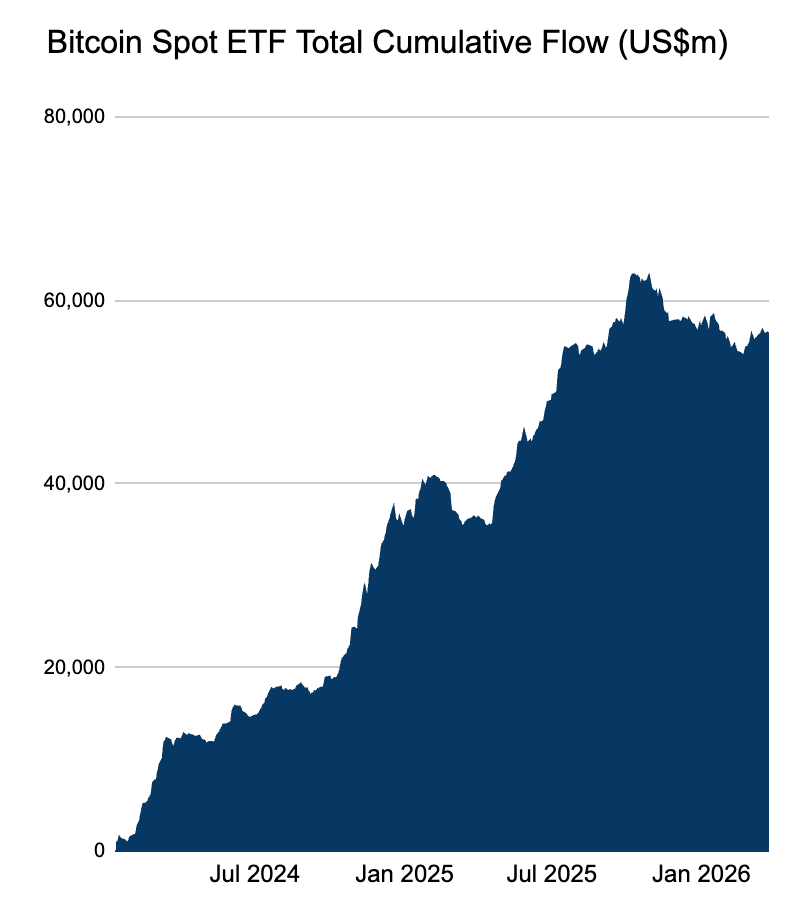
Even a marginal allocation within the $14 trillion market would generate substantial capital inflows into digital assets. One percent would amount to roughly $140 billion. For comparison, total net inflows into US Bitcoin spot ETFs since their launch in January 2024 stand at around $60 billion. That figure is well below the potential 401(k) allocation.
However, the path to actual implementation remains long. After publication of the proposed rule, a public comment period of 30 to 90 days follows first. Only then can the DOL issue a final rule. There is no statutory timeline for this last step.
At the same time, the Supreme Court has been hearing the case Anderson v. Intel Corp. since January 2026. This case could set precedents for the admissibility of private equity in defined-contribution plans. As a result, the ruling is likely to directly influence the design of the final regulation.
Broader regulatory context in the US
The 401(k) opening is part of a series of crypto-friendly regulatory initiatives by the Trump administration. In parallel, the CLARITY Act is making modest progress. Senators Thom Tillis and Angela Alsobrooks reached a preliminary agreement with the White House. The Senate still needs to vote, though, and both Coinbase and banking associations continue to push back.
SEC Chair Paul Atkins signaled support for opening retirement plans to digital assets as early as January 2026. He said the timing was right, provided that safeguards for retirement savers were in place. The coordination between SEC and DOL points to a cohesive regulatory approach.
For the crypto industry, access to the 401(k) market would represent a structural shift. Institutional capital flows from retirement savings differ fundamentally from retail inflows. Because they are long-term oriented, recurring, and less driven by volatility, they could stabilize the market. The DOL must publish its proposed rule in the coming weeks before the public comment phase begins.