
The UK Financial Services Authority (FCA) has recently published a study that examines consumer interaction with crypto-currencies in the country. According to the study, around 3.86% of the UK population is said to own crypto-currencies.
The study was published in October 2018 and March 2019 as a continuation of previously published reports. The studies were commissioned by the Financial Conduct Authority (FCA) to gain insight into the size of the market and identify potential losses. The authority is also interested in recording consumer attitudes and awareness of cryptoassets. The aim is to gain insights into how consumers interact with the cryptoasset market.
Significant increase in the number of owners of crypto-currencies compared to the previous year
The latest study shows that an estimated 3.86 per cent of the population, or 1.9 million adults (over 18 years) in the UK own crypto-currencies. In last year's study, this figure was around 3 per cent. The organization accordingly speaks of a significant increase. A more detailed analysis showed that around 75 percent of owners hold a value of less than 1,000 pounds in crypto-currencies.
Technical knowledge seems to be high among most owners. Most consumers are aware of the risks associated with the lack of protection and the high volatility of the product and have some understanding of the underlying technology. The most popular reason to buy crypto-currencies is speculation, although it has been acknowledged that prices are volatile.
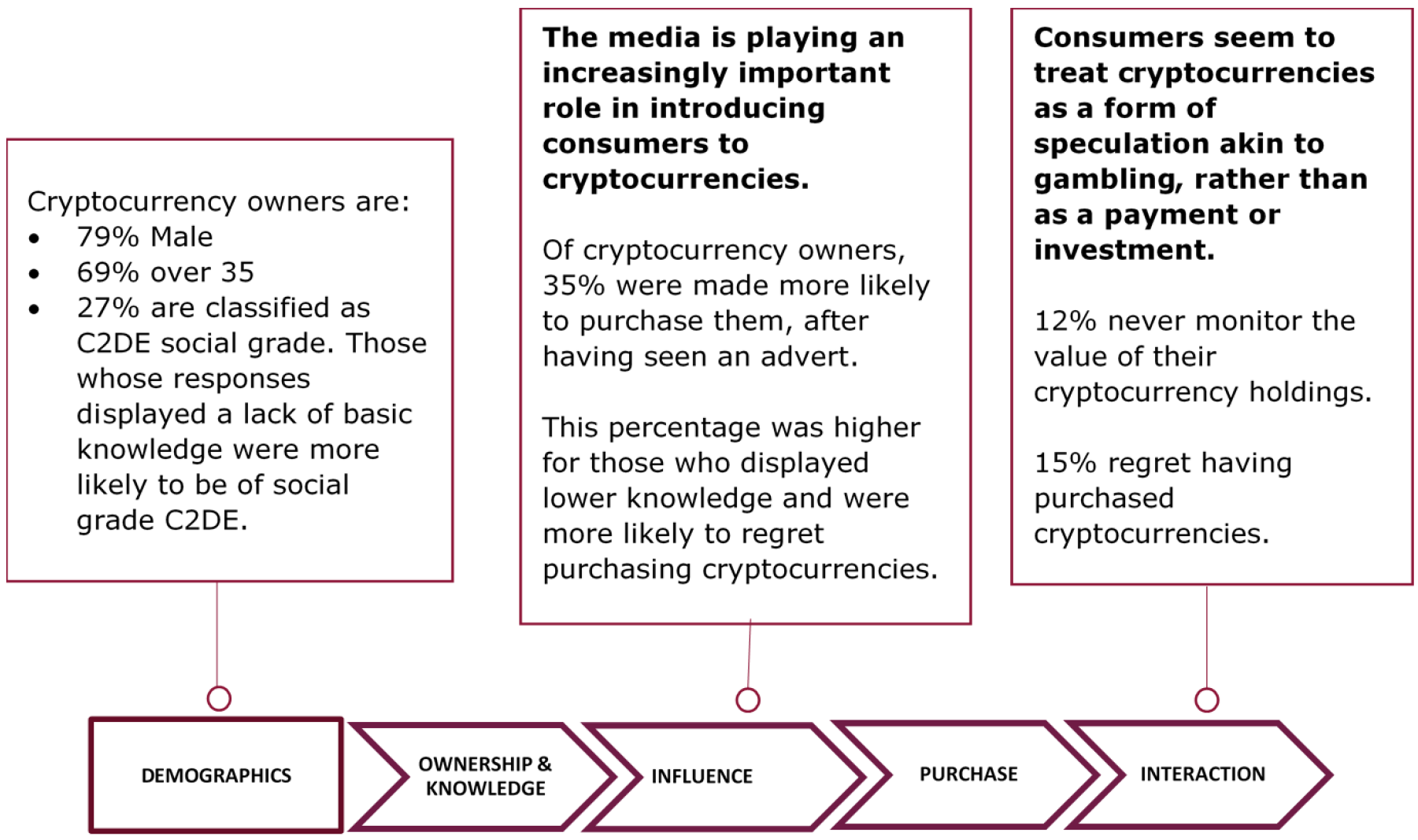
The average holder of digital assets in the UK is male and over 35 years old. The digital assets were acquired through crypto exchanges, most of which are located outside the United Kingdom. Advertising also plays an important role in the initial contact with crypto-currencies. Around 45 per cent of people can remember advertisements from the crypto sector, and a further 35 per cent claim to have been more inclined to buy crypto-currencies through them. 16 percent claim to have been so influenced by advertising that they eventually bought digital currencies like Bitcoin.
Awareness of crypto-currencies is generally on the rise in the UK
Awareness of the industry and crypto-currencies in general has increased in the UK following the study. Last year, 42 percent of adults said they had heard of crypto-currencies. This compares to 73 percent this year. Whether this development is also related to the presence of crypto-currencies in the media is not known. Increased coverage of countries planning digital currencies, or coverage of Facebook's Libra, may have increased the general awareness of crypto-currencies.


The total number of Britons who have had crypto-currencies in their possession is around 2.6 million. The FCA also stated that the general public was quite well informed about the high volatility and the partial lack of protection of the assets. Only the belief about deposit insurance is erroneously quite common - 11 percent assume that crypto assets are covered by consumer protection. After all, this corresponds to almost 300,000 people.