Close Menu
Crypto Valley Journal
    Facebook X (Twitter) Instagram
    Crypto Valley Journal
    • Hot Topics
      • News
      • Minds
    • Focus
      • Background
      • Blockchain
      • Legal & Compliance
      • Non-Fungible Token (NFTs)
    • Investing
      • Markets
      • Financial Products
      • Decentralized Finance (DeFi)
      • Exchange overview
    • Education
      • Basics
      • Glossary
      • Politicians on crypto
    • Statistics
      • Bitcoin-ETF-Flows
      • Ethereum-ETF-Flows
      • Crypto market data
      • On-chain data
    • Academy
      • Overview
      • Part 1: Blockchain
      • Part 2: Money
      • Part 3: Bitcoin
      • Part 4: Cryptocurrencies
      • Part 5: Decentralized Finance
      • Part 6: Investing
    • English
      • Deutsch
    Crypto Valley Journal
    You are at:Home»Education»Basics»The Debasement trade explained: where Bitcoin fits in a changing financial system
    The Debasement trade explained: where Bitcoin fits in a changing financial system

    The Debasement trade explained: where Bitcoin fits in a changing financial system

    By Bitget Research on 21. January 2026 Basics

    Over the past year, more investors have started asking the same question: What happens to my money when currencies keep losing value? This question sits at the heart of what many now call the “debasement trade.”

    As government debt climbs and currencies weaken, capital has begun rotating away from traditional fiat-based assets and toward stores of value with built-in scarcity. Gold has historically played this role. Today, Bitcoin is increasingly entering the same conversation-especially for a new generation of investors. Understanding how and why this shift is happening helps explain Bitcoin’s growing relevance going into 2026.

    Subscribe to our newsletter

    The best articles of the week, directly delivered into your mailbox.

    What Is the Debasement trade?

    The debasement trade is a simple idea. When governments print more money or run persistent deficits, each unit of currency tends to lose purchasing power over time. Investors respond by moving into assets that cannot be easily created or diluted.

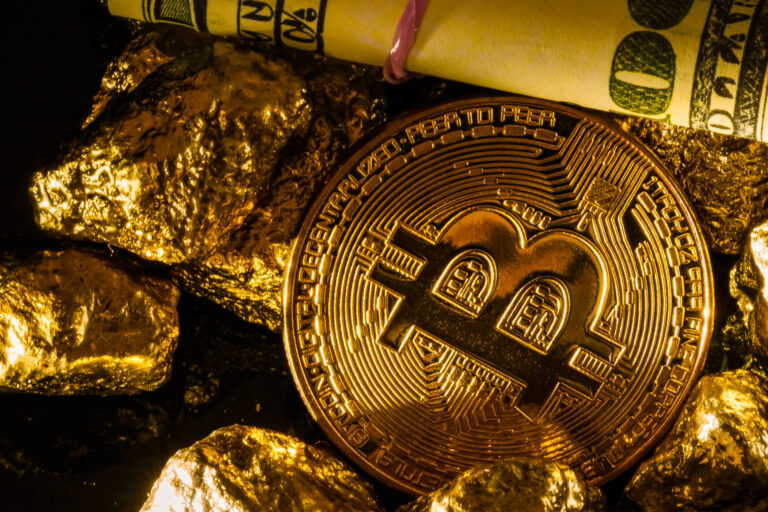
    Traditionally, this has meant gold. More recently, it has expanded to include Bitcoin.

    Both assets share two important characteristics:

    • Scarcity - supply is limited and difficult to increase
    • Independence from government policy - they are not tied to a single nation’s fiscal decisions

    In 2025, this trade moved from theory to mainstream practice. Rising inflation, record sovereign debt, and weakening currencies pushed both institutions and individuals to actively seek alternatives to fiat exposure.

    Ray Dalio’s Bridgewater Associates Minds

    Star investor Ray Dalio considers Bitcoin inferior to gold

    Analysis by Bitget Research on Bitcoin quantum computing risks, ECDSA exposure, NIST post-quantum standards, and BIP-360 migration paths. Background

    Bitcoin quantum computing: What recent developments mean for network security

    JPMorgan warns: Recurring DeFi exploits and stagnant ETH-denominated TVL curb institutional engagement in the DeFi sector. DeFi

    JPMorgan: DeFi hacks and TVL losses weigh on institutional investors

    Basics

    Unit bias in crypto: Why cheap coins mislead investors

    Ray Dalio’s Bridgewater Associates Minds

    Star investor Ray Dalio considers Bitcoin inferior to gold

    Analysis by Bitget Research on Bitcoin quantum computing risks, ECDSA exposure, NIST post-quantum standards, and BIP-360 migration paths. Background

    Bitcoin quantum computing: What recent developments mean for network security

    Why 2025 accelerated this shift

    Several macro developments made currency debasement hard to ignore. US national debt surpassed USD 37 trillion, while persistent deficits signaled that debt would likely be managed through low real interest rates rather than repayment. At the same time, the US Dollar Index fell 11% in the first half of the year, marking its weakest six-month performance since the early 1970s.

    For investors, the takeaway was clear: holding cash alone was no longer a neutral decision. Capital needed protection. Gold led the debasement trade in 2025. Prices broke through USD 4’000 per ounce, driven by both investor demand and central bank accumulation. For the first time in decades, global central banks held more gold than US Treasuries in their reserves, with emerging economies playing a major role.

    Gold’s appeal is straightforward. It has survived for thousands of years as a store of value, is geologically scarce, and cannot be rapidly produced. That long history gives investors confidence-especially during periods of geopolitical stress and monetary uncertainty.

    Where Bitcoin fits in

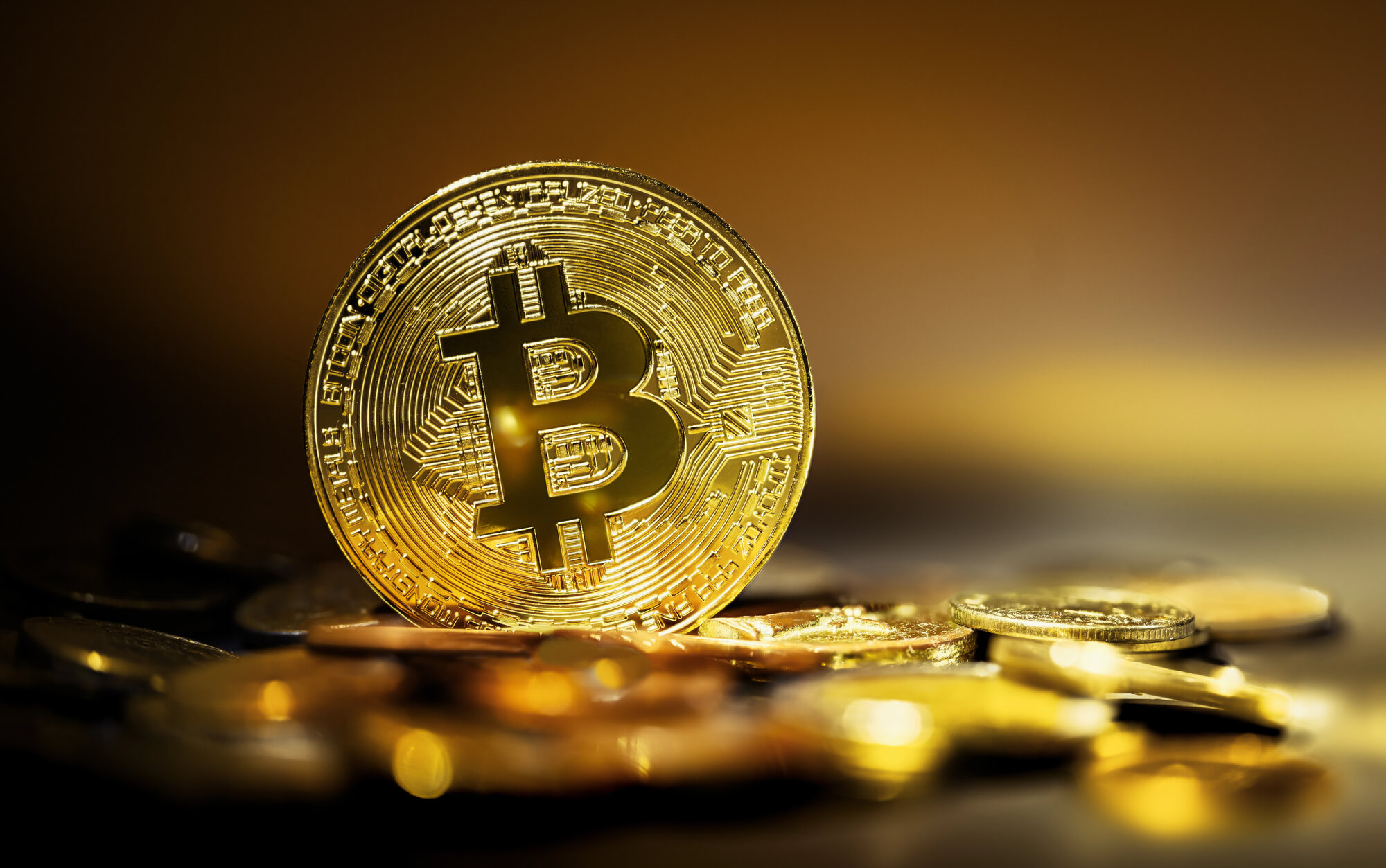
    Bitcoin approaches the same problem from a modern angle. Its supply is capped at 21 million, enforced by code rather than policy. No central authority can change that limit. This makes Bitcoin functionally scarce in a way that mirrors gold, but with digital advantages.

    In 2025, Bitcoin reached a new all-time high of USD 126’198, even after periods of volatility. By year-end, Bitcoin ETFs collectively held more than 1.3 million BTC, signaling growing institutional acceptance. Unlike gold, Bitcoin operates on a global, decentralized network that settles value in minutes, not days. This makes it particularly attractive in a world that is increasingly digital, automated, and connected to emerging technologies like AI.

    Looking ahead to 2026

    The forces behind the debasement trade remain in place. Global debt now exceeds USD 300 trillion, while de-dollarization efforts continue to gain traction across emerging economies. Central banks face pressure to support growth through monetary easing, further weakening fiat currencies. In this environment, both gold and Bitcoin serve as alternatives-but for different types of investors. Gold remains the anchor. Bitcoin adds speed, portability, and a digital-native form of scarcity.

    If monetary easing resumes and balance sheets expand again, Bitcoin stands to benefit disproportionately. Under these conditions, prices could continue rising throughout 2026 as more capital seeks protection from currency dilution. The debasement trade is not about speculation-it’s about preservation. Investors are no longer just chasing returns; they are protecting purchasing power. Gold represents stability rooted in history. Bitcoin represents scarcity designed for the digital age. As global financial systems evolve, both are becoming essential tools in navigating a world where currency debasement is no longer a distant risk, but an active reality.


    Share. Facebook Twitter LinkedIn Email Telegram WhatsApp

    About the author

    Bitget Research
    • Website

    Established in 2018, Bitget is a world leading cryptocurrency exchange and Web3 company. Serving over 30 million users in 100+ countries and regions, the Bitget exchange is committed to helping users trade smarter with its pioneering copy trading feature and other trading solutions. Formerly known as BitKeep, Bitget Wallet is a world-class multi-chain crypto wallet that offers an array of comprehensive Web3 solutions and features including wallet functionality, swap, NFT Marketplace, DApp browser, and more.

    Related Articles

    CNB Governor Michl argues in Las Vegas for a 1% Bitcoin allocation in central bank reserves - despite rejection by his own Bank Board.

    Czech National Bank CNB advocates for Bitcoin as a reserve asset

    Admiral Paparo confirmed to the US Senate: INDOPACOM operates an active Bitcoin node and is conducting operational tests to protect military networks.

    US military operates Bitcoin node in the Indo-Pacific

    Bitcoin fails again at the 80'000 USD mark, profit-taking weighs on ETH, SOL and XRP despite Strategy purchase and ceasefire.

    Bitcoin price climbs to 80’000 USD – profit-taking hits ETH, SOL and XRP

    Coinbase backs the CLARITY Act compromise on stablecoin rewards, now the Senate committee markup path opens, with passage likely.
    4. May 2026

    Crypto industry backs down: Coinbase accepts CLARITY Act compromise

    CNB Governor Michl argues in Las Vegas for a 1% Bitcoin allocation in central bank reserves - despite rejection by his own Bank Board.
    2. May 2026

    Czech National Bank CNB advocates for Bitcoin as a reserve asset

    CVJ.CH Weekly review calendar week
    2. May 2026

    Weekly review calendar week 18 – 2026

    twitter image button instagram image button linkedin image button youtube image button

    About Crypto Valley Journal
    About Crypto Valley Journal

    On the pulse of the movement

    • Academy
    • Contact
    • Advertising
    • About us
    • Partner
    • Imprint
    • Privacy
    • Disclaimer
    Search

    Type above and press Enter to search. Press Esc to cancel.