
Algorithmic stablecoins respond to market events with automated stabilization measures. This increases their decentralization and provides the opportunity to create a smart, responsive currency that is not controlled by a single institution and can serve as a medium of exchange in diverse industries.
Algorithm-based stablecoins do not have collateral attached to them, unlike their centralized counterparts. Therefore, they are also referred to as non-collateralized stablecoins. Algorithmic stablecoins represent a new type of cryptocurrency tailored to improve price stability without a central authority. This is often done by pre-programming the supply to match the demand of the asset.
The algorithm or protocol underlying these stablecoins acts as a "central bank." It helps increase supply in the event of a deflationary trend in the token or decrease supply in the event of a decline in purchasing power. The rules for such actions of the algorithm are available in smart contracts in the embedded form. Changing the rules is possible in decentralized stablecoins only through social consensus or governance votes.
Disadvantages of current stablecoins
After Facebook first wanted to launch their own stablecoin with their cryptocurrency "Libra," many regulators took notice of the sector. With the ability to emmit a stable form of money using blockchain technology, private companies can take over a basic function of central banks. Thus, the regulation of stablecoins quickly became a high priority, both among central banks and other regulators.
In addition to being vulnerable to a regulatory crackdown, collateralized stablecoins such as Tether (USDT) and USD Coin (USDC) also make tradeoffs in the area of censorship resistance. Because the smart contracts of the corresponding tokens are subject to a central authority, users can be specifically blocked from token transfers - an idea that Web 3.0 advocates say is not in keeping with the permissionless and open nature of blockchain technology. Algorithmic stablecoins typically do not exhibit this problem because control over token contracts is not in the hands of a single party. Thus, the use of these protocols and the value on them does not require a third party or permission.
MakerDAO's DAI Token
MakerDAO, the first protocol for the emission of an algorithmic stablecoin, was founded in 2015. This is an over-collateralized stablecoin product that is at home on the Ethereum blockchain. MakerDAO was born out of the realization that early cryptocurrencies were volatile and therefore not particularly useful as a medium of exchange. The project's development was originally led by the Maker Foundation, but is now controlled by the a decentralized autonomous organization (DAO).
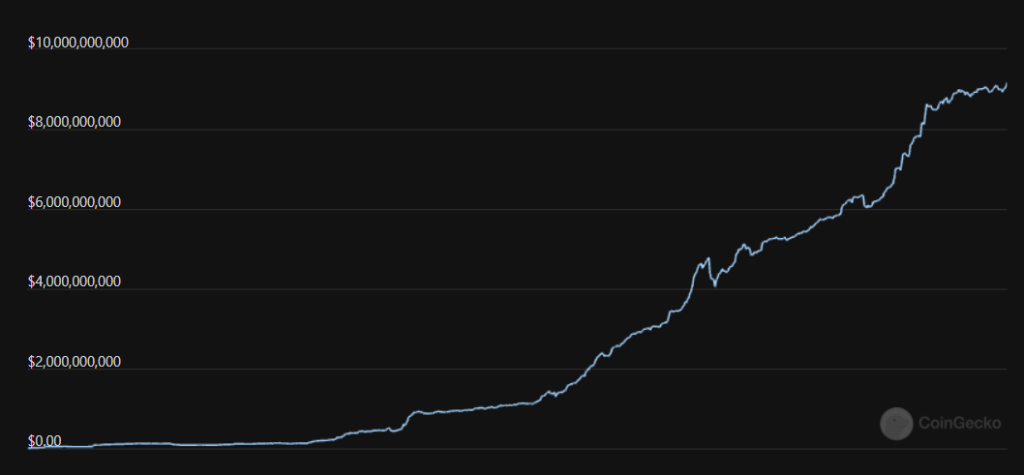
The protocol was officially launched in 2017 as the Single Collateral DAI System (also known as SAI), which allowed users to mint DAI using Ether (ETH) as collateral. If the price of the collateral deposited drops, the position is automatically liquidated below a certain threshold. After the successful launch of Single Collateral DAI, Maker introduced the Multi Collateral DAI (MCD) system in 2019, which enabled a greater variety of collateral over. With a market cap of $9 billion, this was the most popular algorithmic stablecoin for the longest time.
The emerging competitor UST
The LUNA token is currently among the 10 largest cryptocurrencies by market cap, and the associated Terra platform is used to mint the TerraUSD (UST) stablecoin. Terra was built on the Cosmos SDK and uses a delegated proof-of-stake consensus. Users wishing to mint UST must burn the equivalent USD amount of LUNA. A small portion of the LUNA tokens used to mint stablecoins - also known as seigniorage - goes to the Treasury, making minting stablecoins a profitable business for the network. It's a similar process to the seigniorage that central banks profit from when they print money.
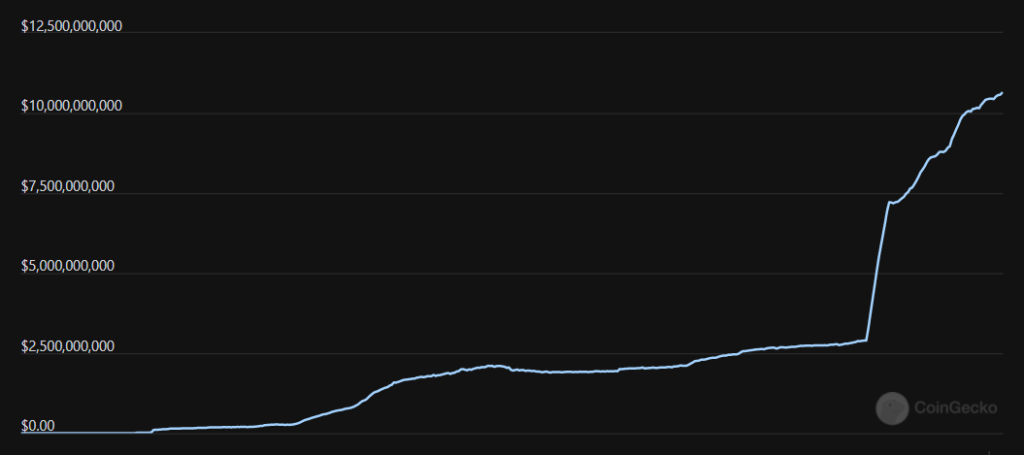
The LUNA token is important to the ecosystem's collateralization mechanism to ensure UST price stability. For this reason, LUNA is designed to have a dynamic supply that fluctuates according to the protocol's collateralization algorithm. The name of the protocol is meant to be an analogy to the symbiotic relationship between the Earth and the Moon and the way the two celestial bodies provide gravitational stability to each other.



Magic Internet Money (MIM)
Abracadabra.Money is a platform that works by using interest-bearing assets to coin its own asset MIM. The goal of the protocol is to create an exclusive way for users to obtain DeFi capital to manage efficiently. The protocol gives users easy access to credit and allows them to raise money with leverage.
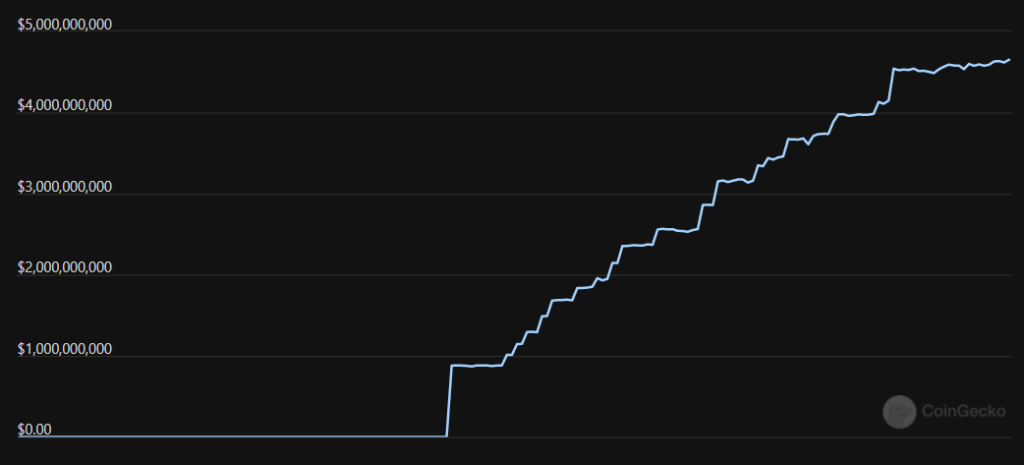
Abracadabra is a lending pool for interest-bearing tokens. Therefore, it allows its users to efficiently control their collateral rates compared to traditional lending exchanges. The collateral is first deposited on the Abracadabra platform, then the debt allocation and interest are allocated to the borrower. Subsequently, the MIM tokens are sent to the users' wallets. Similar to Terra, Abracadabra has two tokens: Magic Internet Money, the cryptocurrency pegged to the U.S. dollar, and SPELL - the governance token and protocol utility used for incentives and fee sharing.
First mix of collateralization and algorithm mechanism
By assuming full collateralization and then decreasing or increasing the collateralization ratio, Frax Finance balances market forces for appropriate collateralization. It is the first and currently only stablecoin where part of the supply is backed by collateral and part of the supply is algorithmic. This means that FRAX is the first stablecoin where part of the supply is variable or unsecured.
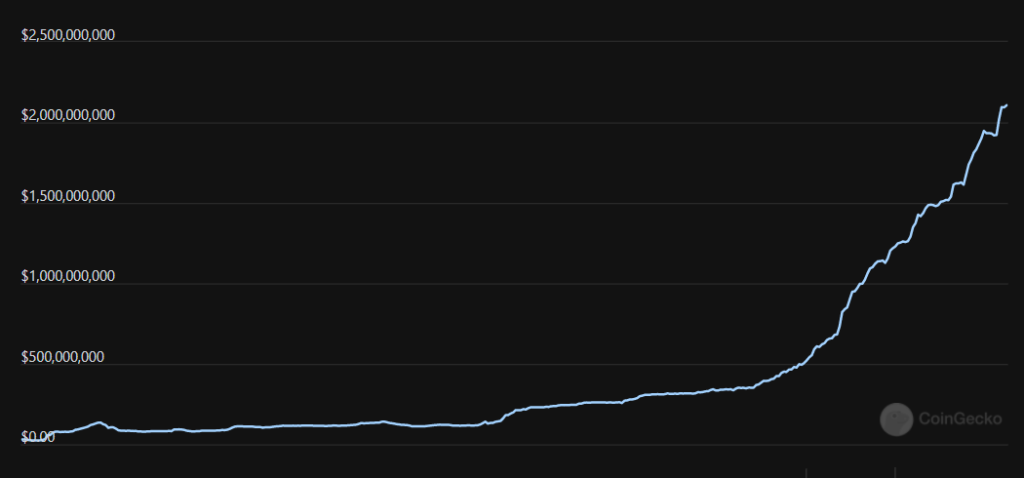
Frax Shares (FXS) is the governance token that accumulates fees, seigniorage revenue, and excess collateral value. Frax's end vision is to create the first crypto version of the Consumer Price Index (CPI) - the Frax Price Index (FPI) - governed by FXS holders (and other protocol tokens). FRAX is currently pegged to the USD, but aspires to become the first decentralized, permissionless native unit of account that keeps the standard of living stable according to CPI measurements.