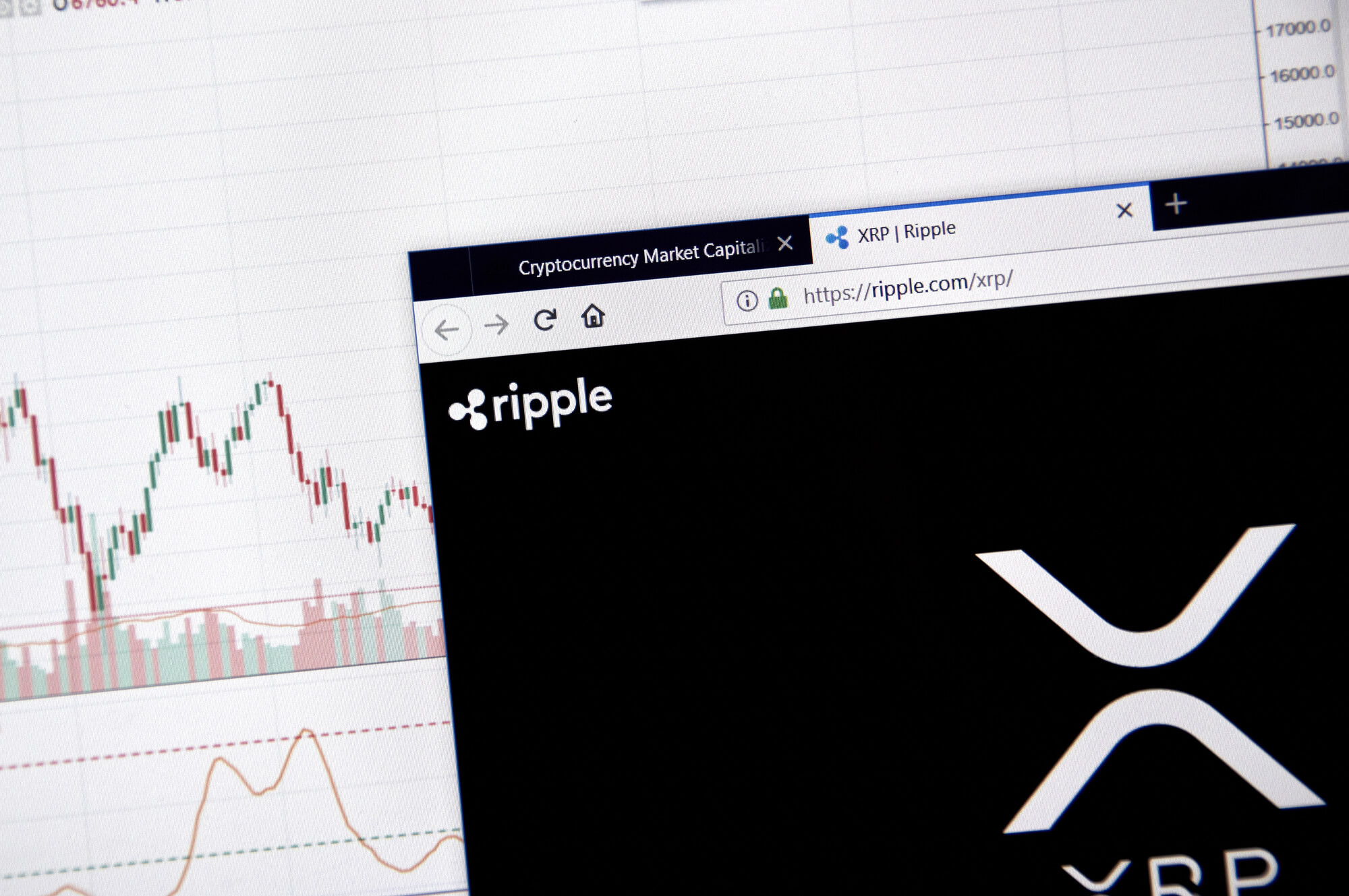
Ripple Labs completed a 500 million dollar funding round in November 2025, valuing the company at 40 billion dollars – the highest valuation ever achieved by a privately held crypto company.
The investors include prominent Wall Street names such as Citadel Securities, Fortress Investment Group, Marshall Wace, Brevan Howard, Galaxy Digital and Pantera Capital. However, the transaction differs fundamentally from traditional venture-capital financings: The investors secured exceptional downside protections that shield their capital commitments from XRP volatility. Several participating funds concluded internally that around 90 percent of Ripple’s net asset value is directly tied to the XRP token – despite the company’s repeated assertions that XRP is legally and operationally independent.
The deal structure reveals the ambivalent attitude institutional investors maintain toward crypto investments: While interest in digital assets continues to grow, traditional financial players demand structural guarantees that significantly limit downside risk.
Guaranteed returns and buyback rights as risk buffers
The investors negotiated terms that resemble structured credit instruments more than classic venture capital. Specifically, they received the right to sell their shares back to Ripple after three or four years at a guaranteed annual return of 10 percent – unless the company goes public beforehand. If Ripple forces an early buyback itself, the guaranteed annual return increases to 25 percent.
Additionally, liquidation preferences were agreed upon, giving the new investors priority over existing shareholders in the event of a sale or insolvency. This combination of buyback guarantees and priority liquidation rights creates synthetic capital protection that is rare in late-stage tech financing but increasingly becoming standard when traditional financial institutions invest in volatile crypto assets.
The structure reflects the core risk of the investment: XRP lost around 40 percent of its value between its mid-July 2025 peak and the November funding round. In July, Ripple controlled XRP holdings worth 124 billion dollars – a multiple of the agreed company valuation of 40 billion dollars. The discrepancy between the market value of Ripple’s XRP holdings and its corporate valuation highlights investor uncertainty about the actual realizability of these token reserves.
90 percent of value tied to XRP – despite legal distancing
Two of the participating funds conducted internal valuation analyses and independently concluded that at least 90 percent of Ripple’s net asset value depends directly on the price of XRP. This assessment stands in contrast to Ripple’s public messaging, which argues that the company does not control XRP and that the token functions as an independent asset.
The legal separation between Ripple and XRP was central to the long-running dispute with the U.S. Securities and Exchange Commission (SEC), which ended in March 2025 with a final victory for Ripple. The SEC ultimately accepted that XRP should be classified as a commodity rather than a security. Nevertheless, economic reality remains unchanged: Ripple holds massive XRP reserves whose market value far exceeds the company’s operational valuation.
Despite the price decline in autumn 2025, Ripple’s XRP holdings were still worth around 83.3 billion dollars at the beginning of December – well above the 40 billion dollar valuation underpinning the funding round. The investors effectively protected themselves against a scenario in which XRP continues to fall in value or Ripple is unable to liquidate its token holdings.


Institutional crypto investments under changing conditions
The protected financing structure exemplifies a broader trend: Institutional investors are increasingly interested in crypto assets but simultaneously demand robust risk-management mechanisms familiar from traditional financial markets. The participation of Citadel Securities – one of the largest market makers in the traditional finance sector – and Fortress Investment Group signals that established Wall Street firms no longer avoid crypto but structure their investments with built-in safety nets.
The timing of the funding round is noteworthy: It occurred during a period of heightened regulatory clarity for Ripple following the SEC settlement, but also amid significant XRP volatility. Investors used this constellation to gain exposure to the potential upside of XRP while limiting downside risk through negotiated guarantees.
For Ripple itself, the financing provides capital to expand its RippleNet payments network and its On-Demand Liquidity (ODL) solution, which uses XRP as a bridge currency for cross-border transactions. The company has launched several strategic initiatives, including support for institutional XRP-treasury vehicles and the development of an Ethereum-compatible EVM sidechain.