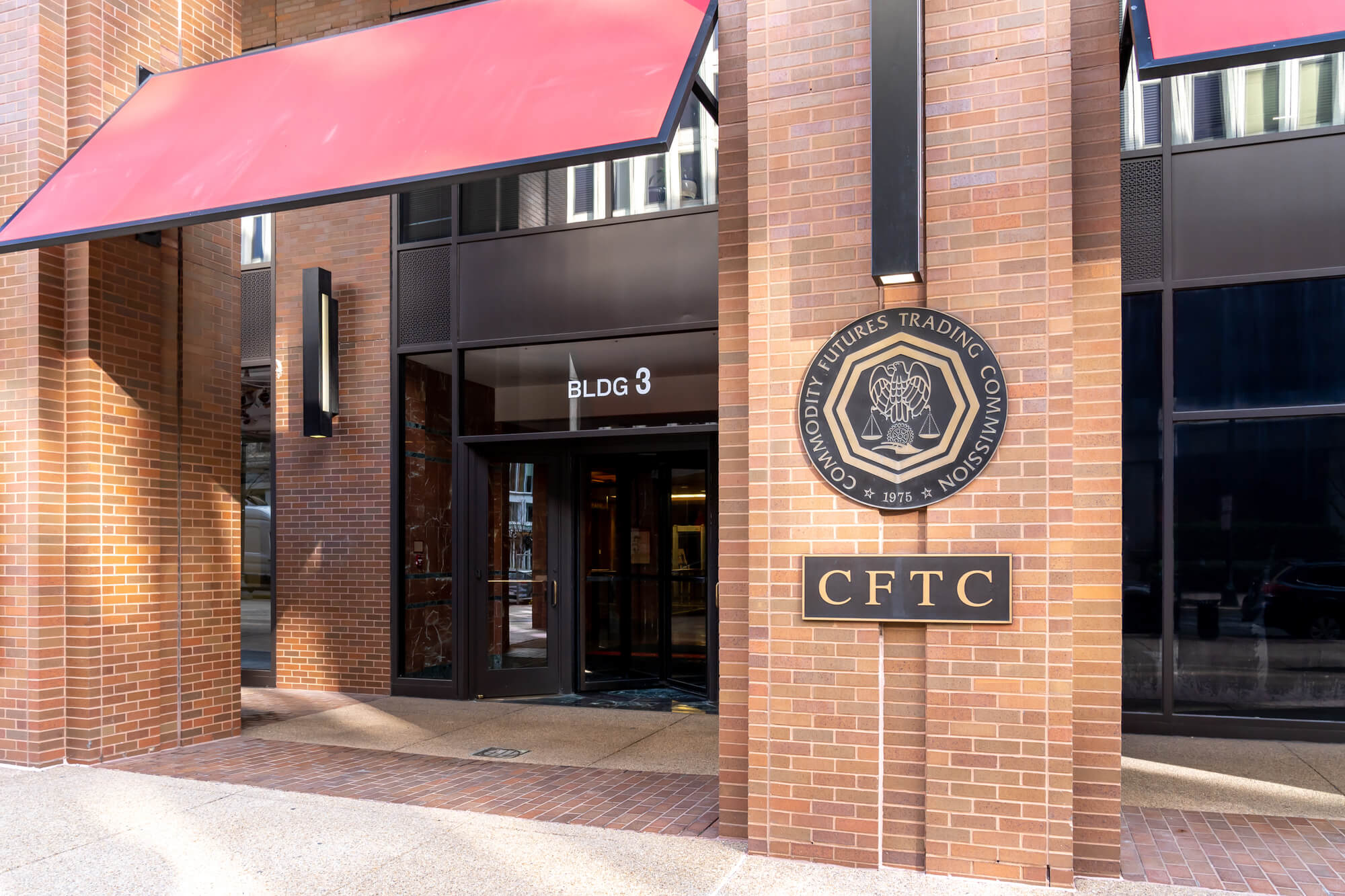
CFTC Chairman Michael Selig has launched a complete reversal within six months, repositioning the agency through his CFTC Innovation Agenda. Enforcement gives way to clear rules for crypto assets, perpetual futures and prediction markets.
The CFTC is the US federal agency for derivatives and futures markets. It oversees futures contracts, options and, more recently, certain crypto products. However, it has no jurisdiction over the crypto spot market, which remains either SEC territory or legally unresolved. Selig was confirmed as the agency's 16th chairman in December 2025. Originally, he worked as a partner at Willkie Farr & Gallagher and represented crypto clients such as eToro and the VC firm Paradigm, after previously serving as chief counsel of the SEC Crypto Task Force. His predecessors from the Biden era left a full 58 enforcement actions in fiscal year 2024 alone. Selig first broke with this course in his first op-ed on 20 January 2026, presenting the "Golden Age" vision and the formula of a "minimum effective dose of regulation".
Selig launches CFTC Innovation Agenda with 35-member advisory panel
In that op-ed, Selig set out the guiding principle of his tenure: a minimum measure of effective regulation, no more and no less. He sharply criticized the approach of the previous administration, whose "policymaking through enforcement" had driven innovation abroad and harmed ordinary investors. The numbers support this break: enforcement actions fell from 58 in fiscal year 2024 to 11 the following year. As a result, the agency's focus shifted from after-the-fact sanctions to rules defined in advance.
This shift is moreover accompanied by an institutional counterweight. As early as 13 January 2026, Selig launched the Innovation Advisory Committee (IAC), which he expanded a month later to 35 members. Of these, 20 come from the crypto industry and at least five from prediction-market companies. The lineup reads like a who's who of the industry: Tyler Winklevoss (Gemini), Brad Garlinghouse (Ripple), Anatoly Yakovenko (Solana Labs), Hayden Adams (Uniswap Labs), as well as Tarek Mansour (Kalshi) and Shayne Coplan (Polymarket). Consequently, the selection signals that the new agenda is no lip service but instead binds the sector directly into the rulemaking.
Project Crypto brings SEC and CFTC to a shared crypto taxonomy
For years, the SEC and CFTC fought over jurisdiction for digital assets. Bitcoin counted as a commodity and therefore as a CFTC matter, whereas Ether remained contested, and the SEC classified most altcoins as securities. This vacuum created legal uncertainty for every company that wanted to build in the United States. Therefore, on 29 January 2026, Selig and SEC Chairman Paul Atkins published a joint op-ed on the "Project Crypto" initiative, which addressed this conflict in a coordinated manner for the first time.
At the core of the initiative is a unified taxonomy. It sorts crypto assets into three categories: digital commodities, collectibles and tools. Both agencies additionally signed a memorandum of understanding and initially classified 16 crypto assets as digital commodities. In addition, there are concrete measures: safe harbors for software developers, rules for tokenized securities and onshore paths for perpetual derivatives. Thus, the initiative aims to reduce the costly double regulation between the two supervisory authorities.
The full legal basis is still missing, however. Only the Clarity Act would formally transfer to the CFTC the oversight of the spot market for digital commodities. The bill continues to advance with broad bipartisan support. Consequently, it is seen as the decisive bridge to a market that now exceeds 3 trillion USD.
"Financial regulation must be precise, not punitive. The future of finance will be built somewhere, and we are making sure that it gets built here." - Michael Selig (CFTC) and Paul Atkins (SEC), joint op-ed




Perpetual futures and prediction markets as new fronts
The first concrete product category concerns perpetual futures, meaning futures contracts without a fixed expiry date. These currently trade almost exclusively on offshore exchanges, outside any US regulation. In a Fox Business interview in June 2026, however, Selig announced plans to bring these products back to the United States under a first-class regulatory framework. As a result, a market that had fully migrated would fall under domestic oversight for the first time.
The second front opens up with the prediction markets, on which investors trade on the outcome of future events. In June 2026, the agency published an Advanced Notice of Proposed Rulemaking on this, the first formal rule proposal for this asset class. The reportedly 267-page document introduces a three-stage review framework: qualification as an event contract, belonging to legally defined prohibited categories such as terrorism, murder or illegal acts, and a formal decision against the public interest. Sports-betting contracts, by contrast, are classified by the proposal as generally in the public interest. At the same time, the agency withdrew the prohibition proposal put forward in 2024 under Biden, which would have banned political and sports-related event contracts.
The formal process is now beginning for both fields. After publication in the Federal Register, a 45-day comment period finally begins, during which market participants can submit their positions.
Staff overhaul with pushback from Congress
In parallel with the substantive realignment, Selig is restructuring the agency's apparatus. Since 2025, around a quarter of the CFTC workforce has left the agency, driven by the Trump administration's austerity requirements. A new buyout offer allows employees to move into administrative leave on full pay until the end of the year, starting 1 July 2026. In addition, Selig plans to fill up to 100 new positions by the end of 2026 with profiles for the crypto sector and prediction markets, while according to him AI tools are meant to offset part of the staff reduction.
This overhaul does not go unchallenged, however. Senator Elizabeth Warren called on Selig to submit documents on staff departures and industry contacts by 18 June 2026. She points to a New York Times report that describes the agency as captured by the industry. Furthermore, she accuses Selig of having lifted the 5 million USD Gemini penalty without justification, shortly after the Winklevoss twins had each donated 1 million USD to Trump's campaign. The drop in enforcement actions from 58 to 11 ultimately underpins her criticism of a line too close to industry.
Behind the dispute lies furthermore an international competition over location advantages. The EU has already created a binding framework with MiCA, and likewise Singapore, Dubai and Hong Kong attracted companies with clear crypto rules. Selig bases his central argument precisely on this competition for jurisdictions: without clear rules of its own, the United States will continue to lose market share.