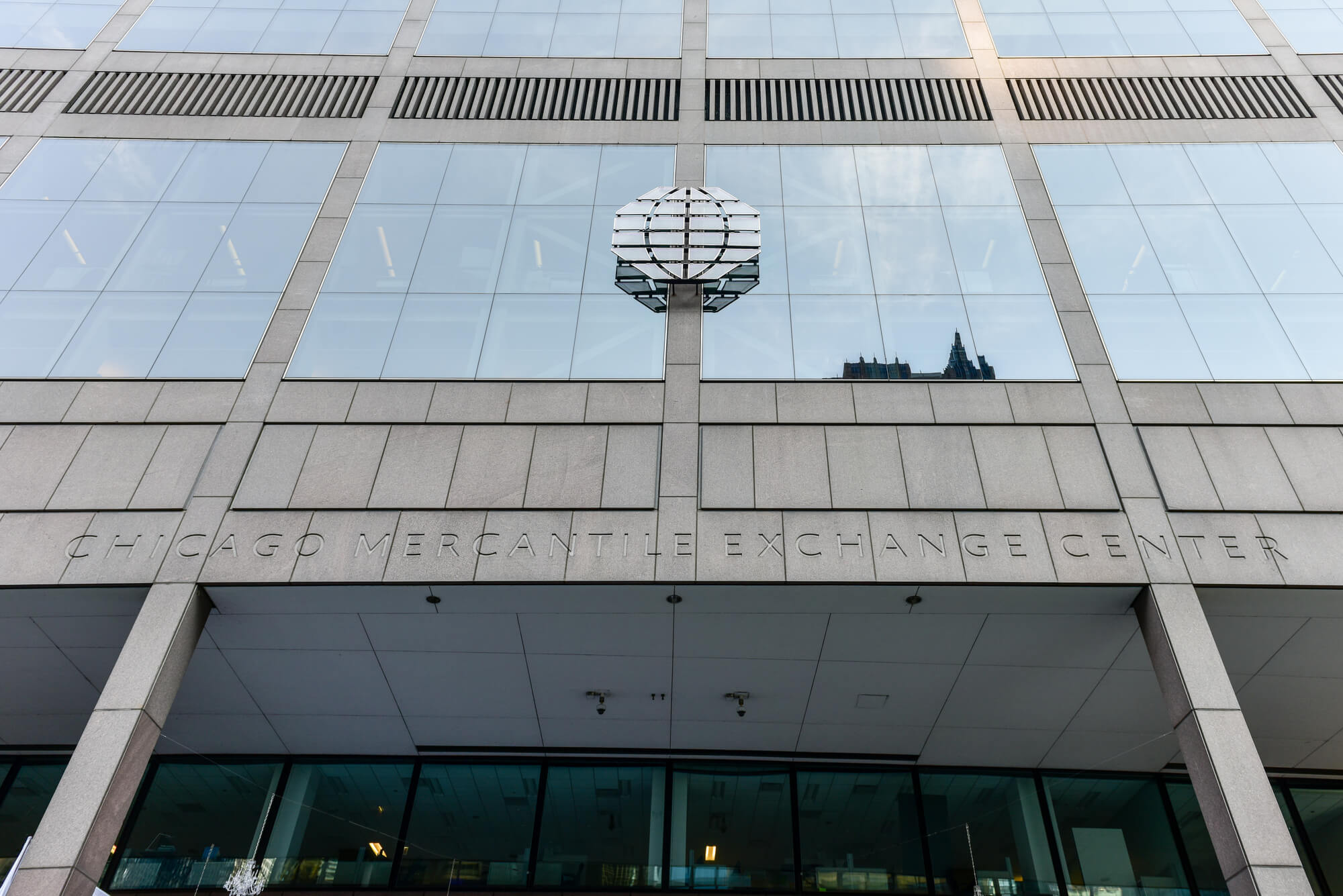
CME Group has sued the regulator CFTC after the agency approved perpetual futures from Kalshi and Coinbase as futures rather than swaps. CEO Terrence Duffy bases the suit on the Dodd-Frank Act, which in his view defines such contracts as swaps because of their funding rate mechanism.
Perpetual futures are derivatives without an expiration date that let traders bet on the price movements of an asset without owning it. Instead of an expiry, a funding rate mechanism keeps the contract price close to the spot price. When the contract price sits above the spot price, long positions pay short positions, and vice versa. Until now, these products dominated global crypto derivatives volume primarily on offshore platforms such as Binance, Bybit and OKX, where daily trading volume regularly reaches the tens of billions.
In the United States, perps were originally treated as swaps for regulatory purposes. Therefore, the CFTC approvals of May 29, 2026 for Kalshi and Coinbase mark the first formal reclassification as futures. Kalshi used a voluntary approval process, while Coinbase may provide US clients access through its Deribit subsidiary in Dubai. At the same time, shares of CME, Cboe and Intercontinental Exchange fell after the decisions, because investors saw competitive pressure on the traditional futures exchanges.
CME bases suit on Dodd-Frank definition of swaps
The world's largest futures exchange filed its suit on June 18, 2026, one day after CEO Duffy announced the move in a CNBC interview. At the center stands the legal classification of the contracts. According to CME's interpretation, the funding rate mechanism constitutes a reciprocal exchange of payments between two parties. However, the Dodd-Frank Act defines exactly this arrangement as a swap rather than a future.
The difference is significant for market participants. Futures run through regulated futures exchanges with standardized terms. Swaps, by contrast, are bilateral contracts in which both sides regularly exchange payments. The Dodd-Frank Act, enacted in 2010 after the financial crisis, therefore subjects swaps to their own registration requirements for dealers as well as additional clearing requirements through central counterparties. Consequently, if a court follows CME, providers such as Kalshi and Coinbase would have to operate their perpetual futures under this stricter regime going forward. Ultimately, this puts up for debate which regulatory framework governs the entire US market for these products.
The CFTC called the suit baseless. Duffy, for his part, points to a clear statutory dividing line.
"Under the Dodd-Frank Act, it is clearly defined what a swap is and what a future is." - Terrence Duffy, CEO of CME Group
CFTC approves perpetual futures as regular futures contracts
Two CFTC decisions of May 29, 2026 triggered the suit. First, the agency approved KalshiEX's BTCPERP contract as a futures contract under Section 5c(c)(4) of the Commodity Exchange Act and Regulation 40.3. This was the first US-regulated perpetual future of any kind. Notably, the choice of provider stands out: Kalshi is a regulated prediction exchange, not a traditional crypto trading venue. The company had filed the application earlier, on May 28, and chose a voluntary approval process with regulatory pre-review instead of the faster self-certification under Regulation 40.2.
On the same day, the regulator additionally published Staff Letter No. 26-17, a no-action letter for Coinbase Financial Markets as a registered futures commission merchant. This letter allows the company to provide US clients access to perpetual contracts on the Deribit platform in Dubai. Deribit ranks among the largest options trading venues worldwide. Furthermore, these contracts are classified as "foreign futures" under CFTC Regulation 30.1. As margin, clients may also post Bitcoin, Ether and stablecoins.
Both decisions therefore represent a regulatory shift. Until now, the CFTC had treated perpetual contracts as swaps in enforcement proceedings. As early as April 2025, the agency had blocked a self-certification attempt by Bitnomial under Regulation 40.2. By contrast, the route via Regulation 40.3 now chosen by Kalshi is considered conceptually more rigorous. Nevertheless, Duffy had already criticized in early June that the review was completed faster than a typical self-certification window, despite the novelty and complexity of the instruments.




Leverage gap between perps and traditional CME products
Alongside the legal dispute, Duffy also advances a risk argument. On offshore platforms, perpetual futures enable leverage of up to 250x. For the now US-regulated variants, by contrast, the CME chief named 50x as a concrete warning figure. The exchange's in-house crypto products work with a much tighter range of roughly 5x. This gap forms the core of his public criticism.
At the Piper Sandler Global Exchange & Fintech Conference in early June, the CEO additionally warned of automatic liquidation mechanisms and opaque funding rate costs. Both, he said, hit small investors above all. He did not want to see people who do not understand a product pushed out of a contract they should never have been in to begin with. The wording places investor protection at the forefront.
At the same time, tangible competitive interests are on the table. In 2025, CME Group recorded an average daily volume of 28.1 million contracts and reached a market capitalization of more than USD 95 billion. However, investors see exactly this established business under pressure from the new competitors: shares of CME, Cboe and Intercontinental Exchange declined after the May approvals. The exchange's risk framing thus coincides in timing with a direct threat to its core business.
CEO transition at CME Group in March 2027
The suit also falls into a phase of leadership change. On the same day as the suit announcement, CME Group disclosed that Duffy will step down as CEO effective March 1, 2027 and move into the role of executive chairman of the board. However, a causal link between the two announcements is not established.
His successor will be Lynne Fitzpatrick, currently president and CFO of the company. As a result, a woman takes the helm of CME Group for the first time. Fitzpatrick has worked for the futures exchange since 2006 and was appointed president and CFO in 2024. Previously, she worked at Credit Suisse and UBS. Therefore, the initiated legal dispute begins under Duffy's watch, but its outcome is likely to fall within his successor's tenure.