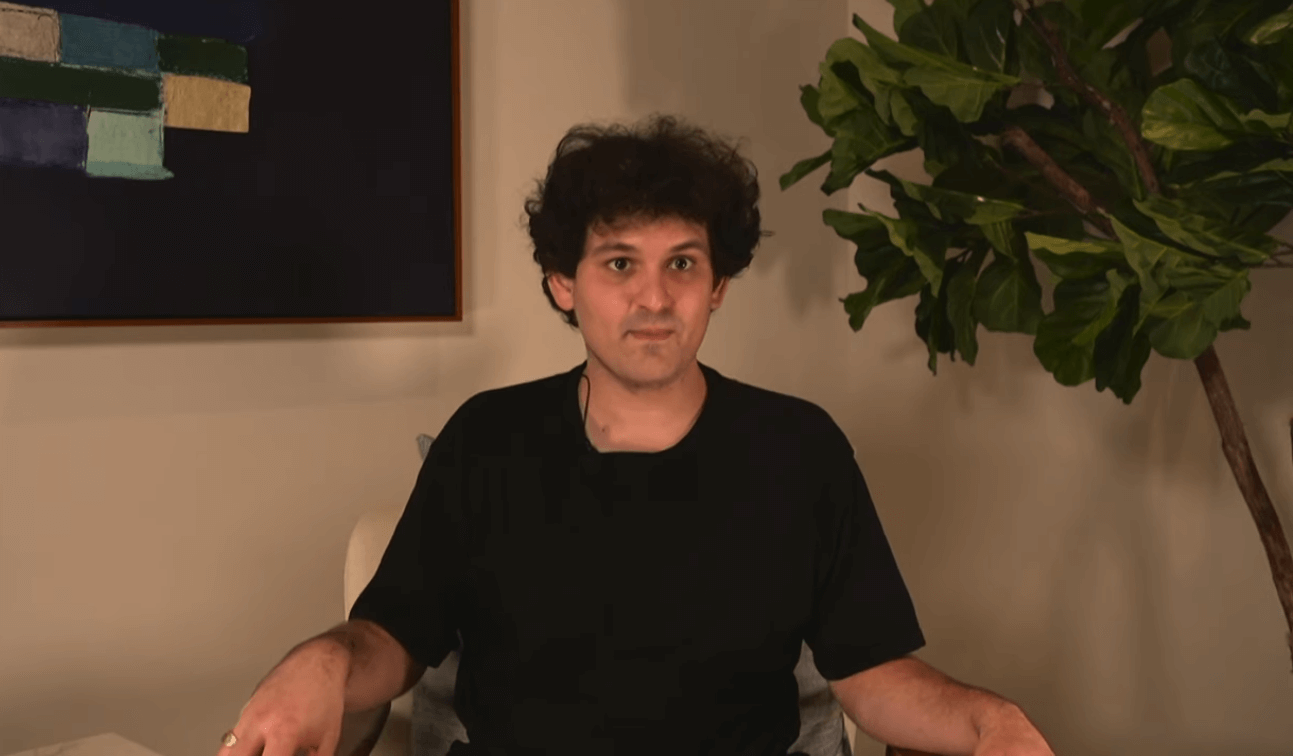
A three-judge panel of the 2nd U.S. Circuit Court of Appeals in Manhattan unanimously rejected Sam Bankman-Fried's (SBF) appeal. As a result, his 25-year prison sentence for the FTX fraud stands.
FTX was one of the world's largest crypto exchanges, founded in 2019 by Sam Bankman-Fried. The platform collapsed in November 2022, after it emerged that customer funds had secretly flowed to SBF's hedge fund Alameda Research. A federal jury in Manhattan first convicted SBF on seven counts in November 2023. Later, in March 2024, Judge Lewis Kaplan imposed the 25-year sentence. Prosecutors accused him of misappropriating 8 billion USD in customer funds to cover losses at Alameda. At its peak, the exchange had been valued at 32 billion USD. The case ranks among the largest financial fraud cases in U.S. history.
42-page ruling: evidence "robust, to put it conservatively"
In a 42-page ruling, the three-judge panel rejected all of the defense's arguments, whose oral appeal had been heard earlier in November 2025. Circuit Judge Barrington Parker wrote the opinion. The court described the prosecution's evidence as "robust, to put it conservatively." Furthermore, it found "no reversible error in the criminal proceedings." Therefore, the appeals court upheld the conviction not only formally but fully on the merits.
In the reasoning, Parker painted a picture of a defendant who projected confidence outwardly while doing the opposite internally. His wording ultimately left little room for a charitable reading.
"While he publicly assured customers, investors, and regulators that FTX customer funds were safe, he simultaneously used FTX as his personal piggy bank, spending customer money on real estate, political donations, and investments." - Circuit Judge Barrington Parker, 2nd U.S. Circuit Court of Appeals
SBF appeal fails on the timing of the deception
The defense's central argument targeted Judge Kaplan. He had allegedly barred evidence during the original trial showing that FTX held enough funds to cover customer withdrawals. However, the appeals court rejected this line and relied on a clear legal principle: fraud occurs at the moment of deception, regardless of any later intent to make amends. Any solvency of the company therefore did not change the offense.
The defense's second argument also failed. FTX had operated as a margin futures trading platform, the defense said, so customers should have expected a temporary loss of access to their funds. The court countered with a pointed distinction: "Some chose to engage in margin trading, others did not. No one chose to have their money transferred to Alameda under false pretenses."
Three former employees also testified against SBF in the original trial: Caroline Ellison, Nishad Singh, and Ryan Salame, all of whom had pleaded guilty. At the 2024 sentencing, Kaplan noted that SBF knew his actions were wrong. However, he had "made a very bad bet about the probability of getting caught." The appeals court has now affirmed this assessment on the merits.



Rule 33 motion for a new trial also fails
Alongside the appeal, SBF had opened a second legal front. In February 2026, he filed a Rule 33 motion for a new trial pro se, meaning without legal representation. The motion rested on allegedly newly discovered witness statements from Ryan Salame and Daniel Chapsky. In addition, it claimed that prosecutors had pressured witnesses. Later, in April 2026, an unusual turn followed: in a handwritten letter, SBF asked to withdraw the motion. Kaplan refused the withdrawal and ruled on the merits anyway.
Kaplan then denied the motion. The arguments raised were "meritless on several independently sufficient grounds," the judge found. By contrast, he described SBF's claim that prosecutors had threatened witnesses as "wholly conspiratorial and completely refuted by the record." Thus this path closed as well, even before the appeals court ruled.
Pardon request and remaining legal options
That leaves the political route. SBF formally filed a pardon request with President Donald Trump through the Office of the Pardon Attorney at the U.S. Department of Justice, confirmed in 2026. However, Trump had already told the New York Times in January 2026 that he did not plan to pardon SBF, and the White House has pointed to that statement since.
Nevertheless, the request draws attention, because Trump has pardoned several prominent crypto figures since taking office, among them Binance founder Changpeng Zhao and Silk Road founder Ross Ulbricht. SBF's parents reportedly sought contact with people in Trump's circle. In a prison interview with Tucker Carlson in early 2025, SBF said he did not see himself as a criminal.
Legally, by contrast, few options remain for SBF, and their prospects are slim. His lawyers, led by Alexandra Shapiro, can request an en banc hearing before the full 2nd Circuit or file a petition with the U.S. Supreme Court; historically, both paths rarely succeed. Furthermore, a habeas petition would remain as a last resort with even slimmer odds. Should these means fail, the earliest release date for the now 34-year-old SBF, currently held at the Federal Correctional Institution Lompoc in California, falls in 2044.