
The University of Cambridge has published its third study on the use of cryptocurrencies. It's 71-page paper called "Global Cryptocurrency Benchmarking Study" examines the industry growth and looks at how different sectors behave.
The study was conducted by the University of Cambridge and the Centre for Alternative Finance. It includes two surveys from March and May 2020 that compile a series of key figures in a report. Here’s a summary of the main points of this study:
Growth within the ecosystem
The report begins with employment figures in the crypto-asset ecosystem and concludes that while the industry offers opportunities, it has been in decline since 2017.
"Respondents from all market segments reported annual growth of 21% in 2019 compared to 57% in 2018" - the authors of the UC report.
The mining sector was hit the hardest, with its aggregate employment level falling by 37 points. According to the data, respondents from the Asia-Pacific region (APAC) had the highest proportion of high-growth companies in 2019.
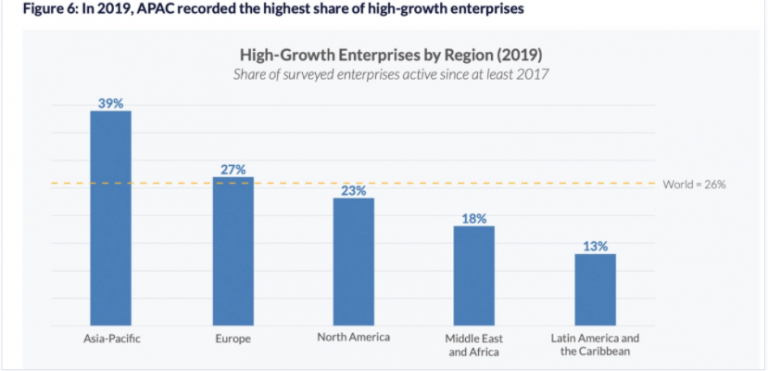
High growth is particularly evident in younger companies. These account for 49% of the respondents. A few of the service providers surveyed stated that they would see an increase in profits in 2019 compared to previous years.
Across the industry, full-time equivalent employment growth declined by 36 percent between 2017 and 2019. Mid-sized firms reported a 75 percent change in employment growth downwards.
Popularity and Mining
The study also discusses the crypto-currency mining ecosystem, and the report emphasizes that the mining industry is steadily reaching an "industrial scale".
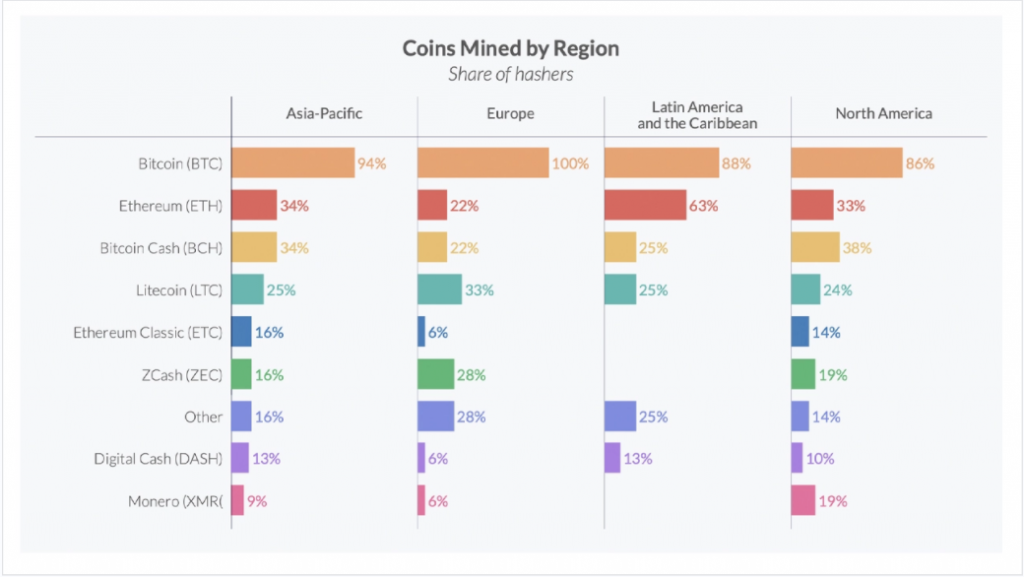
The benchmark report states that Bitcoin is the most popular coin. 89% of the miners surveyed spend at least part of their work on it. Ethereum and then Bitcoin Cash follow Bitcoin. Regional differences in preferred mining activities are also evident.
For example: Ethereum seems to be incredibly popular among Latin American miners. While Bitcoin Cash is more prevalent in APAC and North America. Mining of Privacy Coins in Western regions also differs from the global average: 28% and 19% of European and North American miners respectively report mining Zcash just as many North American miners are also active in monero mining.
The "Digital Asset" landscape and crypto user profiles
As far as the growing crypto-asset landscape is concerned, Bitcoin is still the most popular cryptocurrency. It prevails in the range of custody services, payment processors, exchanges, and wallet providers. Support has declined slightly over time. From 98% of service providers in 2017 to 90% in 2020, say the UC authors.
Ethereum is the second most widely used token and widely supported. While Litecoin, Bitcoin Cash, and Ripple are available at least 50% of crypto service providers in 2020.
Also, Zcash and Monero, which are still increasingly available despite some delistings, are supported by 24% and 17% of service providers, respectively. Since the second UC benchmark report, the number of crypto users with verified identity has increased significantly.
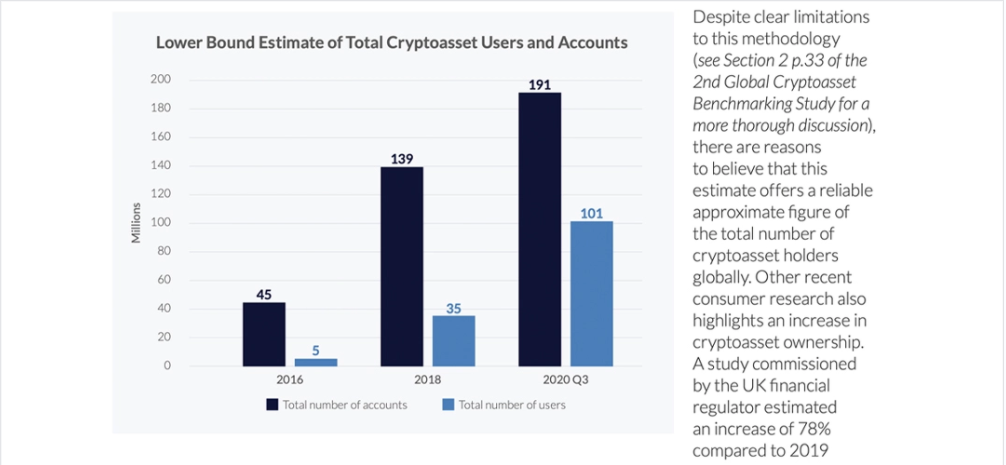
In 2018, the 2nd Global Cryptocurrency Benchmarking Study estimated the number of identities verified users worldwide to be approximately 35 million. Using the same methodology, an update of this estimate results in a total of up to 101 million unique crypto users on 191 million wallets. This 189% increase in the number of users can be explained by more wallets (which rose by 37%) and a larger proportion of wallets systematically linked to a person's identity. Thus, the estimate of the minimum number of users associated with each service provider's accounts is also higher.