
What has been happening this week in the world of blockchain and cryptocurrencies? Current events and background reports in our weekly review.
Selected articles of the week:
US investment bank Morgan Stanley has launched the Morgan Stanley Bitcoin Trust (MSBT) on NYSE Arca. It is the first physically backed spot Bitcoin product from a major American commercial bank. With a management fee of 0.14%, MSBT undercuts both BlackRock’s iShares Bitcoin Trust (0.25%) and the Grayscale Bitcoin Mini Trust (0.15%). Crypto exchange Coinbase serves as custodian. On its first trading day, the fund attracted USD 30.6 million in inflows, followed by another USD 14.9 million on day two. MSBT is part of a broader crypto push. Morgan Stanley has already filed S-1 registrations for Ethereum and Solana ETFs and plans to offer spot trading via E*Trade. The real strategic asset, however, is its roughly 16’000 financial advisors, who collectively manage USD 6.2 trillion in client assets.
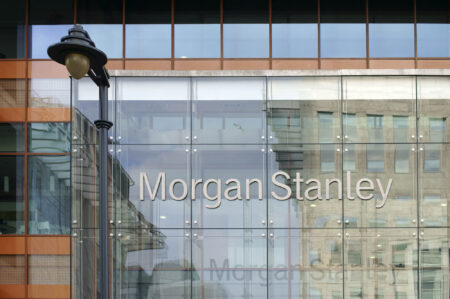
Morgan Stanley launches MSBT, the first spot Bitcoin ETF from a major US bank. At 0.14% it undercuts BlackRock and Grayscale.
14.5 billion in the red, and Saylor keeps buying
The downside of large Bitcoin positions is on full display at software company Strategy (formerly MicroStrategy). In Q1 2026, the firm recorded an unrealized loss of USD 14.46 billion. The reason is the FASB standard ASC 350-60, effective since 2025, which requires mark-to-market accounting. As of the end of March, Bitcoin traded at USD 82’445. The book value of the portfolio thus fell to USD 51.65 billion. Nonetheless, Strategy purchased an additional 88’594 BTC for USD 7.25 billion during the same quarter. Total holdings now stand at 766’970 BTC, roughly 3.65% of the entire circulating supply. The MSTR share trades 74% below its 52-week high and, for the first time since 2022, carries no premium over the underlying Bitcoin reserves.

Strategy reports a $14.5 billion unrealized Bitcoin loss in Q1 2026 – yet still added 88,594 BTC to its treasury holdings.
How much Bitcoin belongs in an institutional portfolio?
Despite such paper losses, there is a strong institutional case for a targeted Bitcoin allocation. A recent analysis by crypto investment firm 21Shares examines the role of Bitcoin in diversified portfolios. Three pillars support the thesis. Bitcoin offers a positive beta to the technology sector while simultaneously providing inflation protection through its fixed supply. On top of that, it serves as a systemic hedge. During the 2023 banking crisis, for example, Bitcoin gained 30% while traditional institutions suffered from liquidity shortages. Even a 3% allocation increases the annual return of a 60/40 portfolio by 0.5 to 0.7 percentage points. Daily trading volumes exceeding USD 50 billion also make Bitcoin comparably liquid to mega-cap equities.

Entdecken Sie die Vorteile von Bitcoin im Portfolio als Werkzeug zur Renditesteigerung und zum Schutz vor Inflation.
Washington’s crypto legislation stalls in a Senate committee
US Treasury Secretary Scott Bessent has urged the Senate in a guest op-ed in the Wall Street Journal to pass the CLARITY Act before the summer. The House of Representatives already approved the bill in July 2025 by a vote of 294 to 134. It proposes a three-tier classification system for digital assets and divides oversight between the SEC and the CFTC. The main point of contention in the Senate remains whether crypto firms should be allowed to offer interest on stablecoins. Major banks such as JPMorgan and Bank of America warned of deposit losses totaling USD 6.6 trillion. A White House analysis refuted this, estimating the actual impact at just USD 2.1 billion. The Senate Banking Committee markup in late April is considered the decisive deadline – the clock is ticking as the midterms draw closer.

US Treasury Secretary Bessent urges the Senate to pass the CLARITY Act before summer – the crypto regulation faces a closing window.
Stablecoins as tolls: Iran collects at the Strait of Hormuz
In addition, Iran is levying transit fees in crypto stablecoins and yuan on ships passing through the Strait of Hormuz. The costs amount to roughly USD 1 per barrel, reaching up to USD 2 million per passage for supertankers. Some 20.9 million barrels of oil transit the strait daily, accounting for around 20% of global consumption. A shell company linked to Iran’s Revolutionary Guards handles the process. Iran favors stablecoins for their price stability and yuan to circumvent SWIFT sanctions. The country’s crypto infrastructure has been expanding for years – mining has been legal since 2019, and Iran accounts for 4% of global mining capacity thanks to cheap energy.

Iran imposes a crypto and yuan toll on the Strait of Hormuz: Ships pay approximately $1 per barrel – administered by the IRGC.