
As cryptocurrencies continue to gain traction around the world, more financial institutions are entering the cryptocurrency market. The Eurex Digital Assets 2021 report analyses the adoption of digital asset trading by institutional investors.
This is based on a survey conducted with both buy- and sell-side financial institutions active in derivatives markets. The research assesses their approach to digital assets: current adoption, barriers to crypto involvement, as well as the perception of digital assets and digital product offerings.
Current adoption and channels
The results by Eurex show that most institutions are either invested in cryptocurrencies or interested in becoming active. However, compared to the sell side, the buy-side is currently less involved in cryptocurrency trading. The main reasons for crypto involvement are trading opportunities, growing confidence in crypto as an asset class and portfolio diversification. 90% of all institutions see crypto as a trading opportunity. 24% of respondents surveyed shared they are invested in digital assets, 30% are interested. However, there is a significant difference between the buy and sell-side: More than half (53.66%) of respondents from the buy-side stated they are not invested in crypto, but almost 40% are interested and open to future crypto investments.
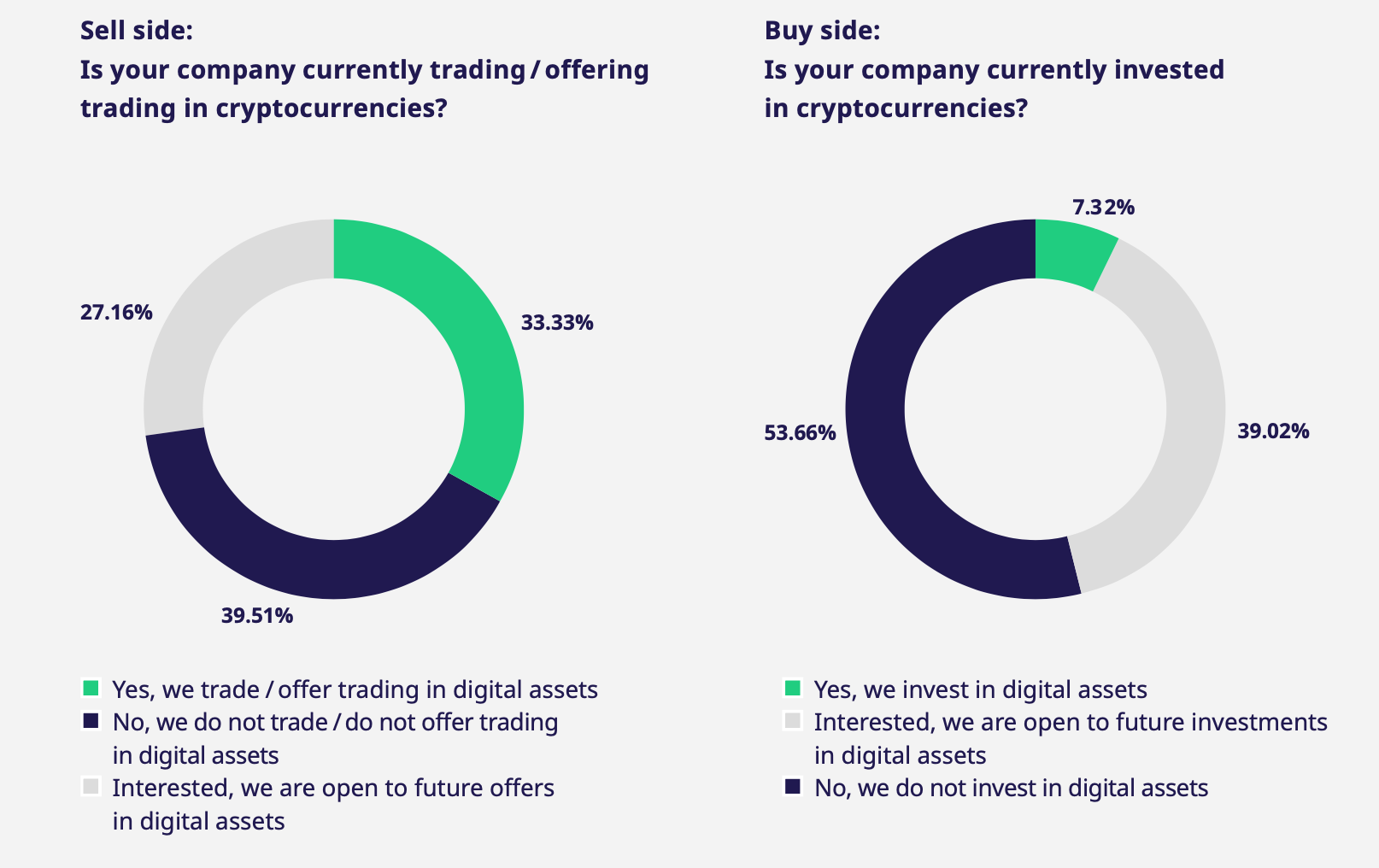
One-third of the sell-side institutions currently trade (offering trading) in cryptocurrencies. The majority of sell-side institutions that are interested in becoming active are banks and brokers. Sell-side institutions that are already active are mainly market makers and high-frequency traders. Overall, the responses suggest that the adoption of cryptocurrency trading amongst institutional investors is at its early stage.
Entering the crypto world
The main reason for crypto adoption was the factor trading opportunity, with 91.30% of respondents citing this. This opinion is shared across all types of institutions. Less than half of respondents view crypto as an investment vehicle for long-term capital increase.
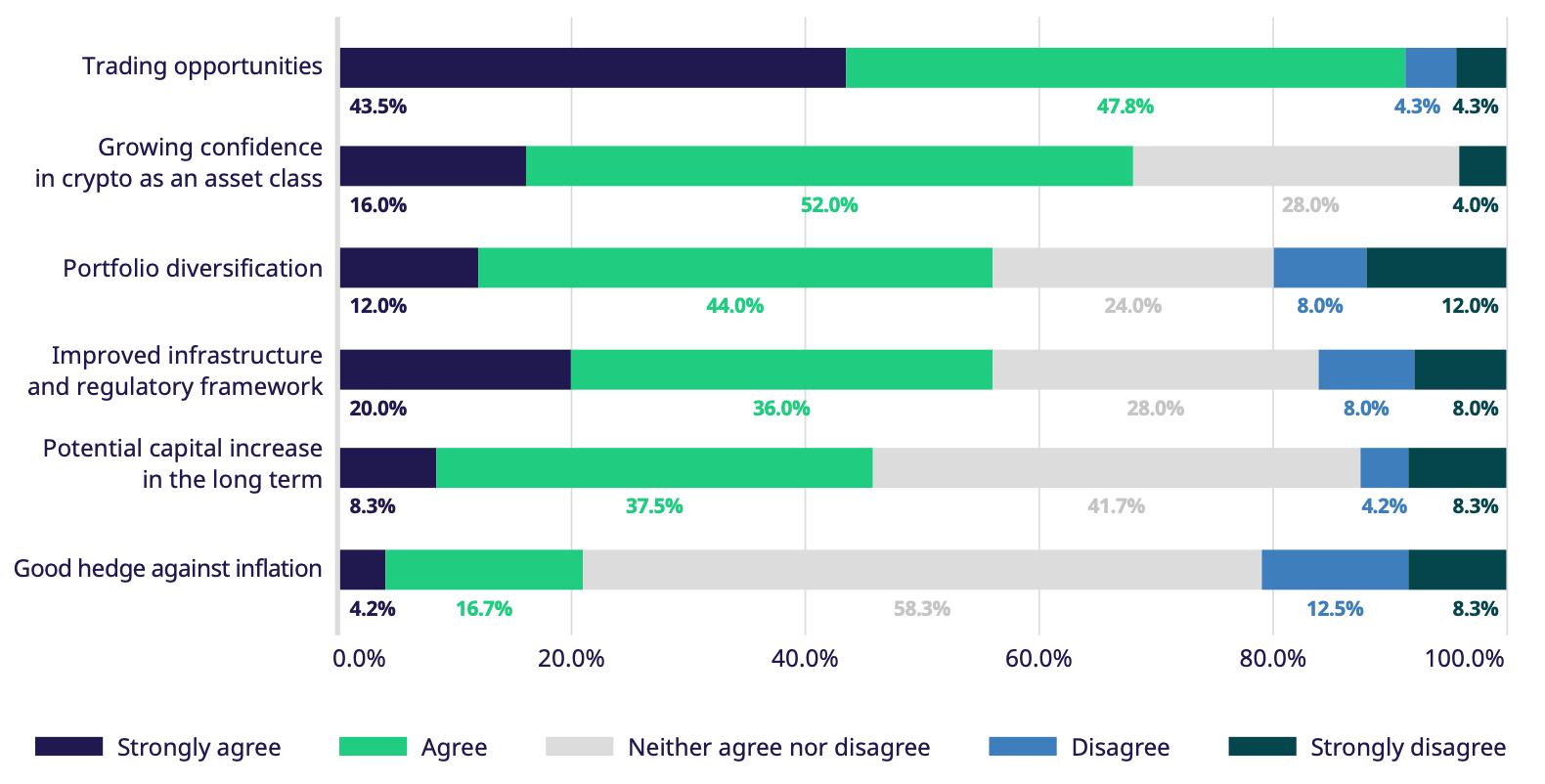
The growing confidence in crypto as an asset class ranked second, with 68% of customers surveyed sharing this. Improved infrastructure and regulatory framework, as well as portfolio diversification, ranked third, with 56% of sell and buy-side customers surveyed sharing this sentiment.
Barriers to adoption
Overall, most respondents interested in crypto plan to invest in digital assets within twelve months. Altogether, 34% stated to be likely to do so in the next twelve months; 29% are likely to invest within six months. Comparing the sell-side and buy-side, the respondents from the buy-side voted for earlier investment in digital assets.
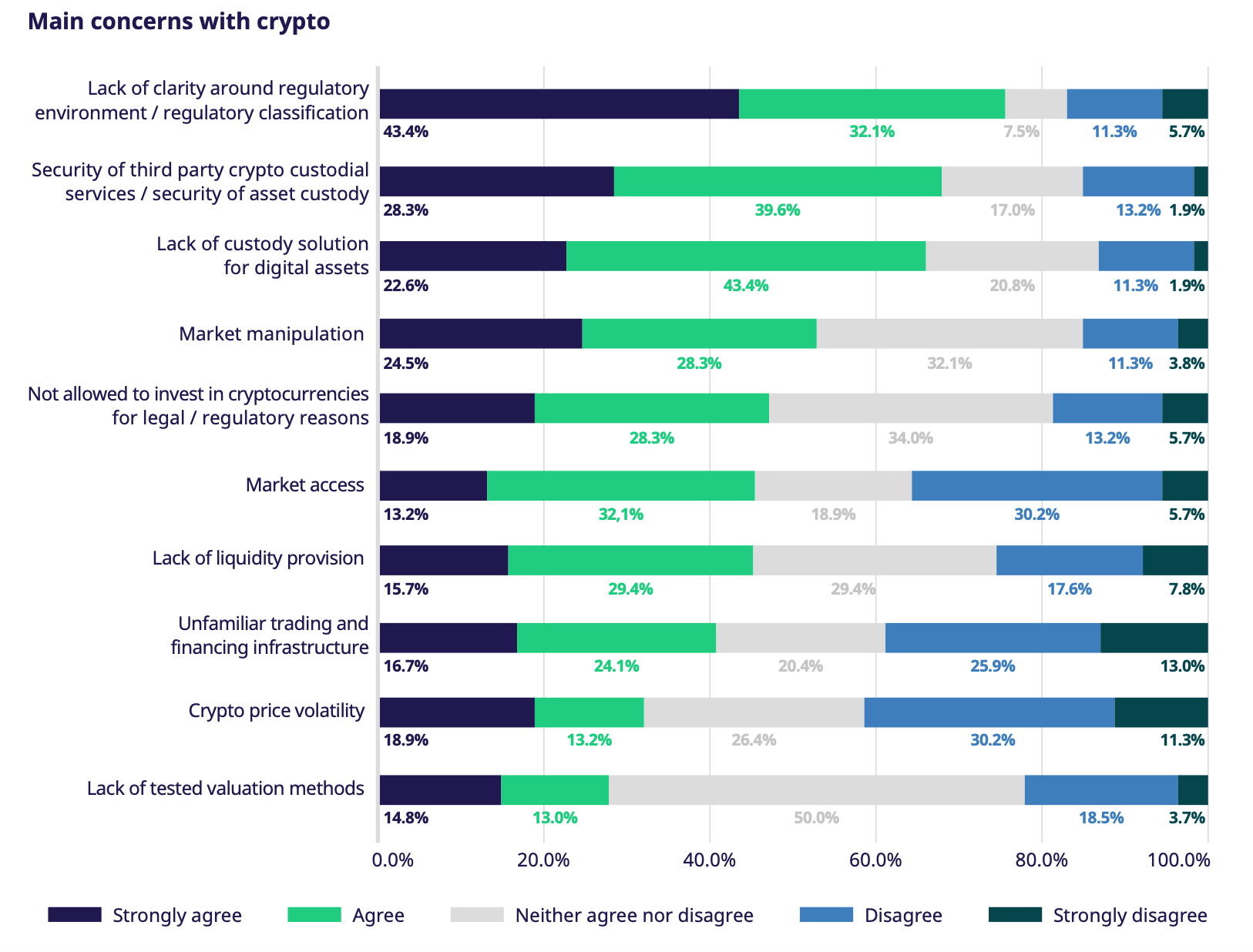
77.42% of surveyed customers believed that a lack of clarity around the regulatory environment
is the main barrier to crypto adoption. 67.75% of customers surveyed shared that the lack of custody solutions for digital assets and the security of third-party crypto custodial services (security of asset custody) is a barrier to crypto involvement. Given the relevance of regulatory clarity and safe infrastructure for financial institutions, it is not surprising that many respondents plan to get involved mid-term. This view is shared amongst all types of institutions.
Digital asset products
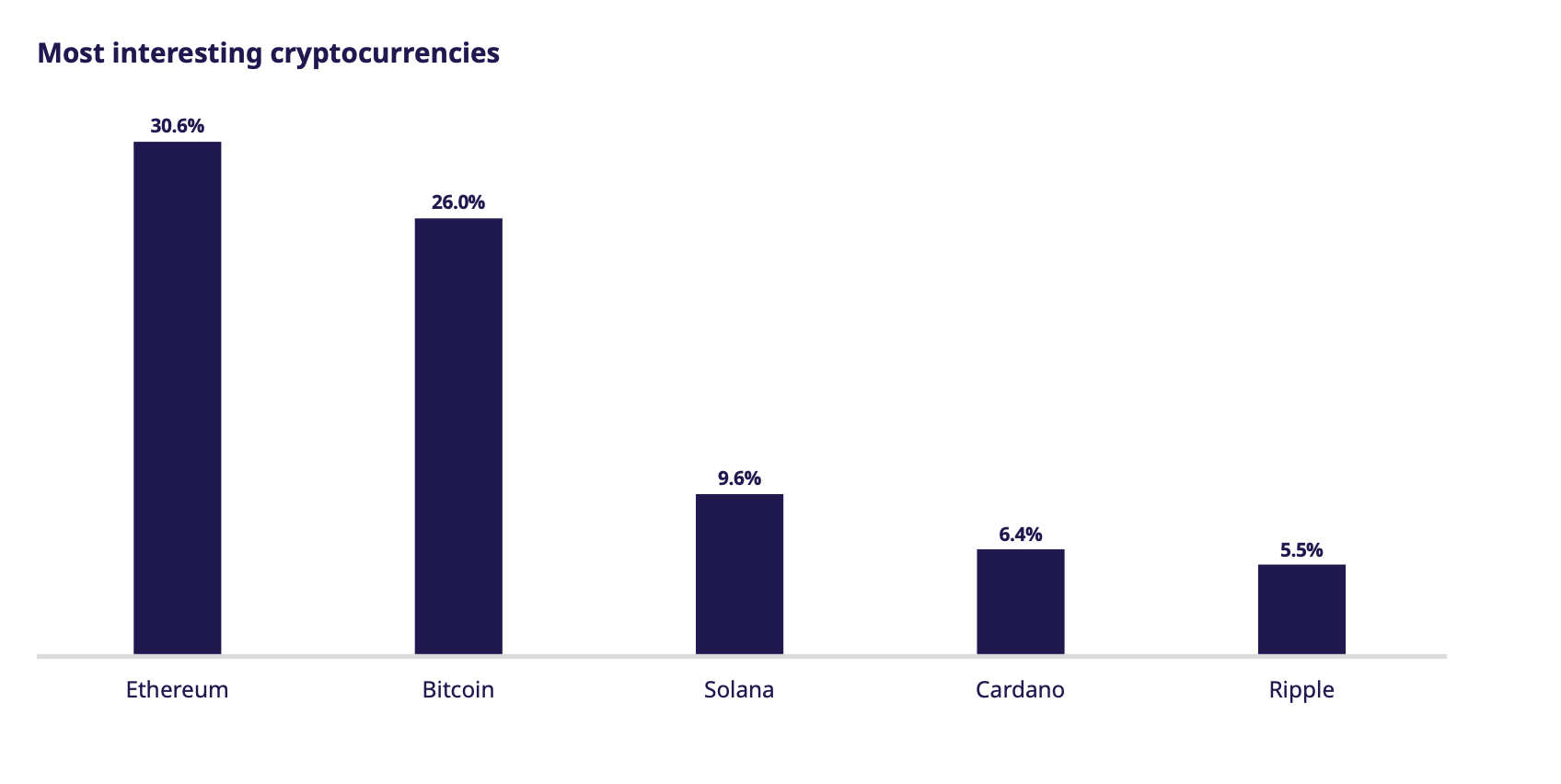
Current interest in digital asset currencies was largely dominated by the two leading cryptocurrencies, Ethereum and Bitcoin. The majority (56.62%) of respondents across buy and sell-side shared that Ethereum (30.59%) and Bitcoin (26.03%), in their opinion, provide the best investment opportunity. These are also predominantly mentioned by institutions already active in cryptocurrency trading.
82% of the sell-side customers shared that they are trading digital assets via order book, 18% via block trades. Most sell-side institutions (48%) shared that they trade cryptocurrency derivatives, 30% trade digital assets directly, whereas 23% trade cryptocurrencies through an investment product (ETF/ETN). Most respondents (33%) stated that futures (cash-settled) and options are the most interesting investment vehicles. Cash-settled futures address the concerns around custody. Options could provide clients access to the volatility risk premium, which is very high in cryptocurrencies. Institutional investors consider crypto derivatives as the most important investment vehicle.
Perception of digital assets
59% of all customers surveyed had a positive perception of digital assets. The most appealing attribute was that cryptocurrencies are an asset class of their own, with 77% of respondents citing this. Viewing cryptocurrencies as an innovative technology play ranked second in terms of appeal, with 69% of institutions surveyed sharing this sentiment.
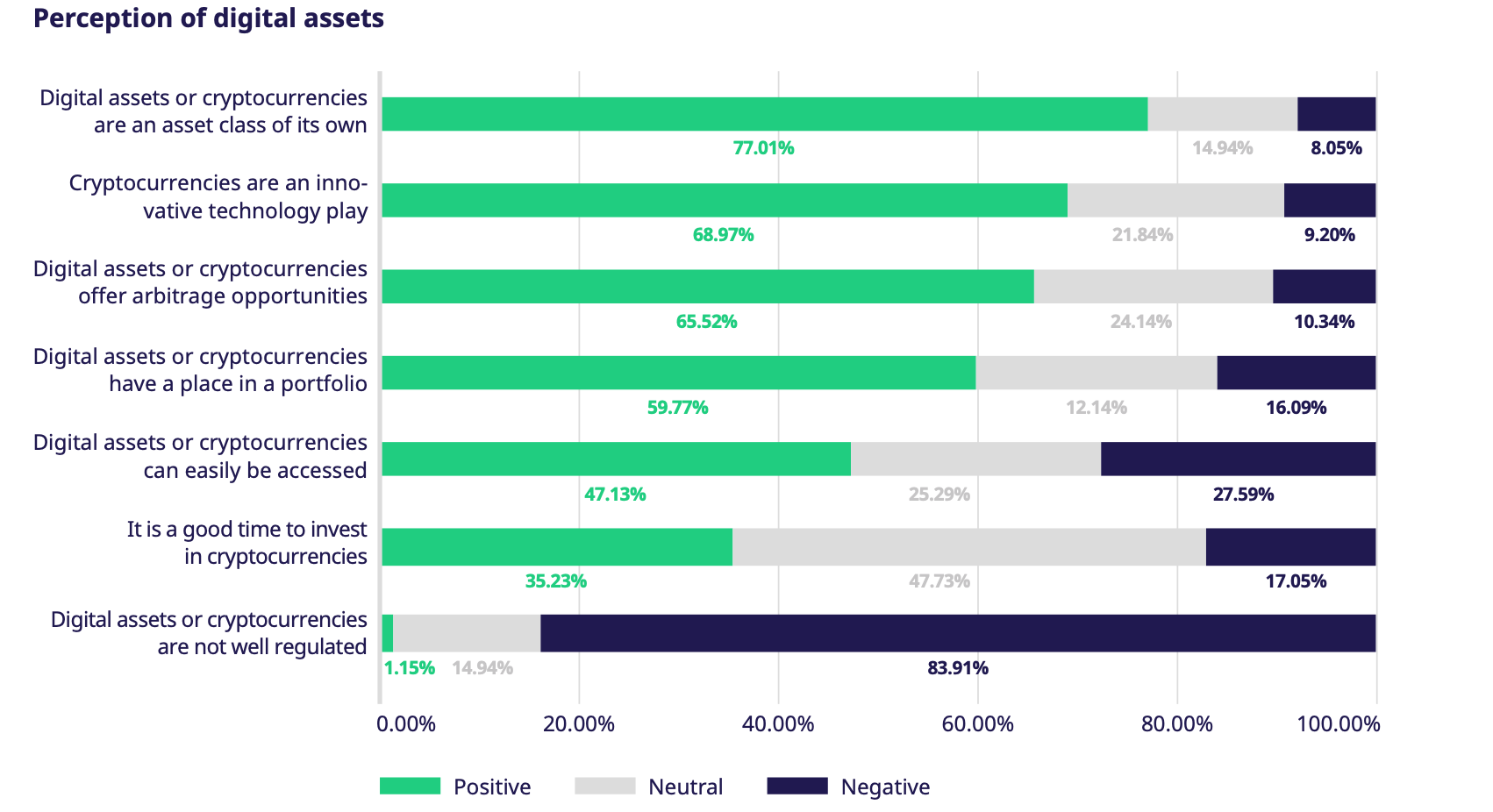
The opinion that digital assets offer arbitrage opportunities ranked third, with 65% of sell and buy-side institutions surveyed sharing this sentiment. However, more than 80% of respondents agree that digital assets are not well regulated.
Summary
The majority of institutions responding to the Eurex survey agree that cryptocurrency is an asset class of its own and should be part of a diversified portfolio. However, the adoption of trading and investing in cryptocurrencies amongst financial institutions is at an early stage. Only a minority of respondents are already active in this new asset class.
However, most not-active respondents plan to get involved soon. Other respondents are simply not allowed to invest in cryptocurrencies. Major concerns are a lack of regulatory certainty and (trusted) custody solutions. As a result, most respondents look at cash-settled futures to get exposure. Bitcoin and Ethereum remain the tokens of most interest.