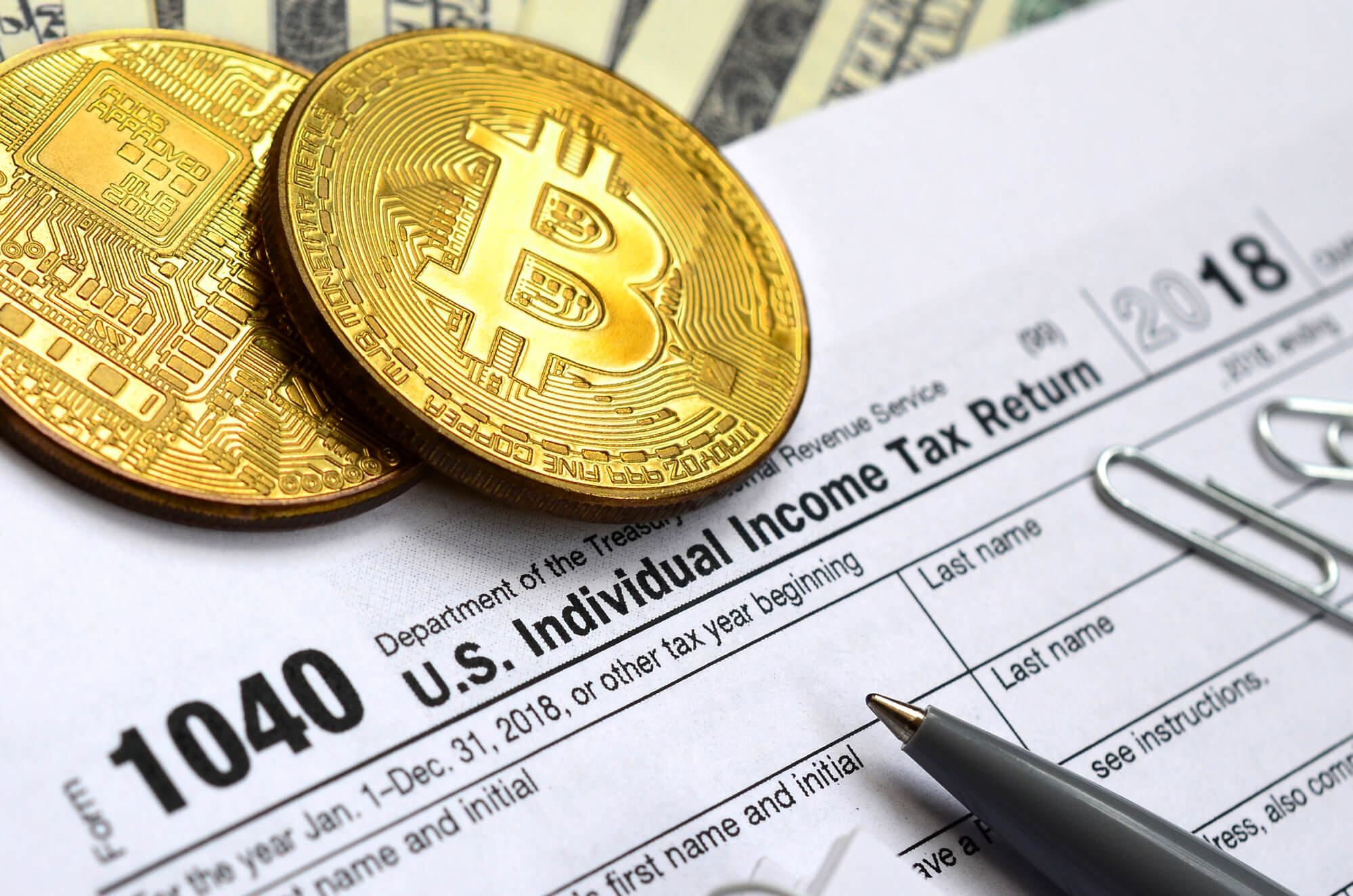
Like every year, thousands of investors in Switzerland are once again faced with the question of how to declare cryptocurrencies in their tax returns and what tax is due on them. Due to the increasing relevance and spread of Bitcoin & Co. these questions become more and more urgent.
From a tax perspective, cryptocurrencies are also classified as wealth components and must be declared as "other assets" in the list of securities and credit balances in the tax return. They are subject to wealth tax at the cantonal level. However, there are some nuances to consider.
Easy process for private individuals
For Bitcoin (BTC) and other common cryptocurrencies, the Swiss Federal Tax Administration (FTA) publishes year-end tax rates. Other altcoins must be declared at the year-end rate of the most common exchange platform for this currency. Proof must be provided in the form of a statement from the digital wallet as per the end of the tax period.
Those prices that are published by the FTA can be monitored relatively easily by the tax authorities. For the several thousands of altcoins, however, the evaluation and monitoring of the prices is much more complex. It is quite possible that in the future, in addition to the wallet statements, the corresponding detailed transaction receipts will also have to be submitted to the tax authorities in some cases.
If cryptocurrencies were mistakenly not declared in previous tax returns, this could lead to proceedings for tax evasion. In this case, taxpayers would have the option of disclosing undeclared assets and income as part of a one-time penalty-free voluntary disclosure and thus avoid criminal proceedings as well as a fine. However, the missing taxes and late payment interest is owed.. We recommend to be proactive in such cases and to contact a tax advisor. We recommend the same regarding the clarification of the tax treatment of income from mining, staking, airdrops or other crypto-specific profitable actions.




In good times... (profits)
The lead currency Bitcoin rose from under USD 30,000 at the beginning of 2021 to over USD 65,000 and closed at a price of over USD 47,000 at the end of 2021. Many investors who bought and sold at a favourable time will enjoy the positive development of their assets in their 2021 tax return. For individuals who hold their cryptocurrencies as private assets, there is generally only a tax risk in the case of realized gains. Such investors who “hodl" (buy and hold) cryptocurrencies or only have unrealized price gains, have a correspondingly low tax risk.
In this context, the question arises for private individuals as to whether realized gains on cryptocurrencies classify as tax-free capital gains (principle, private assets) or as taxable income (business assets, professional securities trader).
A classification as a professional securities trader from a tax perspective means that the realized gains on the sale of cryptocurrencies are taxed together with the other earned / regular / income and salary and thus usually results in a massively higher tax progression and burden. Furthermore, around 10% social security contributions are owed on the net income from professional securities trading.
The problem of taxing the professional securities trader has not only existed since the crypto boom; the tax authorities wanted to establish the criteria in the law as early as the 1990s, but this has never happened to date. The FTA then issued a circular letter with criteria that can be used to exclude professional securities trading (which most cantons also classify crypto trading as) in the course of a pre-assessment. The Federal Supreme Court has confirmed these principles in its case law.
Criteria for taxation as professional securities trader
In any case, the tax authorities assume private asset management or tax-free private capital gains if the following criteria ("safe haven rules") are cumulatively fulfilled:
- The holding period of the securities sold is at least 6 months.
- The transaction volume (corresponds to the sum of all purchases and sales) per calendar year does not exceed a total of 5 times the corresponding balance at the beginning of the tax period.
- The investments are not (significantly) leveraged or the taxable investment income from the securities (such as interest, dividends, etc.) is greater than the proportionate debt interest.
- The purchase and sale of derivatives (in particular options) is limited to hedging own securities positions.
- The realization of capital gains from securities transactions does not constitute a necessity to replace missing or lost income for living expenses. This is usually the case if the realized capital gains amount to less than 50% of the net income in the tax period.
If these criteria are not cumulatively fulfilled, professional securities trading cannot be excluded. Already 1 transaction can constitute a commercial activity. This means that capital gains on liquid assets qualify as income from self-employment. This is the case if the taxpayer buys and sells assets in a way that goes beyond the simple management of private assets. The assessment is made based on the circumstances of the specific individual case.
...and in bad times (losses)
According to experience, the tax returns are usually prepared in the 2nd half of the year. If you take a look at today's prices, cryptocurrencies are worth massively less; the price of Bitcoin is currently still at around USD 20,000 compared to USD 47,000 at the end of 2021. However, in the 2021 tax return, you will have to declare and pay taxes on BTC with the value of USD 47,000 per BTC (converted into CHF). In addition, as a professional securities trader, you also pay taxes on the income from realized profits in 2021.
Professional securities traders cannot build a provision for price losses occurring after year end date. In Switzerland, taxes are charged on a periodicity principle and each tax year is considered individually. Professional securities traders who keep accounting records, are allowed to claim realized capital losses for tax purposes, however this is not possible for persons who simply manage private assets
Summary
Arguably, few investors enjoy a bear market, but perhaps this very circumstance is currently helping crypto investors in Switzerland – at least from a tax perspective; after the bull markets in 2017 and 2020/21, among others, crashes and bear markets have immediately followed. For the tax authorities, this would mean a lucrative taxation of profits of qualified professional securities trade in times of a bull market. However, in subsequent bear markets, losses from the sale of these assets would also have to be accepted, which would reduce taxable income and progression as well as lead to lower tax revenues for the authorities.
In addition to the sometimes complex monitoring of transactions, the enormous price fluctuations are probably the decisive factor why only very few people have been classified as professional securities traders with cryptocurrencies to date. However, once the tax authorities qualify someone as a professional securities trader, the hurdles to "escape" it again are very high.
If the crypto market becomes more stable in the future, the issue of explosive profits will put itself into perspective. Should cryptocurrencies remain ever so volatile, tax authorities will continue to be confronted with the dilemma of offsetting losses for tax purposes. In both cases (exchange rate gain/loss), the courts will probably have to increasingly judge cases in the future that deal with the distinction between private asset management and commercial crypto trading from a tax perspective.