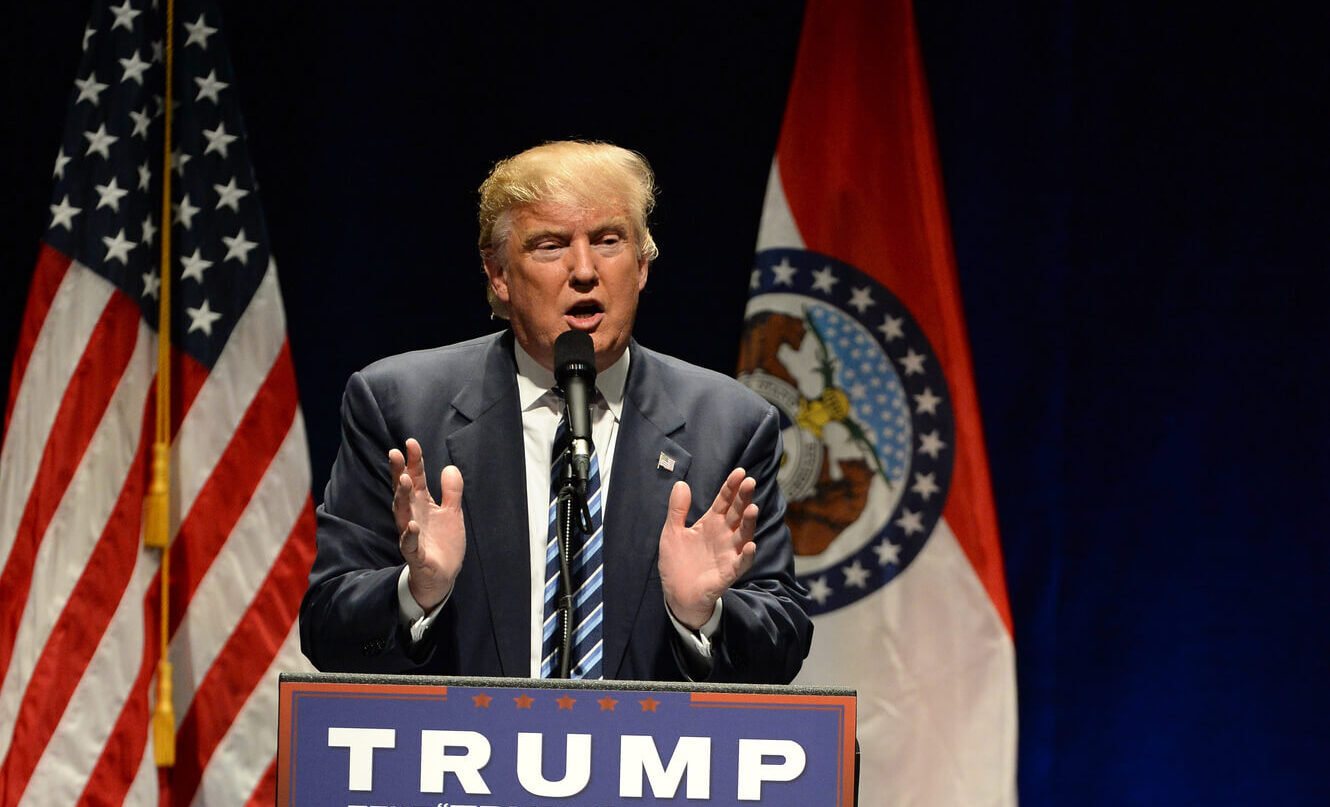
President Donald Trump meets Republican senators Bernie Moreno and Cynthia Lummis at the White House on Thursday. Their goal is to settle the contested ethics clause of the Clarity Act. This meeting counts as the last major hurdle before a possible Senate vote ahead of the August recess.
The Clarity Act (Digital Asset Market Clarity Act) would be the first comprehensive U.S. federal law for digital assets. First of all, it would draw a line between the so far unclear responsibilities of two agencies. These are the securities regulator SEC and the futures regulator CFTC. On the other hand, the SEC oversees securities, while the CFTC governs commodity futures trading, and many tokens fall between the two categories.
The Senate Banking Committee passed the bill on May 14, 2026, by a vote of 15 to 9. However, an ethics amendment from Senator Chris Van Hollen failed the same day by 11 to 13. Moreno's opposition blocked it. The latest draft merges the Banking and Agriculture Committee versions and still contains no ethics provision. Nevertheless, Senate Majority Leader John Thune has promised a full vote before the recess. The week of July 20 stands as the target. Without passage, though, the industry would keep only a reversible executive order instead of a federal law.
What Trump and the senators are negotiating
The meeting begins Thursday at 2:30 p.m. at the White House. Alongside Trump, Moreno and Lummis, two more officials will also attend. These are the White House's top crypto adviser Patrick Witt and Chief of Staff Susie Wiles. Kristin Smith, president of the Solana Policy Institute, confirmed the details, and CoinDesk had first reported the talks. According to her, the meeting aims to put several concrete proposals on the ethics question before Trump. Ideally, it would secure his support. She reads the appointment as a positive sign. Whether Democrats were invited remained unclear at first.
At the center sits the question of how far officeholders may profit from their own crypto dealings while in office. Van Hollen's failed amendment targeted the president, vice president and members of Congress. It would have barred them from holding stakes in crypto companies while serving. Moreover, it would have required disclosure of existing holdings. Moreno had earlier rejected the amendment in committee as procedurally out of order.
Meanwhile, an alternative mechanism is on the table, under which state attorneys general could sue elected officials. Lummis rejected that proposal in comments to Fox Business. Still under review, by contrast, is the use of blind trusts. These are assets managed by a trustee that the owner no longer controls. Such a trust should ease the conflict of interest, because the officeholder no longer influences the investment decisions. If Thursday brings no agreement on an ethics formula, the bill consequently lacks the support of Democrats on the floor.
"If we eventually reach wording that both Congress and the White House can live with, I think it will be a reasonable balance and something fair." - Cynthia Lummis, U.S. Senator
Trump's own crypto income sits at the center
Why the ethics question is not a mere procedural detail becomes clear from Trump's latest financial disclosure. The document, released in late June, reports around USD 515 million for 2025. That sum came from the sale of World Liberty Financial tokens. In addition, further income came from licensing fees for his official meme coin activity. On the total, however, the figures diverge. CNBC cites more than USD 580 million, while NBC News puts the crypto-related income at up to USD 1.4 billion.
World Liberty Financial is the president's crypto family business and therefore sits at the heart of the debate. The firm had issued its own token, whose sales made up most of the reported crypto income in 2025. Critics see a direct conflict of interest. Trump decides on a law that regulates his own industry and from which he personally profits. Democratic senators Ruben Gallego and Angela Alsobrooks did vote for the bill in committee. Without the ethics questions resolved, however, there will be no support on the floor, both explained.
The resistance has grown more visible lately. On July 14, Senators Van Hollen, Chris Murphy and Jeff Merkley held a press conference at Maryland Blockchain Week. Their signs read "Stop Trump's Crypto Corruption." Senator Alsobrooks spoke there as well on the open ethics questions. As a result, the Democrats moved the president's personal crypto interests to the center of their campaign against the bill.



Time pressure on the Clarity Act before the recess
The timeframe is tight. Thune has promised to bring the bill to a full vote before the recess. The week of July 20 is under discussion. The Senate finally breaks for recess after the first week of August. Should the Clarity Act stay blocked until then, a renewed effort before the midterm elections looks unlikely.
For the crypto industry, more than a schedule is at stake here. Without a federal law, an executive order would remain the only regulatory protection. A new administration can lift such an order quickly. A passed federal law, by contrast, would give the industry the lasting legal certainty it has demanded for years.
Should the vote slip past the midterms, a complete restart looms. The midterm elections are due in November 2026. Several observers then consider it likely that the legislative process starts over in the next term. The balance of power in Congress could shift after the elections.