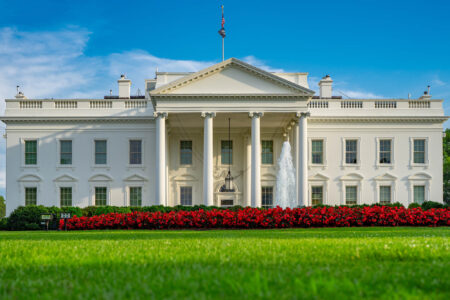
The US Senate cleared the "21st Century ROAD to Housing Act" for further debate with an 84-to-6 vote. Embedded in the 303-page housing bill: a ban on the Federal Reserve issuing a central bank digital currency. It spans two pages in Title X of the draft and applies initially until 2030.
This clause specifically prohibits the Board of Governors of the Federal Reserve and all regional Federal Reserve Banks from issuing a CBDC. Digital assets that are substantially similar to a CBDC also fall under the ban. Both direct issuance and indirect issuance through financial institutions are ruled out. Meanwhile, the White House signaled immediate support: President Trump would sign the bill in its current form.
CBDC ban in the housing bill: a tactical decision
The vote was a so-called cloture vote. It was not a final passage but rather an authorization for further Senate debate. Still, the broad bipartisan support stands out. Republican Senate Banking Committee Chairman Tim Scott and Democratic Senator Elizabeth Warren introduced the bill together. Neither side mentioned the CBDC ban in public statements. Their messaging focused on housing market reforms.
Embedding the planned US CBDC ban in a housing bill was a calculated move. As a standalone crypto bill, the ban would have attracted few Democratic votes. Bundled with popular measures, proponents secured broad support instead. For instance, the draft prohibits large investors with more than 350 single-family homes from purchasing additional properties. For Democrats, these housing market reforms were the political driving force. In effect, the CBDC ban came along for the ride.
From executive order to legislation
The CBDC ban in the Senate did not come out of nowhere. President Trump signed the executive order "Strengthening American Leadership in Digital Financial Technology" on January 23, 2025. It banned all federal agencies from developing, issuing, or promoting a CBDC. Yet a future president can revoke an executive order at any time. This legislation is designed to close exactly that gap.
"[The government shall] take measures to protect Americans from the risks of Central Bank Digital Currencies that threaten the stability of the financial system, individual privacy, and the sovereignty of the United States." - Executive Order, January 23, 2025
In the House of Representatives, lawmakers already passed the "Anti-CBDC Surveillance State Act" as a standalone bill. A Senate counterpart had been missing until now. Senator Mike Lee introduced his own draft in February 2025 to permanently codify Trump's executive order. Senator Ted Cruz filed another proposal with the "Anti-CBDC Surveillance State Act" (S.1124). Ultimately, the route through the housing bill proved more politically viable.




Sunset clause and the Cruz amendment
A key point of contention remains the time limit. The current version contains a sunset clause: the ban expires automatically on December 31, 2030. After that, a new vote would be required. Senator Ted Cruz considers this insufficient. He therefore filed Amendment SA 4318, which would remove the sunset clause and make the ban permanent.
At the same time, the bill contains a notable exception. So-called permissionless, private, dollar-denominated digital currencies (stablecoins) are exempt from the ban. The condition: they must offer the same level of privacy as physical cash. Lawmakers are targeting the protection of certain crypto projects and privacy coins that are based on the dollar.
USA against the global CBDC trend
The planned ban positions the United States against the international trend. For example, the European Central Bank plans to launch the digital euro by 2029. China already operates a fully functional CBDC system with the digital yuan. Meanwhile, the Federal Reserve had always described its own plans as "exploratory." It emphasized that a central bank digital currency would require explicit authorization from Congress. Now, the new legislation formally codifies this self-imposed restriction.
The 84-to-6 vote makes the consensus clear. Both Republicans and a large share of Democrats view a government-issued digital currency with skepticism. Privacy concerns and fears of state surveillance over payments unite conservative and progressive critics alike.
The bill still faces several hurdles. A vote on Cruz Amendment SA 4318 was expected for the week of March 10. After that, the final Senate vote on the full bill is next. Because the Senate version differs from the House version, a conference between both chambers must then reconcile the differences. Only then can President Trump sign the bill into law.