The announcement of a US-Iran peace deal has pulled the geopolitical risk premium out of global markets and triggered a Bitcoin rally. As a result, Bitcoin climbed 2.4% to USD 65,793, while crude oil prices fell sharply at the same time.
At the center of the move sits the Strait of Hormuz, one of the most important oil transit corridors worldwide. Specifically, roughly 20% of global crude oil trade passes through this maritime channel. Since 28 December 2025, when the US and Israel began military operations against Iran, the route closed almost entirely and drove crude oil prices to multi-year highs. Furthermore, Iran confirmed the deal through Deputy Foreign Minister Kazem Gharibabadi, who also released the finalized treaty text for the Memorandum of Understanding. The signing is planned for 19 June in Switzerland. As a result, the market reaction was uniform: WTI Crude lost 4.84% to USD 80.77 per barrel, the Nikkei 225 gained 4.89% and South Korea's Kospi jumped 5.63%.
Bitcoin rally: Why the deal pulls the risk premium out of crypto markets
Bitcoin most recently traded at USD 65,793 and thus 2.4% higher, after the cryptocurrency had fallen to around USD 63,600 over the weekend. Moreover, the upward move swept across the entire market: Ethereum gained 2.8% to USD 1,720, XRP rose 3.5% to USD 1.19 and Solana advanced the most, up 4.2% to USD 71.11. However, none of these increases followed a crypto-internal signal; instead, they tracked the broader risk appetite after the deal announcement. Notably, the fact that the market first slipped to around USD 63,600 over the weekend and then turned within hours underscores the tight coupling to the geopolitical news flow.
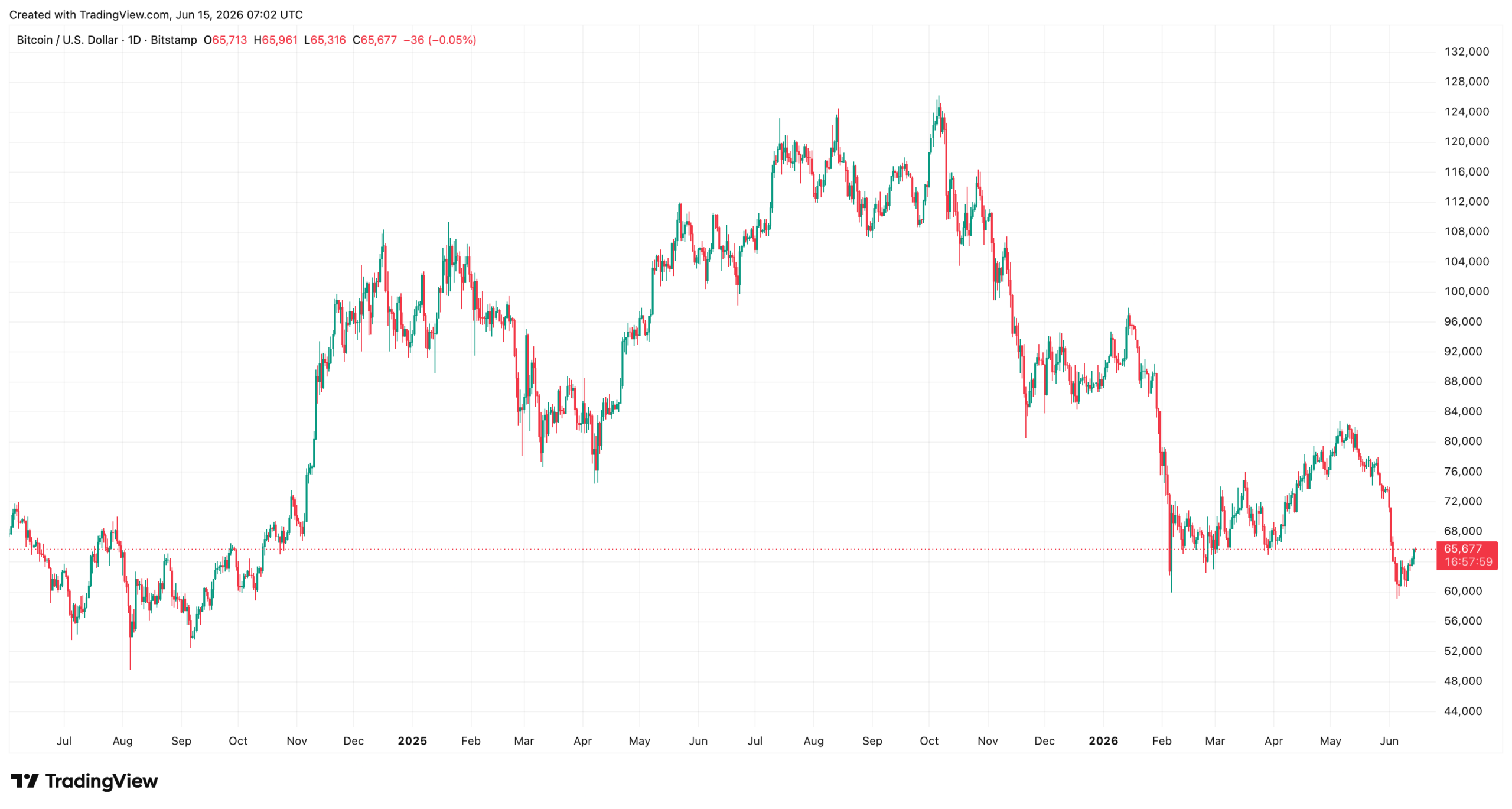
The rally began immediately after Trump's comment on a US-Iran framework agreement, which pulled the risk premium out of the crude oil market. Furthermore, thin weekend liquidity amplified the move, because even moderate order flows trigger larger price swings. According to some voices, a compression of the macroeconomic risk premium drove the recovery, which simultaneously pulled oil lower and Asian markets higher.
Hormuz reopening drives crude oil to lowest level in three months
The oil price slump formed the first and clearest barometer of the risk relief. WTI Crude fell 4.84% to USD 80.77 per barrel and thus to its lowest level in over three months. Brent Crude also gave way and lost 4.33% to USD 83.53 per barrel. In addition, Trump published a statement on social media that oil would once again flow through the Strait of Hormuz after the signing. Consequently, that very prospect of additional supply put the quotes under pressure.
The significance of this corridor explains the scale of the reaction. Since 28 December 2025, the Strait of Hormuz had been largely closed, through which roughly 20% of global crude oil trade normally runs. Therefore, the closure had driven quotes to multi-year highs since year-end and forced a persistent premium onto global energy markets. Meanwhile, Iran may resume its crude oil exports during the 60-day ceasefire, which holds out the prospect of additional supply.
Qatar, Pakistan, Saudi Arabia and Turkey brokered the deal, with backing from Britain's Prime Minister Starmer and France's President Macron. It provides for a permanent halt to military operations on all fronts, including in Lebanon. Subsequently, the signing ceremony is scheduled for 19 June in Switzerland, and Trump authorized the immediate lifting of the US naval blockade after the signing. However, only a 60-day negotiation phase on the lifting of sanctions and Iran's nuclear program follows thereafter. At the same time, Trump warned that the US could restart operations should the agreement fail. Thus the deal has not yet been finally ratified, and part of the risk premium could return should the implementation stall.




Fed meeting under Warsh as the next driver for the Bitcoin rally
The next macro event follows immediately with the FOMC meeting from 16 to 17 June. It is the first meeting under new Fed Chair Kevin Warsh, who took the oath of office on 22 May. Warsh is seen as skeptical toward forward guidance and the dot-plot practice, and he prefers a data-driven approach without long-term commitments. Moreover, the policy rate is likely to remain unchanged in the range of 3.50% to 3.75%, with the announcement coming on 17 June at 2:00 pm ET. Finally, the subsequent press conference is scheduled for 2:30 pm ET.
Through the inflation channel, geopolitics connects directly with monetary policy. The Hormuz closure had driven US inflation to a three-year high, which is why the now-expected reopening could ease the price pressure. However, J.P. Morgan expects the new Summary of Economic Projections to show higher inflation and a slightly higher rate path. As a result, the relieving effect of oil prices would stand against potentially tighter central bank communication. In addition, US retail sales for May, which appear on Wednesday, deliver further data pressure.
The planned signing on 19 June also falls on Juneteenth, when US markets remain closed. Consequently, the event meets a trading day without US activity, which is likely to push the immediate price reaction into regular US trading. Therefore, the subsequent 60-day negotiation phase keeps the uncertainty alive, which is why the foundation of the rally remains dependent on the actual implementation of the deal.