
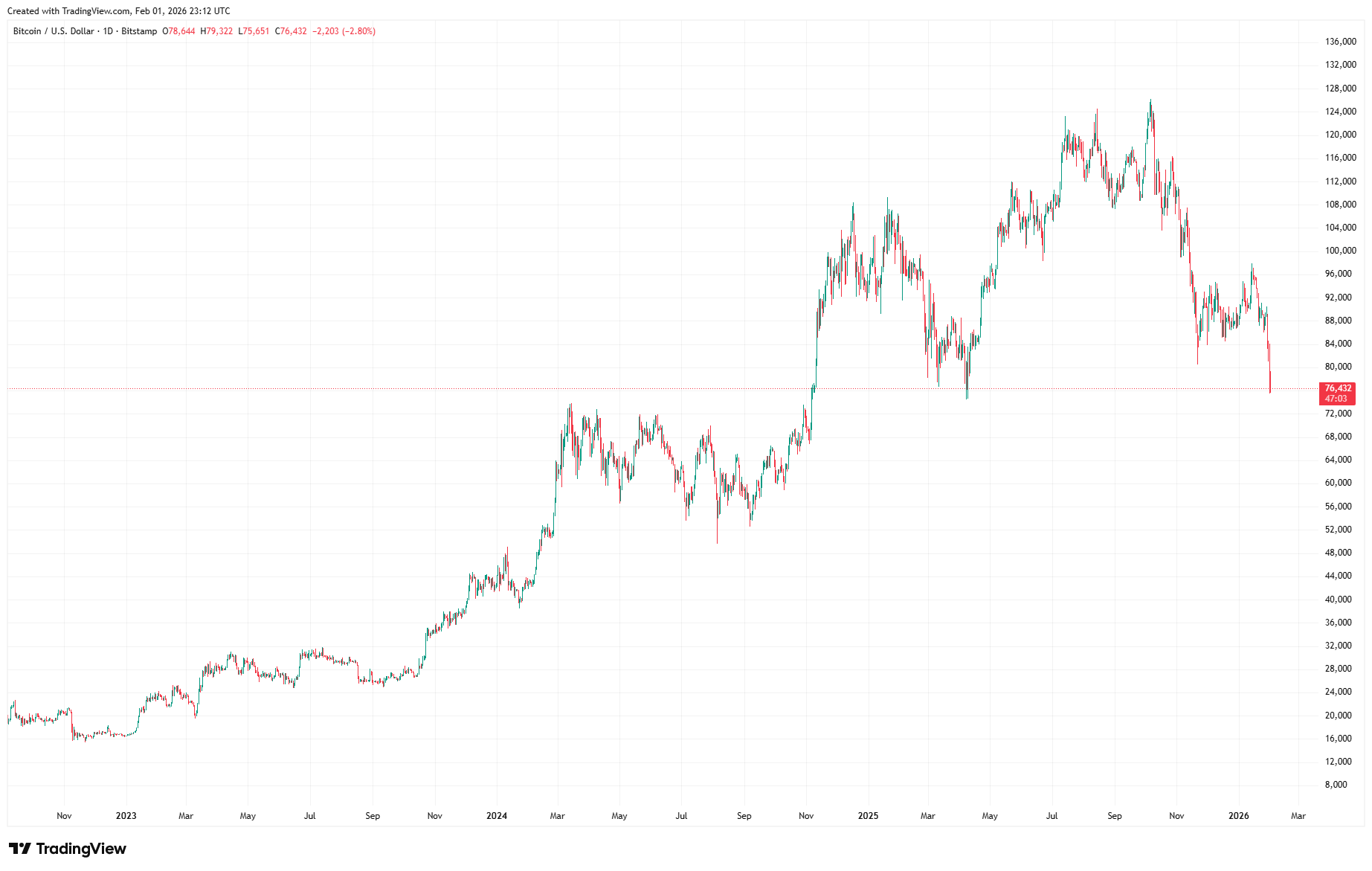
Bitcoin broke through the psychologically important 80,000 USD mark on January 31, 2026. The price dropped to 78,615 USD, a daily loss of over 5 percent. In illiquid weekend trading on February 1, it then slid further below 76,000 USD.
This puts Bitcoin on track for its fourth consecutive monthly loss. Such a streak last occurred in 2018, during the ICO crash. Since the all-time high in Q4 2025, the decline totals around 40 percent. In January alone, Bitcoin lost 6 percent. The selloff has swept across the entire crypto market. Ethereum fell 8.5 percent, Solana 8.2 percent. Also, 90 of the 100 largest tokens closed in the red, with an average loss of 4.6 percent. Total market capitalization shrank from its peak of 4.27 trillion USD to 2.5 trillion.
ETF outflows accelerate
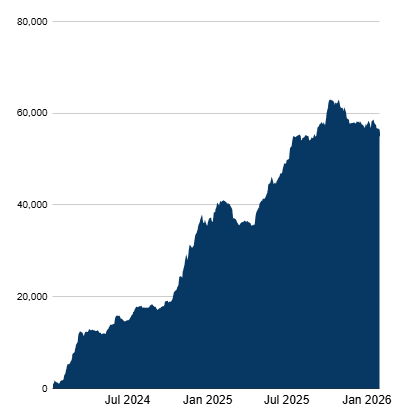
The institutional tailwind that propelled Bitcoin in 2024 and 2025 has turned into a headwind. US Bitcoin spot ETFs recorded net outflows of 1.6 billion USD in January 2026. These are the third-largest monthly outflows on record. On January 30 alone, roughly 1 billion USD left in a single trading session, the most since August.
This dynamic accelerated over the course of the month. Over five consecutive trading days, outflows totaled 1.7 billion USD. On January 29, investors pulled 818 million USD from the funds. Earlier in January, a three-day outflow streak of 1.1 billion USD had already wiped out the inflows from the first two trading days entirely. And the prior months showed weakness too. In November and December 2025, a total of 4.57 billion USD left Bitcoin ETFs, a record. Since inception, the funds have still attracted 55 billion USD in net inflows. Despite substantial price losses, only 13% of assets have flowed out of the products since the highs.
Liquidity crisis amplifies downward pressure
Market structure is compounding the selloff. Bitcoin's market depth sits more than 30 percent below its October peak. Top-of-book liquidity on major exchanges stands at just around 500,000 USD. At the same time, spot volumes are at their lowest level since late 2023.
This thin liquidity makes the market vulnerable to cascading sell orders. On January 29, the drop below 86,000 USD triggered 570 million USD in liquidations within 24 hours. In the most intense hour of the year, 268 million USD in positions were wiped out. Binance and Bybit accounted for 65 percent of all liquidations. And when Bitcoin subsequently fell below 76,000 USD, 2.4 billion USD in long positions were liquidated within 24 hours.
Analysts describe this as a textbook case of phantom liquidity meeting forced deleveraging. Unlike previous crashes, there is no single trigger like the FTX collapse in 2022. Instead, demand is fading gradually, liquidity is thinning, and Bitcoin is decoupling from broader markets.




Warsh nomination and Fed policy weigh on risk assets
Monetary policy is offering no support to the crypto market right now. On January 28, the FOMC held the key interest rate at 3.50 to 3.75 percent. Only two members voted for a cut. As a result, the higher-for-longer scenario is reducing expectations for aggressive easing in the first half of 2026.
Trump's nomination of Kevin Warsh as the new Fed chair is adding further pressure. Warsh is seen as an advocate for tighter monetary policy, higher real rates, and a smaller Fed balance sheet. Following the announcement, the dollar rose, and Bitcoin came under pressure. Yet Warsh himself struck a fairly constructive tone on the crypto market.
He described Bitcoin as an important asset that signals when policymakers are making mistakes. In the long run, a hawkish Fed leadership could even strengthen the crypto narrative, particularly for Bitcoin as a hedge against centralized monetary control. But in the short term, fear of continued restrictive policy dominates.