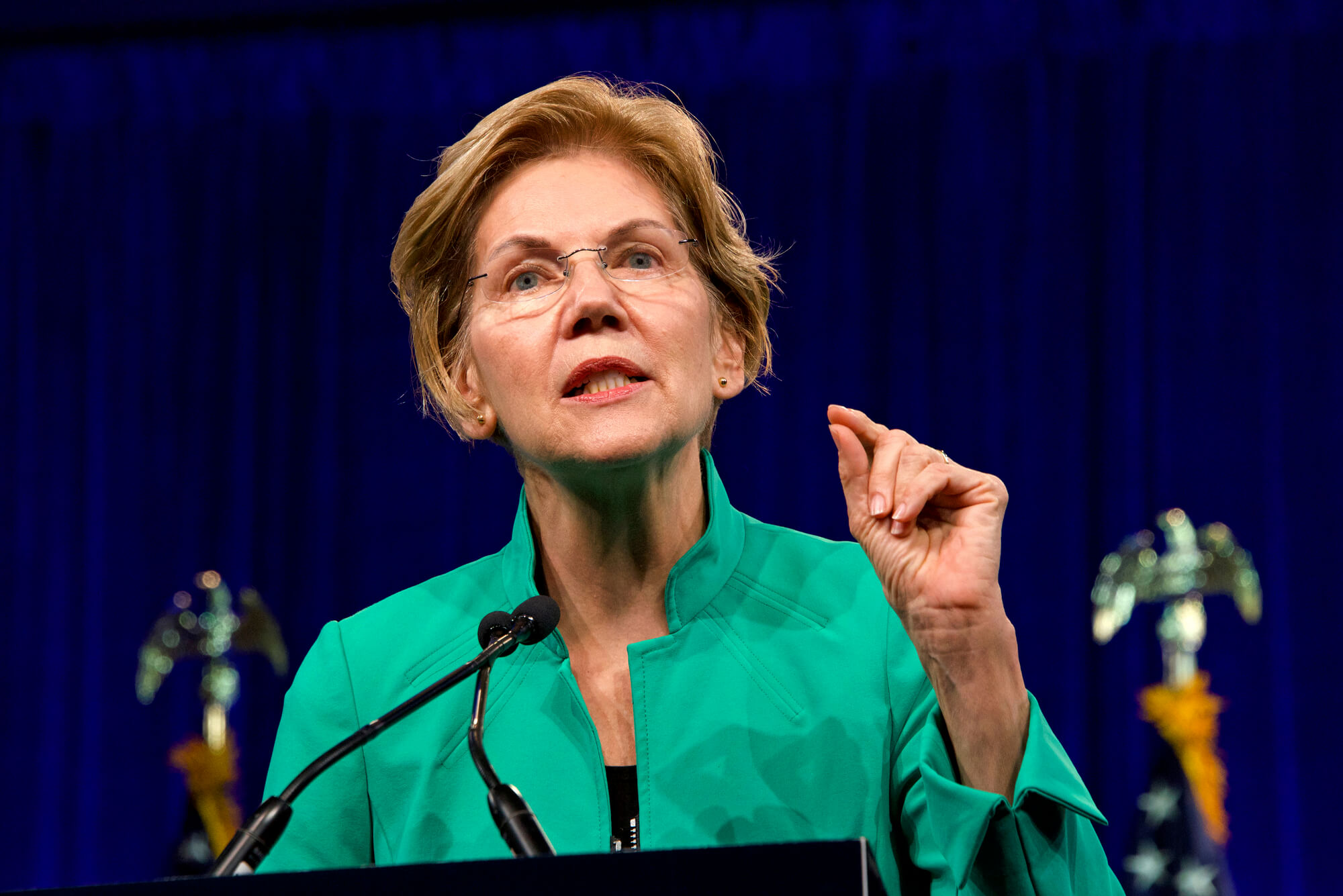
US Senator Elizabeth Warren has sent a formal letter to Comptroller Jonathan Gould. In it, she accuses the banking regulator OCC of granting nine crypto firms illegal National Trust Bank Charters. Coinbase and Ripple rank among the affected companies.
By June 1, 2026, Warren is demanding the complete documentation of all approvals. This includes every communication between OCC officials and President Trump or his family. The ranking member of the Senate Banking Committee describes the charter grants as a violation of the National Bank Act. According to her, the approved business models primarily cover custody, staking, lending, stablecoin issuance and payment services. However, they do not cover core fiduciary activities. As a result, she argues that the OCC is engaging in regulatory arbitrage in favor of the crypto industry.
Nine OCC crypto trust charters in four months
Between December 2025 and April 2026, the OCC issued nine conditional charter approvals to crypto companies. On December 12, 2025, five approvals followed at once. These included Ripple National Trust Bank and the Circle subsidiary First National Digital Currency Bank. In addition, the agency converted the trust structures of Paxos, BitGo and Fidelity Digital Assets. In February 2026, the Stripe subsidiary Bridge, Protego and the Crypto.com subsidiary Foris DAX joined the list. On April 2, 2026, the agency approved Coinbase National Trust Company.
As a result, there are now around 60 national trust banks under OCC supervision in the United States. Anchorage Digital set the precedent in January 2021. The firm became the first crypto company ever to secure a National Trust Bank Charter. The recent wave includes as many approvals within four months as in several previous years combined.
A National Trust Bank Charter allows companies to operate in all 50 states under unified federal supervision. However, the license entitles holders neither to accept FDIC-insured deposits nor to engage in traditional lending. In addition, trust banks do not fall under the Bank Holding Company Act. This regulatory middle ground is precisely what makes the charter attractive to crypto firms. In short, it offers federal legitimacy without the full obligations of a commercial bank.
Warren's core legal argument
Warren bases her criticism on the wording of the National Bank Act. Under federal law, national trust companies must limit themselves to fiduciary activities. Specifically, this means acting as trustee, executor, administrator or guardian. However, the business plans of the nine approved firms do not list fiduciary activities as their primary focus. Instead, custody, staking and stablecoin services form the core business.
According to Warren, the OCC attempted to bridge this gap through a rule change. On March 2, 2026, the agency finalized an amendment to 12 CFR 5.20. The rule took effect on April 1, 2026. In doing so, the OCC replaced the term "fiduciary activities" with a broader phrase. The new wording reads "operations of a trust company and activities related thereto." Warren argues that the OCC has thereby expanded the scope of trust bank activities beyond what Congress permits. Furthermore, the GENIUS Act passed in 2025 allows stablecoin issuance by national trust banks. However, it does not change the underlying provisions of the National Bank Act.
"These companies look like crypto banks, not trust companies." - Elizabeth Warren, Ranking Member, Senate Banking Committee
The approvals pose a "serious risk to the safety and stability of the US banking system," Warren writes in her letter. Specifically, she is requesting the complete charter applications as well as all legal analyses from the OCC. In addition, she is demanding all emails, text messages and meeting records with Trump, his family or their representatives. The focus on Trump-related communications is not a side issue. Warren explicitly links the charter grants to alleged influence from the White House.




Trump crypto firm as a political flashpoint
The background to the Trump component is the company World Liberty Financial. The crypto firm has filed its own trust charter application with the OCC. Co-founder Zach Witkoff stated in early May 2026 that the application was "in the final stages" of conditional approval. An official OCC confirmation is still pending. Moreover, Warren and Comptroller Gould had already clashed publicly at a Senate hearing in February 2026. Gould refused to commit to a delay or rejection of the World Liberty application. Warren subsequently called him an "accomplice" in alleged Trump corruption. With the letter dated May 18, she now brings these accusations into a formal supervisory process.
Industry opposition to the wave of charters extends well beyond Warren. For example, the Independent Community Bankers of America (ICBA) called the Coinbase approval a "serious mistake." According to the group, the OCC lacks the statutory authority. "This significant policy change was made without any direction from Congress and without any amendment to the National Bank Act," the ICBA said. Bank Policy Institute CEO Greg Baer criticized that the decision left "significant questions unanswered." In addition, the American Bankers Association urged the OCC to slow down the charter process. A federal approval, the group argued, must not serve as a mechanism to bypass SEC or CFTC registration.
Comptroller Gould had defended the December approvals by pointing to new market participants. Access to new products and credit, he said, is "good for consumers, the banking industry and the economy." A direct OCC response to Warren's letter had not arrived by press time. The deadline to submit all requested documents expires on June 1, 2026. At the same time, the Senate Banking Committee passed the revised CLARITY Act by a vote of 15 to 9. The bill aims to regulate crypto market structure and now awaits a vote on the floor. In addition, further trust charter applications from Morgan Stanley Digital Trust, Payoneer and Zerohash are pending at the OCC.