Close Menu
Crypto Valley Journal
    Facebook X (Twitter) Instagram
    Crypto Valley Journal
    • Hot Topics
      • News
      • Minds
    • Focus
      • Background
      • Blockchain
      • Legal & Compliance
      • Non-Fungible Token (NFTs)
    • Investing
      • Markets
      • Financial Products
      • Decentralized Finance (DeFi)
      • Exchange overview
    • Education
      • Basics
      • Glossary
      • Politicians on crypto
    • Statistics
      • Bitcoin-ETF-Flows
      • Ethereum-ETF-Flows
      • Crypto market data
      • On-chain data
    • Academy
      • Overview
      • Part 1: Blockchain
      • Part 2: Money
      • Part 3: Bitcoin
      • Part 4: Cryptocurrencies
      • Part 5: Decentralized Finance
      • Part 6: Investing
    • English
      • Deutsch
    Crypto Valley Journal
    You are at:Home»Glossary»ENS – Ethereum Name Service
    ENS (Ethereum Name Service)

    ENS – Ethereum Name Service

    By Redaktion cvj.ch on 19. November 2025 Glossary

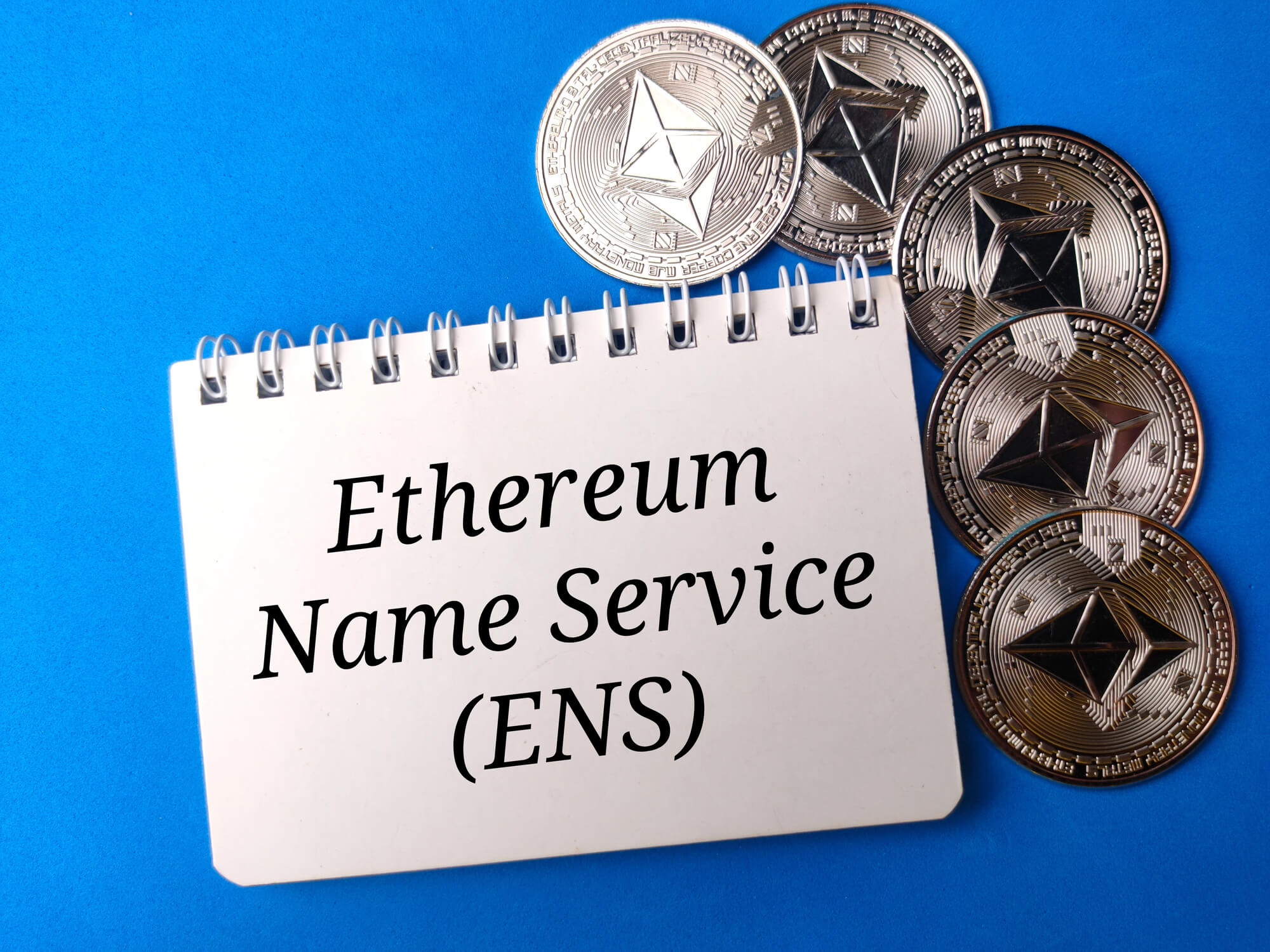
    The Ethereum Name Service (ENS) is a core Web3 infrastructure protocol that transforms complex wallet addresses into easy-to-read names. Instead of using a long string of numbers and letters, users can manage their blockchain identity through domains such as “alice.eth”.

    ENS enables the registration of human-readable domain names that can be linked to wallet addresses, smart contracts, or decentralized web content. The domains are issued on Ethereum as NFTs, making them tradable, transferable, and governed by a community-driven DAO model. ENS is integrated into numerous applications today and plays a central role in Web3 identity.

    Subscribe to our newsletter

    The best articles of the week, directly delivered into your mailbox.

    How ENS works and why it matters

    ENS was launched in 2017 by the Ethereum Foundation and quickly evolved into one of the most important applications in the Ethereum ecosystem. At its core, the system functions like the Domain Name System (DNS) of the traditional internet, but decentralized, censorship-resistant, and fully controlled through smart contracts. An ENS name replaces the 42-character hex address – for example, 0x83be… – with a simple, memorable label such as “name.eth”.

    Every registered name exists as an ERC-721 NFT, meaning it acts as a digital ownership certificate stored in the user’s wallet. Users can employ these domains not only as their primary address for receiving cryptocurrencies, but also as the foundation for a comprehensive Web3 identity. The domain can be linked to multiple crypto addresses, profile information, and on-chain resources. Subdomains can also be created to separate different wallet or service access points – for example, “pay.name.eth” for payments or “nft.name.eth” for collections.


    Ray Dalio’s Bridgewater Associates Minds

    Star investor Ray Dalio considers Bitcoin inferior to gold

    Analysis by Bitget Research on Bitcoin quantum computing risks, ECDSA exposure, NIST post-quantum standards, and BIP-360 migration paths. Background

    Bitcoin quantum computing: What recent developments mean for network security

    JPMorgan warns: Recurring DeFi exploits and stagnant ETH-denominated TVL curb institutional engagement in the DeFi sector. DeFi

    JPMorgan: DeFi hacks and TVL losses weigh on institutional investors

    Basics

    Unit bias in crypto: Why cheap coins mislead investors

    Ray Dalio’s Bridgewater Associates Minds

    Star investor Ray Dalio considers Bitcoin inferior to gold

    Analysis by Bitget Research on Bitcoin quantum computing risks, ECDSA exposure, NIST post-quantum standards, and BIP-360 migration paths. Background

    Bitcoin quantum computing: What recent developments mean for network security

    Use within the Web3 ecosystem

    ENS has grown far beyond a convenience feature for wallets. The domains serve as digital identity anchors across numerous Web3 applications. Users authenticate with their “.eth” name in decentralized social networks, use it as a handle in on-chain communities, or link it to profile pages hosted on IPFS or other decentralized storage protocols.

    ENS is now integrated into hundreds of services and wallets, including MetaMask, Coinbase Wallet, Uniswap, OpenSea, and Etherscan. As a result, the name is often the first thing others see when interacting with someone on-chain. ENS has thus become a building block for digital reputation – similar to a username in Web2, but with true ownership and without a central authority.

    Structure, token, and governance model

    Since the launch of the ENS token in November 2021, the protocol has been governed by the ENS DAO. The community decides through governance voting on system adjustments, such as pricing structures, technical upgrades, or treasury fund allocation. The economic operation of the service is financed through annual domain fees paid in ETH. Shorter names are significantly more expensive and are considered premium identities, while longer domains remain affordable.

    The model creates a balance between decentralization, brand value, and usability. At the same time, the fee acts as a spam-prevention mechanism to avoid mass registrations. Unlike the traditional DNS, where registrars and authorities act as intermediaries, ownership of ENS domains lies entirely with the user – secured by cryptography and smart contracts.

    Analysis by Bitget Research on Bitcoin quantum computing risks, ECDSA exposure, NIST post-quantum standards, and BIP-360 migration paths. Background
    17. April 2026

    Bitcoin quantum computing: What recent developments mean for network security

    Analysis by Bitget Research on Bitcoin quantum computing risks, ECDSA exposure, NIST post-quantum standards, and BIP-360 migration paths.

    XRPL validator analyzes quantum risk: only 0.03% of XRP supply is exposed, compared to up to 35% for Bitcoin. Google sets 2029 deadline. Background
    14. April 2026

    Quantum risk: Is XRP more secure than Bitcoin?

    XRPL validator analyzes quantum risk: only 0.03% of XRP supply is exposed, compared to up to 35% for Bitcoin. Google sets 2029 deadline.

    13. April 2026

    Power Shift in Crypto Exchanges: Retail Overtakes Institutional

    Entdecken Sie die Vorteile von Bitcoin im Portfolio als Werkzeug zur Renditesteigerung und zum Schutz vor Inflation.
    9. April 2026

    Bitcoin’s role within an institutional portfolio

    AI agent security risks grow as autonomous systems shift from analysis to execution in crypto markets, a Bitget and SlowMist report warns.
    8. April 2026

    New research highlights security risks as AI agents shift to execution

    6. April 2026

    Crypto Myths 2026: Four Costly Mistakes Investors Make

    $500 million in minutes: Pump.fun writes ICO history
    3. April 2026

    Have launchpads like Pump.fun destroyed the altcoin market?

    2. April 2026

    Unit bias in crypto: Why cheap coins mislead investors

    Popular Posts
    About Crypto Valley Journal
    About Crypto Valley Journal

    On the pulse of the movement

    • Academy
    • Contact
    • Advertising
    • About us
    • Partner
    • Imprint
    • Privacy
    • Disclaimer
    Search

    Type above and press Enter to search. Press Esc to cancel.