
Non-fungible tokens (NFTs) have emerged as a transformative technology with the potential to revolutionize digital ownership and create new opportunities for businesses. Many major corporations have started initiatives using NFTs in one way or another, demonstrating the clear potential of the technology for brands.
In the midst of the 2021 NFT craze, many companies jumped on the bandwagon. Either by launching their own collections, investing in the NFT and metaverse space, or forming novel partnerships in the crypto industry. Now that the initial hype has passed, many projects that were launched are maturing. We can see which companies believed in the new technology for the long term, created business models and penetrated new communities, attracting a solid user base. Other companies seem to have used their NFT collections as test runs or have abandoned the project line altogether.
Why are companies embracing NFTs?
Overall, companies are experimenting with NFTs for a variety of reasons. Most notably, they are spurred by the massive $15.5 billion in NFT trading volume generated in 2021, an increase of approximately 850 times from the previous year. NFTs promised to be a new tool for brand building, community engagement, and revenue generation. Companies took notice of this market development and were quick to launch their own collections, not all with a smooth start as this was a completely new playing field for many of the companies.
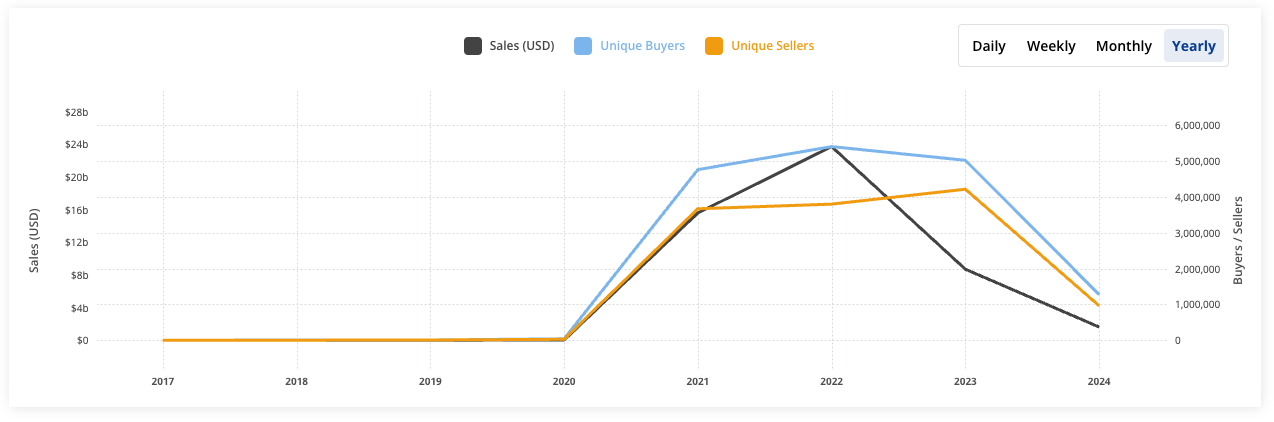
Total sales volume of the NFT market / Source: Crypto slam
NFTs can offer a new way to monetize digital assets. This is particularly attractive for companies that create or own valuable digital content such as art, music or collectibles. NFTs can also be used to create unique experiences and rewards for customers, driving engagement and loyalty. The range of enterprise applications for NFTs is very broad. It can be broadly categorized into the following areas based on past activity.
NFTs have so far mainly been used as:
- Representation of a proof of ownership (Breitling)
- Ticket sales (FIFA)
- Unlocking unique community benefits (Porsche)
- Representing physical items digitally (Gucci and Fortnite)
- Employee activation (Sodexo).
In addition, NFTs can be used to improve supply chain management and authentication. This is particularly important for industries with physical goods, such as luxury goods or pharmaceuticals. NFTs can provide a tamper-proof record of ownership and authenticity, which can help protect consumers from counterfeit products. This application does not focus on the community-building aspect, but rather uses the technology as a proof of authenticity.
Notable examples of corporate NFT collections
A large number of corporations have started an endeavour into the Web3 space using NFTs. Some of the most notable projects are:
- NBA Top Shots: A digital collectibles platform built on the Flow blockchain that allows users to buy, sell and trade officially licensed video highlights "moments" of iconic NBA games. Since inception Top Shots has generated over $1 billion in total sales volume.
- Coca-Cola: The beverage giant released a series of NFTs to celebrate its anniversary. The NFTs, which sold for a total of $575,000, included unique digital versions of Coca-Cola bottles and other memorable moments from Coca-Cola's history.
- Adidas: The athletic apparel company has partnered with several companies to create NFTs, including a partnership with the Bored Ape Yacht Club (BAYC) for sneakers and apparel. Adidas is also working on a metaverse experience where users can interact with their NFTs.
- Nike: The footwear mogul is also exploring NFTs. Nike has filed several NFT patents and partnered with RTFKT a company acquired by Nike In December 2021. RTFKT, is a leading brand that delivers next generation digital collectibles. The first release was the "Clone X" collection, launched in September 2022, where NFT holder could redeem physical sneakers.
- Louis Vuitton: The luxury fashion house has embraced the NFT trend with a number of initiatives, recognizing the potential of this technology to enhance its brand equity and connect with a broader audience. Louis Vuitton has collaborated with digital artists to create NFTs and offer them as exclusive rewards to customers and collectors. The brand is also exploring their use in virtual fashion shows and metaverse experiences.
Some companies experimented with the Web3 space in other ways. Either through investing or by exploring existing crypto-native companies and their solutions. For example, the multinational financial services company Visa Inc. made headlines in August 2021 by purchasing a crypto-punk. The decision went beyond mere investment. It served as a strategic move to gain NFT market expertise, explore business opportunities in payments and digital identity, and project a tech-savvy brand image, all while symbolically supporting innovation and engaging with the NFT community.
Mastercard topped it off 2022 by launching the world's first debit card allowing users to customize it with their own NFT avatars. Eligible cardholders can personalize their cards with NFT avatars they own. This collaboration signifies a milestone in bridging online communities with traditional finance. NFT customization is available to Gold members and above, with verification processes ensuring ownership legitimacy.




The future of NFT adoption by corporations
NFTs are still a relatively new technology, and their long-term impact on the corporate world is still uncertain. However, there is no doubt that NFTs have the potential to revolutionize the way businesses interact with their customers and manage their assets. As platforms and wallets become more user-friendly, NFT adoption will increase, making them more accessible to everyday consumers. This could drive revenue and the corporate interest further.
As the technology continues to evolve, we can expect to see even more innovative applications. For instance, a recent development of the novel social media platform Farcaster has made it possible to have NFT mints inside the UI of the app offering a seemless mint experience, highly useful for easy customer acquisition and onboarding. With increased adoption, we can expect to see a significant transformation in the way that businesses operate and interact with their customers.