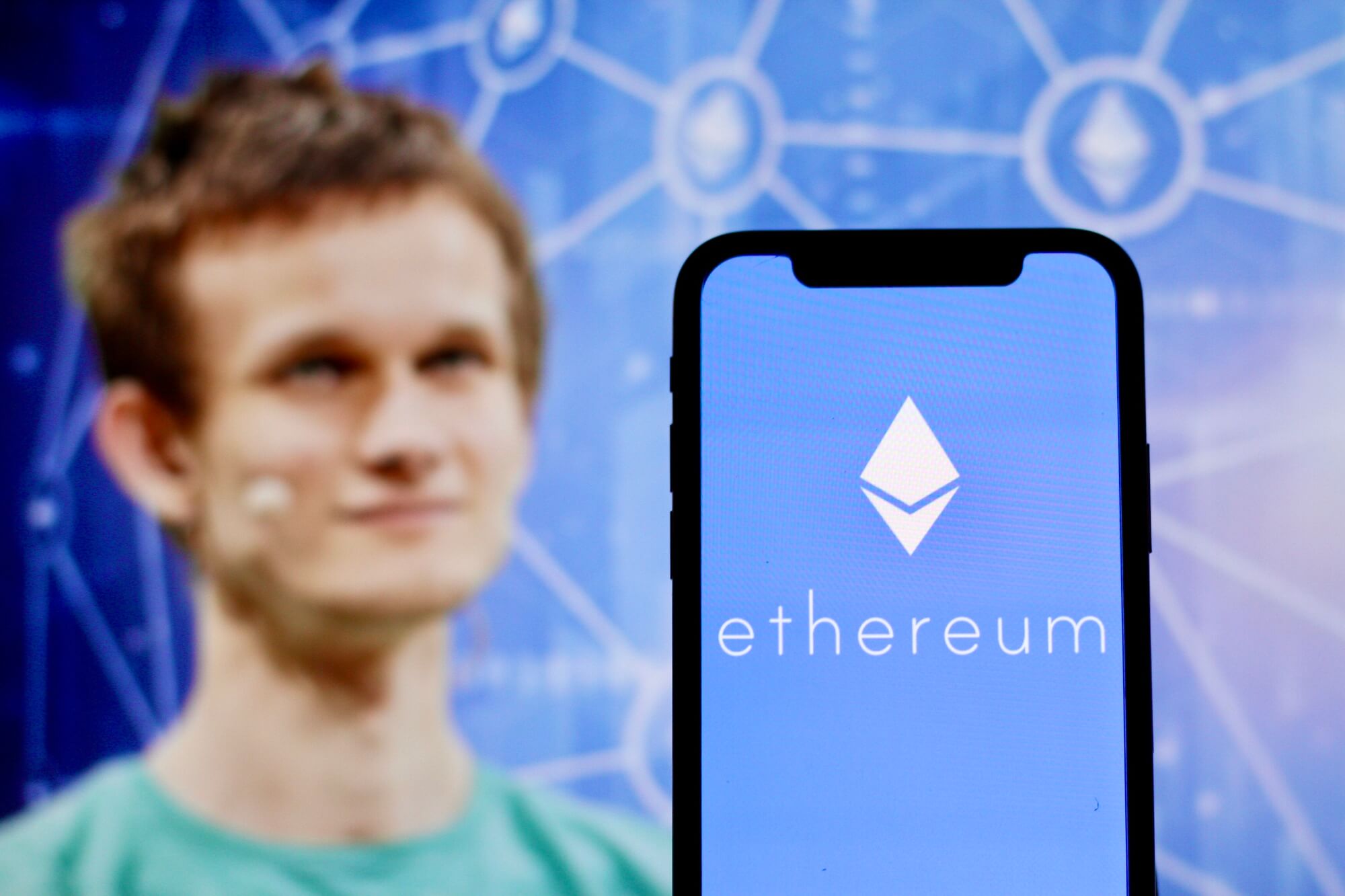
Ethereum co-founder Vitalik Buterin has announced a fundamental realignment of the network. The year 2026 aims to reclaim lost ground in terms of self-sovereignty and trustlessness. For the first time publicly, Buterin admits that Ethereum has "fallen behind considerably" over the past ten years.
The announcement comes at a critical moment. Following the successful Pectra upgrade in May 2025, two more major upgrades are on the agenda for 2026: Glamsterdam and Hegota. But Buterin focuses less on new features and more on returning to core principles: Nodes should be easy to operate again. Wallets should no longer transmit user data to dozens of servers.
Admission of structural problems
In an X post from January 16, Buterin lists specific shortcomings. Nodes have become too difficult to operate. Dapps have evolved from static pages to complicated structures that transmit all data to a dozen servers. The criticism targets a fundamental conflict of goals. Ethereum's pursuit of scalability led to dependence on centralized infrastructure.
Remote Procedure Call (RPC) providers like Infura or Alchemy now process the majority of wallet requests. Convenient for end users, problematic for the network. The original vision of a decentralized "World Computer" faded into the background. Two days later, Buterin intensified the rhetoric further. He warned the blockchain is becoming "too dense for independent verification." The protocol must pass a "walkaway test": Could Ethereum continue to run if all founders and core developers permanently left the project? Currently, that is questionable.
Technical solutions for 2026
Buterin's roadmap operates on three levels:
- First: Simplified node operation through Helios and Zero-Knowledge Ethereum Virtual Machines (ZK-EVMs). These technologies aim to enable standard consumer hardware to verify incoming data using Bridges and Local Verification (BAL). A full node would run on a standard laptop again.
- Second: Privacy through Oblivious RAM (ORAM) and Private Information Retrieval (PIR). These cryptographic protocols allow wallets to query data from the network without revealing specific access patterns. RPC providers would effectively become "blind" to user activities.
- Third: User-friendly security. Social recovery wallets and timelocks aim to prevent users from losing their entire assets if they lose their seed phrase. Ethereum relies on decentralized recovery mechanisms instead of centralized custodians. At the same time, user interfaces will be hardened through decentralized storage protocols like IPFS. This reduces the risk of hijacked frontends.




Protocol streamlining as core demand
Parallel to the decentralization agenda, Buterin demands radical code reduction. His concern: Ethereum is too eager to add new features to meet highly specific needs. The result is a bloated protocol. "One of my fears about Ethereum protocol development is that we can bloat the protocol unnecessarily."
As a countermeasure, he proposes an explicit "garbage collection function" in the development process. A mandate to delete outdated code and dependencies. The dependence on "PhD-level cryptography" and increasingly bloated code carries the risk of restricting Ethereum's accessibility. According to Buterin, the network could drift toward a technocratic model instead of remaining a decentralized public good.
The two planned upgrades for 2026 reflect this philosophy. Glamsterdam (Q2/Q3 2026) brings full Verkle Trees for stateless clients and drastically reduced hardware requirements. Hegota (H2 2026) focuses on state and history expiry. Both measures address the same problem: Ethereum is becoming too large and too resource-intensive to be stored indefinitely.
Long-term vision and consolidation
Buterin positions the current turbulence as a transitional phase. "In the long term, I hope that the rate of change at Ethereum can slow down. These first fifteen years should partly be viewed as an adolescence phase in which we explored many ideas."
The strategy accordingly aims at consolidation. After the feature-rich upgrades Pectra and Fusaka in 2025, 2026 should consolidate the work. FOCIL Inclusion Lists (Q1/Q2 2026) enforce censorship resistance at the consensus level. Block Access Lists optimize node performance and gas costs. The Kohaku Wallet (mid-2026) integrates verified RPC and native Account Abstraction.
In addition, Buterin calls for innovations in the stablecoin sector. Many popular stablecoins depend on the US dollar or centralized banks. A stablecoin backed by various assets could offer independence from traditional finance. He also emphasizes the need for quantum-resistant cryptography: The protocol should be secure for a hundred years.