The Ethereum blockchain will be significantly improved with the upcoming Dencun upgrade (EIP-4844). Through a process called proto-danksharding, layer-2 scaling solutions such as Arbitrum, Optimism and Base are set to profit from 90% lower transaction fees; a much needed upgrade.
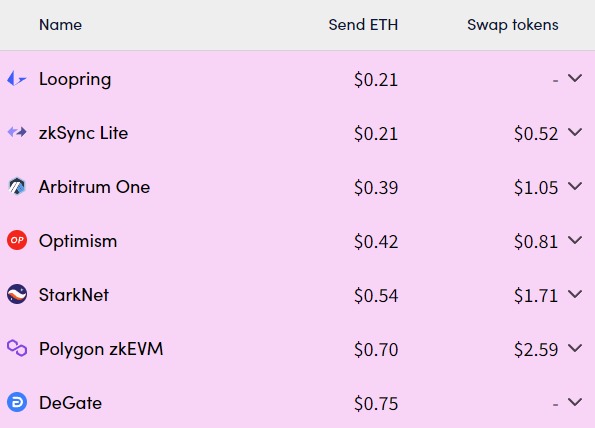
Upgrades to the Ethereum blockchain are implemented through Ethereum Improvement Proposals (EIPs) and aim to improve the functionality, security, and scalability of the network. The Dencun upgrade is a culmination of two smaller upgrades called Cancun and Deneb. The upgrade focuses on scalability and lower transaction fees for layer-2 networks through the key feature of proto-danksharding. Ethereum currently struggles to handle high transaction volumes, leading to network congestion and exorbitantly high fees. Even on scaling protocols, users pay an average transaction fee of over $0.50. The Dencun Upgrade (EIP-4844) will lower these fees dramatically.
What is danksharding and what does it have to do with Ethereum's scalability?
The name comes from the proposers of EIP-4844 Protolambda and Dankrad Feist. Danksharding is a necessary development for Ethereum to achieve scalability and the ability to process more than 100,000 transactions per second (TPS). For comparison, the payment provider VISA has the capacity to process more than 65,000 TPS, while Ethereum stands at around 13.
Proto-Danksharding is the first step towards Danksharding that brings Ethereum closer to it's goal of scalability. It introduces a new data storage mechanism within the Ethereum mainnet that reduces the cost of transactions on layer-2 rollups. Layer-2 solutions are separate blockchains built on top of the Ethereum Layer 1 blockchain. Examples of prominent layer-2 solutions are Arbitrum, Optimism and Coinbase's "Base" blockchain.
Layer-2 blockchains use rollup technology, which bundles multiple transactions, processes them and then records the resulting data on the main (layer-1) blockchain. This approach helps reduce congestion and fees on the main blockchain while maintaining security and decentralization. Without the Dencun Upgrade, users still pay over a dollar per transaction on layer-2 networks, depending on the complexity of the blockchain interaction. This is prohibitive for many applications that require multiple transactions.
Proto-Danksharding to increase transaction throughput
The Dencun upgrade creates a dedicated space for layer-2 transactions on the Ethereum main network. This new method of transaction processing is called proto-danksharding. Blobs, on the other hand, is the name given to these chunks of data from the L2 rollup chains that can be sent and appended to transaction blocks. Blobs are transactions that carry a "blob" payload of about 125 kilobytes of transaction data.
However, since the transaction data is not stored on Ethereum's execution layer, smart contracts cannot read the blob directly. Instead, KZG commitments are used to ensure the validity of the data. Conceptually, this is the same as how validators validate incoming transactions and add them to the blockchain upon consensus. The Dencun upgrade specifies that blob data is automatically deleted from the node every 18 days. The actual data can be stored off-chain by rollup operators, users or others. Deleting the data from the node reduces storage size and makes the transaction verification process leaner.
A much-needed boost for layer-2 solutions
Arbitrum and Optimism were the first Ethereum layer-2 blockchains to launch in Summer 2021. Since then, they've built solid ecosystems on their own with $3.6bn and $1bn in total value locked (TVL) respectively. Competitors such as Blast and Base also boast a total of $1.6bn in assets. Arbitrum in particular kicked off impressive growth through the launch of important ecosystem protocols such as the perpetual exchange GMX, its competitor Hyperliquid as well as the rate swap protocol Pendle among many others.
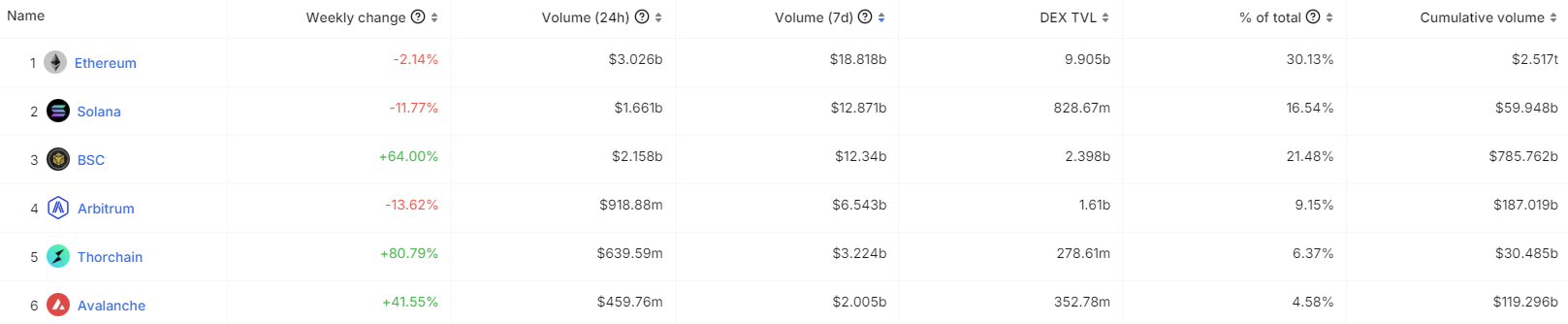
However, across many metrics such as unique users and daily transactions, competing layer-1 blockchains such as Solana and Avalanche have recorded much stronger growth. The Solana blockchain's weekly decentralized exchange (DEX) volume of $12.8bn is currently higher than that of all layer-2 networks combined. It is slowly approaching Ethereum's $18.8bn. The main difference is the much lower average transaction fee on Solana. Through the Dencun Upgrade, some of the volume could flow back into the Ethereum ecosystem.